
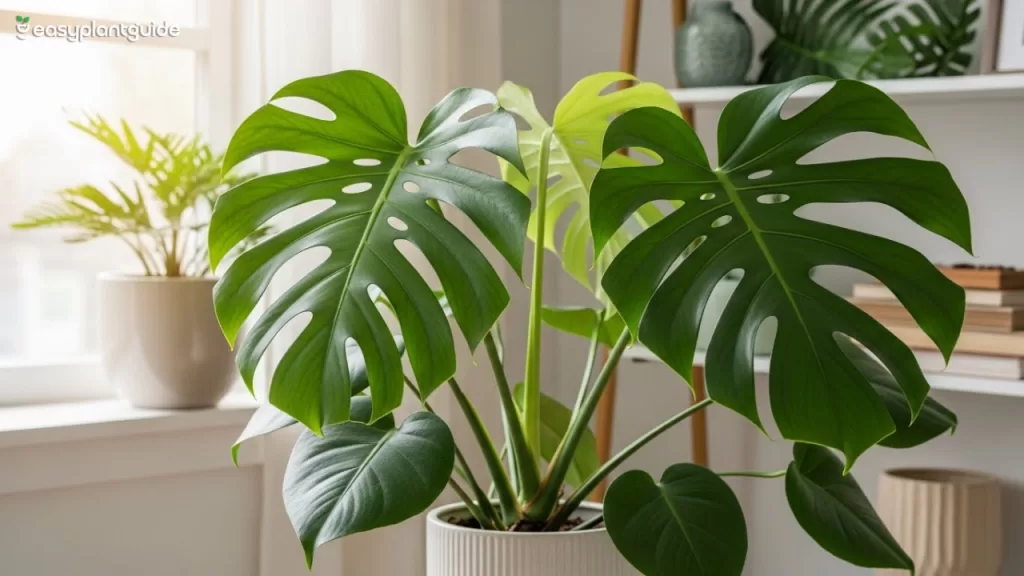
If you’ve ever admired those dramatic, split leaves taking over Pinterest and Instagram, you’re already familiar with Monstera. Learning how to care for monstera indoors is not complicated, but it does require understanding its rhythm. Think of Monstera like a relaxed tropical guest in your home. Treat it well, and it grows fast, bold, and beautiful. Ignore its needs, and it quietly protests with yellow leaves and drooping stems. In this guide, we’ll walk through everything step by step, using simple language, practical tips, and real-life plant logic. No fluff. No confusion. Just healthy indoor Monstera growth.
What Is a Monstera Plant?
Monstera, most commonly Monstera deliciosa, is a popular tropical houseplant native to the rainforests of Central America. It’s admired for its large, glossy green leaves that develop natural splits and holes, known as fenestrations, as the plant matures. These dramatic leaves give Monstera its bold, architectural look and make it a favorite for indoor spaces. Knowing how to care for monstera indoors ensures your plant stays healthy, vibrant, and develops its signature leaf patterns.
The splits aren’t just decorative. In the wild, they help the plant withstand heavy rain and allow light to reach lower leaves. Indoors, proper attention to light, water, and humidity—key aspects of how to care for monstera indoors—helps your Monstera thrive and maintain those striking, well-defined fenestrations.
Why Monstera Is Perfect for Indoor Spaces
Monsteras are popular for a reason. They adapt beautifully to indoor environments and don’t demand constant attention. Even if you miss a watering or place it in less-than-perfect light, a Monstera usually bounces back. That forgiving nature makes it an ideal choice for busy households, apartments, and workspaces where plant care can’t always be precise.
Benefits of Growing Monstera Indoors
Monsteras offer more than just good looks. They bring together beauty, adaptability, and ease of care, making them one of the most rewarding plants you can grow indoors.
1. Instant Greenery With a Luxury Feel
Monstera’s large, glossy leaves instantly elevate any space. Whether placed in a living room corner or near a window, it adds a bold, modern touch that makes interiors feel thoughtfully styled rather than plain.
2. Supports a Fresher Indoor Environment
Like many houseplants, Monstera contributes to a healthier indoor atmosphere. Its presence helps promote better air circulation, making rooms feel more open and breathable over time.
3. Ideal for Apartments and Office Spaces
Monsteras adapt well to indoor lighting and controlled environments. This makes them perfect for apartments, home offices, and workspaces where outdoor conditions can’t be replicated easily.
4. Long-Lasting Plant With Minimal Effort
With basic care, a Monstera can live for many years. It doesn’t require constant repotting or attention, making it a reliable long-term addition to your indoor plant collection.
5. Beginner-Friendly and Forgiving
Monstera is an excellent choice for beginners. It tolerates small care mistakes, recovers well from stress, and doesn’t demand strict routines, helping new plant owners build confidence easily.
How to Care for Monstera Indoors: Light Requirements
Light is where most people get confused, and it’s often the reason Monsteras struggle indoors. These plants don’t enjoy harsh, direct sunlight, but they also won’t thrive in dark corners. Finding the right balance is key to healthy growth and beautifully split leaves.
Best Light Conditions
Bright, indirect light works best for Monstera plants. Placing your plant near a window where sunlight is softened by sheer curtains or reflected off walls is ideal. This mimics the filtered light it receives under tree canopies in the wild.
Too much direct sun can scorch the leaves, leaving brown or faded patches. On the other hand, too little light slows growth and prevents leaf fenestrations from developing, resulting in smaller, solid leaves over time.
Signs Your Monstera Needs More or Less Light
Your plant speaks through its leaves if you pay attention
- Pale leaves mean too much sun
- No splits mean low light
- Leaning stems mean it’s searching for light
- Brown edges signal sun stress
- Slow growth suggests insufficient brightness
Watering Monstera Indoors Without Killing It
When learning how to care for monstera indoors, watering mistakes are the number one issue. The key is consistency, not strict routines. Monsteras thrive in evenly moist soil—not constantly soggy roots and not completely dry soil. Understanding when to water is crucial for healthy growth.
How Often to Water Monstera
To master how to care for monstera indoors, water your plant only when the top 2 inches of soil feel dry. Stick your finger in the soil; if it’s still damp, wait. Overwatering can cause root rot and yellow leaves, while underwatering leads to drooping, tired-looking foliage.
Best Soil for Indoor Monstera Plants
An essential part of how to care for monstera indoors is providing the right soil. Monstera roots need moisture and airflow. Dense, compact soil traps water and restricts oxygen, which can quickly harm the plant.
Ideal Soil Mix
A well-draining soil mix is crucial for how to care for monstera indoors. Combine potting soil, perlite for airflow, orchid bark or coco chips for structure, and a little light compost. Avoid heavy garden soil as it retains water and suffocates the roots, which can hinder growth indoors.
Monstera Pot Size and Drainage
When learning how to care for monstera indoors, pot choice is very important. The right pot supports growth, allows comfort for the roots, and prevents overwatering issues.
Potting Tips
Always use a pot with drainage holes, and choose one just 1–2 inches larger than the root ball. Oversized pots hold excess moisture and can lead to root rot. Terracotta pots help regulate soil moisture, while plastic pots retain water longer. Good drainage is a key part of how to care for monstera indoors successfully.
Ideal Temperature for Monstera Growth
Understanding temperature is an important part of how to care for monstera indoors. Monsteras thrive in warm, stable environments but can struggle with extremes. Keeping your plant within its comfort zone ensures healthy growth and vibrant leaves.
Temperature Range
- Ideal: 18°C–30°C, which mimics its natural tropical habitat
- Avoid cold drafts: Sudden drops in temperature can shock the plant and slow growth
- Keep away from air conditioners: Constant cold airflow can dry out leaves and damage stems
- No frost tolerance: Monsteras cannot survive freezing temperatures, even briefly
- Stable temperatures encourage growth: Consistent warmth supports larger leaves, proper fenestrations, and overall plant health
Fertilizing Monstera Indoors
Proper feeding is an essential part of how to care for monstera indoors. Food fuels growth, but too much fertilizer can burn the roots and damage your plant. A balanced approach ensures healthy, vibrant leaves without stress.
Fertilizer Schedule
To follow the best practices for how to care for monstera indoors, use a balanced liquid fertilizer and feed your plant once a month during spring and summer when it’s actively growing. Skip fertilizing in winter when growth slows. Always dilute the fertilizer to half strength and water the soil before applying it. Remember, fertilizer is a supplement to healthy soil, not a full meal for your Monstera.
Pruning Monstera for Healthy Growth
Pruning is a key aspect of how to care for monstera indoors, helping keep your plant tidy and encouraging new leaves to develop. Removing damaged or yellow leaves prevents disease and promotes a healthier overall appearance.
When and How to Prune
To prune correctly, remove yellow or damaged leaves and make your cuts just above a node. Always use clean, sharp scissors to avoid introducing infections. Prune during the growing season and avoid removing more than 25% of the plant at once. Think of pruning as a form of self-care for your Monstera, helping it stay strong and vibrant indoors.
Supporting Monstera With a Moss Pole
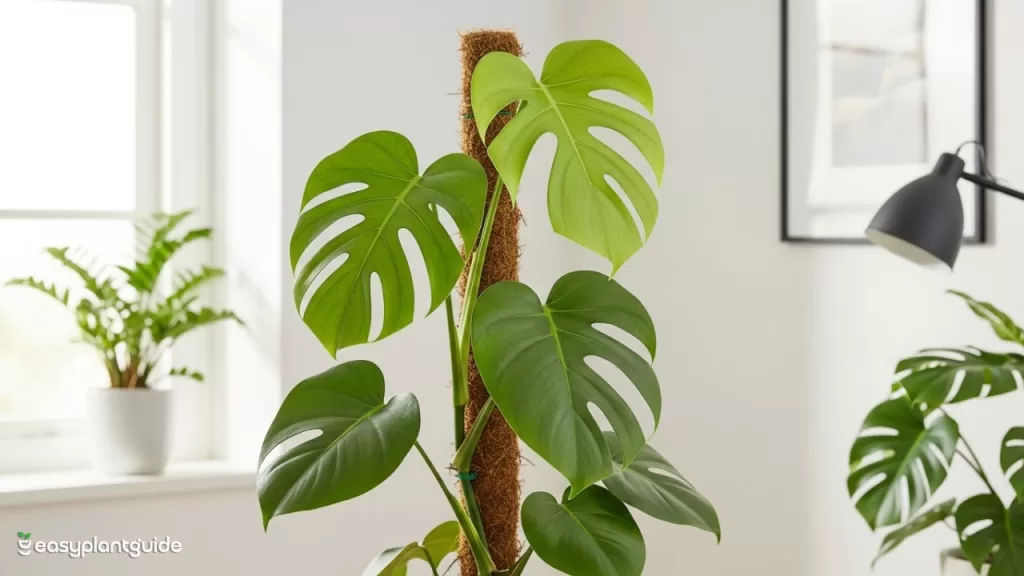
Another important tip for how to care for monstera indoors is providing support for its natural climbing habit. Monsteras are climbers in their native tropical habitats, and indoors they benefit from something to attach to.
Why Use a Moss Pole
A moss pole encourages larger leaves and keeps the plant upright, mimicking its natural growth in the wild. It prevents stems from breaking and improves the overall appearance of the plant. When attaching stems, do so loosely and allow the Monstera to climb naturally for the best results.
Humidity Needs for Monstera Indoors
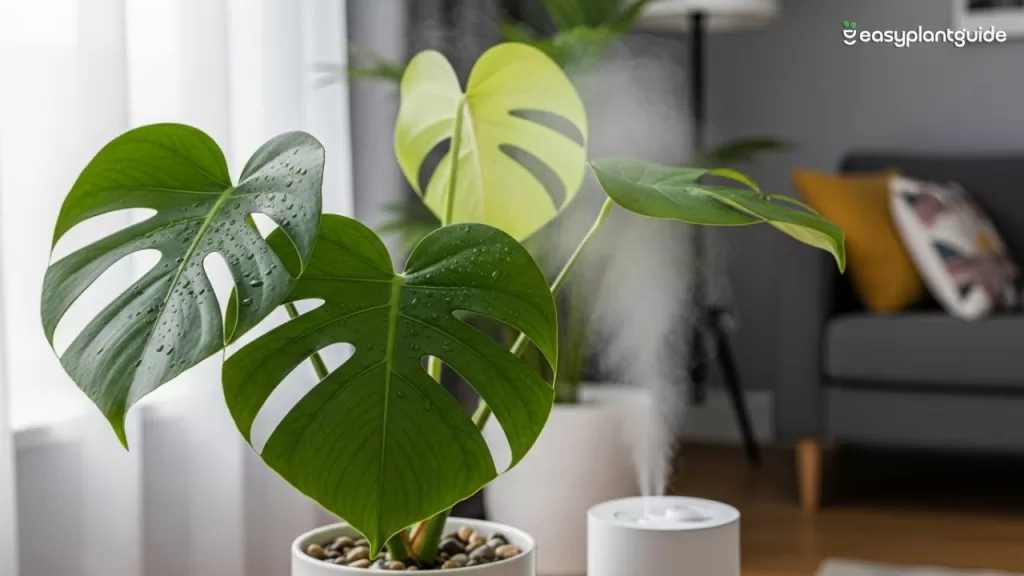
Understanding humidity is another key to how to care for monstera indoors. Monsteras come from tropical environments and naturally thrive in higher humidity. Dry indoor air can stress them, causing dull leaves, brown edges, and slower growth.
Ways to Increase Humidity
To follow proper how to care for monstera indoors, lightly mist the leaves, place the plant on a pebble tray with water, group plants together, or position it near a humidifier. Keep it away from heaters and vents, as dry air can affect the plant’s health. Maintaining proper humidity ensures your Monstera stays vibrant and lush indoors.
Common Monstera Problems and Solutions
Even healthy Monsteras have bad days.
Troubleshooting Issues
- Yellow leaves: Often caused by overwatering. Check the soil moisture and adjust watering frequency to prevent root rot.
- Brown tips: Usually a sign of low humidity. Increase humidity with misting, a pebble tray, or a humidifier to keep leaves healthy.
- No leaf splits: Low light can prevent fenestrations from forming. Move your Monstera to a brighter spot with indirect light.
- Drooping stems: Typically a sign of underwatering. Make sure to water consistently, allowing the top 2 inches of soil to dry before rewatering.
- Black spots: Often caused by root rot. Improve drainage, reduce watering, and remove affected leaves to protect the plant.
Monstera Care Mistakes to Avoid
Knowing what not to do is just as important as knowing what to do when learning how to care for monstera indoors. Avoiding common mistakes saves time and keeps your plant healthy.
Top Mistakes
- Overwatering on a schedule: Water only when the soil needs it, not on a fixed timetable.
- Placing in direct sunlight: Harsh light can burn leaves. Bright, indirect light is ideal.
- Ignoring drainage: Soggy soil leads to root rot, so always use a pot with proper drainage.
- Using compact soil: Dense soil traps water and suffocates roots. Opt for a well-draining mix.
- Sudden environment changes: Temperature or light shifts can stress the plant. Maintain a stable environment.
Indoor Monstera Care Table
| Care Aspect | Ideal Condition |
|---|---|
| Light | Bright, indirect |
| Watering | When top soil dries |
| Soil | Well-draining mix |
| Humidity | Medium to high |
| Temperature | 18°C–30°C |
Conclusion: Mastering How to Care for Monstera Indoors
Learning how to care for monstera indoors isn’t about following strict rules or complicated routines. It’s about understanding the right balance for your plant—providing the right amount of light, consistent watering, proper humidity, warmth, and a little patience. Each Monstera is unique, and observing its needs is part of the process.
When you give your Monstera what it truly needs, it rewards you with bold, glossy leaves, dramatic fenestrations, and steady, healthy growth. Over time, caring for your plant becomes second nature, and your indoor space transforms into a lush, tropical haven. Mastering how to care for monstera indoors is not just plant maintenance—it’s creating a thriving, vibrant atmosphere that brings life and energy to your home.
Explore more plant blogs and grow your green journey with us.