
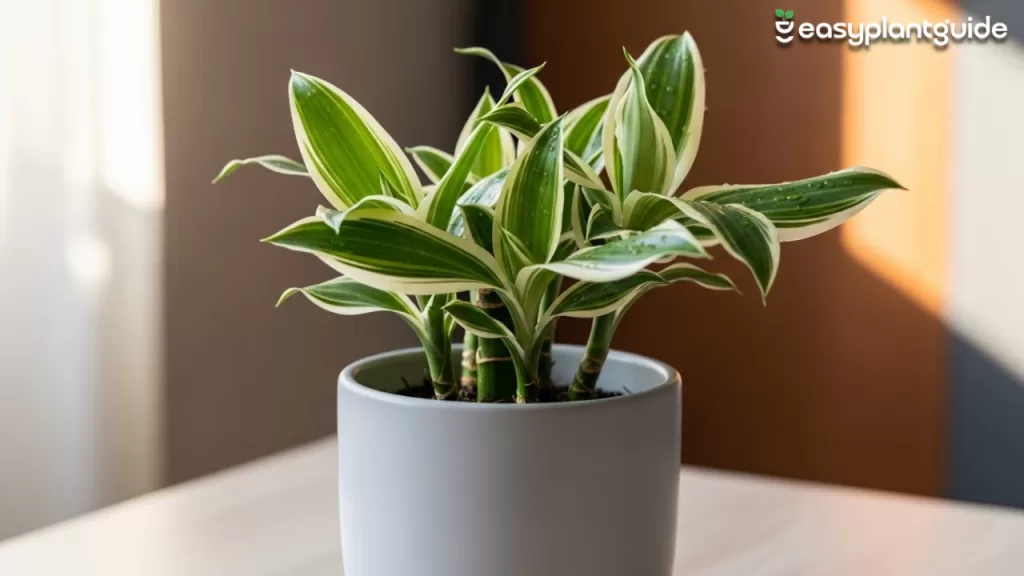
The Sanderiana Variegated plant, scientifically known as Dracaena sanderiana ‘Variegata’, is a popular indoor plant valued for its elegant striped foliage and effortless care routine. Often mistaken for bamboo, this plant is widely used in homes and offices for décor, Feng Shui benefits, and beginner-friendly maintenance. Its green leaves accented with creamy white or yellow variegation make it visually appealing throughout the year.
This detailed guide explains everything about Sanderiana Variegated care, including light, watering, growth habits, propagation, and common problems, helping you grow a healthy and long-lasting indoor plant.
What Is Sanderiana Variegated plant?
1. Overview of the Plant
Sanderiana Variegated is a cultivated form of Dracaena sanderiana, valued for its upright, cane-like stems and slender, arching leaves marked with creamy white or pale yellow variegation. These contrasting stripes give the plant a lighter, more refined look compared to solid green varieties, making it especially appealing for indoor décor. Its structured growth habit allows it to fit neatly into small spaces such as desks, shelves, and tabletops. With its slow growth rate and adaptability to indoor conditions, Sanderiana Variegated is both decorative and easy to maintain.
2. Is It Really Bamboo?
Despite being widely known as Lucky Bamboo, Sanderiana Variegated plant is not a true bamboo species. It actually belongs to the Asparagaceae family and is closely related to other Dracaena plants. True bamboo is part of the grass family and grows very differently, often outdoors and at a rapid pace. The bamboo-like appearance of this plant comes from its segmented stems rather than its botanical classification. Its popularity as “bamboo” is mainly cultural and symbolic rather than scientific.
Botanical Profile of Sanderiana Variegated
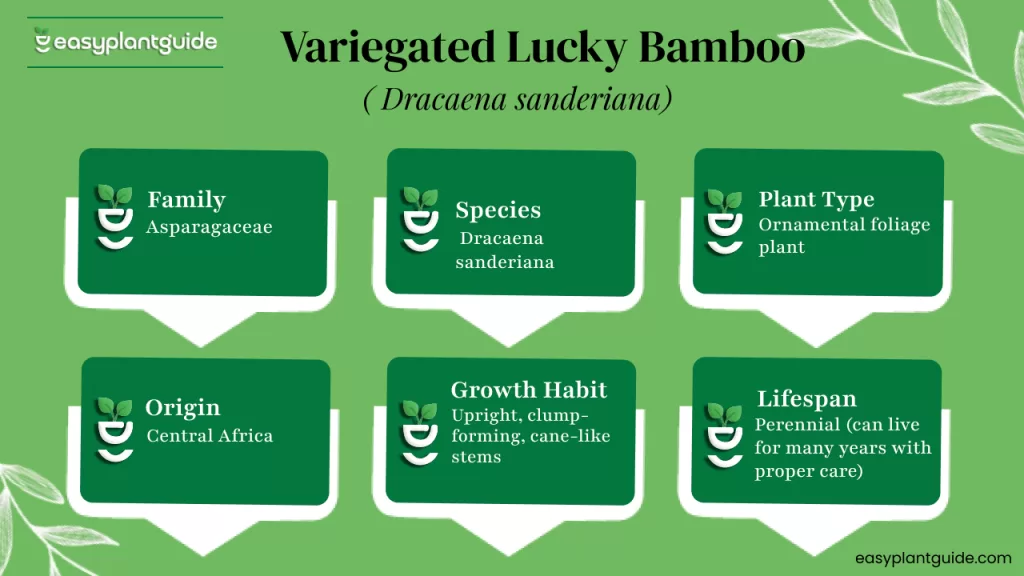
The Sanderiana Variegated plant is scientifically classified as Dracaena sanderiana ‘Variegata’ and belongs to the Asparagaceae family. It is an evergreen perennial, valued for its year-round foliage and long indoor lifespan. Native to Central Africa, this plant has adapted well to indoor environments across the world. Sanderiana Variegated plant is characterized by its upright growth habit, segmented cane-like stems, and neatly clustered leaves with attractive variegation.
When grown indoors, it remains compact and easy to manage, typically reaching a moderate height without spreading aggressively. This controlled growth makes it an excellent choice for small homes, offices, and decorative tabletops.
Why Sanderiana Variegated Is a Popular Houseplant
1. Low Maintenance Nature
One of the main reasons for the popularity of Sanderiana Variegated is its exceptionally low maintenance nature. This plant adapts well to low and medium light conditions, making it suitable for indoor spaces with limited sunlight. It can tolerate occasional missed watering without showing immediate stress, which is ideal for busy plant owners. Sanderiana Variegated plant also thrives in average indoor temperatures and humidity levels, requiring minimal special care.
2. Perfect for Modern Interiors
Sanderiana Variegated fits effortlessly into modern interior designs due to its clean, upright form and soft variegated foliage. The elegant green and creamy white leaf patterns add brightness without overpowering the space. Its structured appearance works well with minimalist décor, while its natural texture complements traditional and contemporary styles alike. Whether placed in glass containers, ceramic pots, or sleek planters, this plant enhances visual balance.
Light Requirements for Sanderiana Variegated plant
1. Bright Indirect Light for Healthy Growth
Sanderiana Variegated performs best when placed in bright, indirect light that mimics its natural habitat. This type of lighting supports balanced growth and helps the plant maintain its attractive variegated leaf patterns. Sunlight filtered through sheer curtains or reflected light from nearby windows is ideal. Consistent exposure to gentle light encourages strong stems and evenly colored foliage, allowing the plant to grow steadily without stress. Proper light placement also reduces the risk of leaf discoloration and keeps the plant looking fresh and vibrant indoors.
2. Maintaining Variegation Through Proper Lighting
Adequate light is essential for preserving the distinctive variegation of Sanderiana Variegated plant . When the plant receives enough indirect light, the contrast between green and creamy stripes remains sharp and visually appealing. Insufficient light can cause the leaves to revert to more solid green tones as the plant compensates for reduced energy. Providing the right light balance ensures the plant retains its decorative appeal and continues producing healthy, well-defined foliage throughout the growing season.
3. Impact of Low Light Conditions
Although Sanderiana Variegated can tolerate low-light environments, prolonged exposure to dim conditions may slow its growth and dull its appearance. Leaves may become thinner, paler, and less vibrant over time. While the plant may survive in low light, it will not thrive or display its full ornamental potential. Rotating the plant occasionally or relocating it closer to a light source can help improve its overall health and maintain a balanced growth pattern.
4. Risks of Direct and Harsh Sunlight
Direct sunlight can be harmful to Sanderiana Variegated plant, especially during peak afternoon hours. Intense sun exposure may scorch the leaves, causing brown patches or dry edges that reduce the plant’s visual appeal. Variegated leaves are particularly sensitive to harsh rays, as the lighter sections burn more easily. To prevent damage, place the plant near east- or north-facing windows where it receives gentle, filtered light that supports long-term health and leaf quality.
Watering Sanderiana Variegated Correctly
- Water Sanderiana Variegated in soil only when the top inch of soil feels dry to the touch, as consistently wet soil can cause root rot and weaken the plant.
- Always use a pot with proper drainage holes to allow excess water to escape and prevent moisture from sitting around the roots.
- When growing Sanderiana Variegated plant in water, choose filtered or distilled water to avoid chemical damage from chlorine and fluoride.
- Change the water every 7–10 days and rinse the container regularly to prevent algae growth and bacterial buildup.
- Ensure that only the roots are submerged in water, keeping the stems above the waterline to avoid stem rot.
Soil and Potting Needs
A well-draining soil mix is essential for healthy Sanderiana Variegated plant growth. An ideal blend includes peat moss for moisture retention, perlite for improved aeration, and organic matter to provide essential nutrients. This combination allows the soil to hold light moisture while preventing waterlogging, which can lead to root rot. The soil should feel slightly damp but never soggy.
Equally important is choosing the right pot. Always select containers with drainage holes to allow excess water to escape freely. Repotting Sanderiana Variegated every two to three years helps refresh depleted nutrients, encourages root development, and prevents overcrowding, ensuring continued healthy and balanced growth indoors.
Temperature and Humidity Preferences
Sanderiana Variegated plant thrives in a warm and stable indoor environment with temperatures ranging between 18°C and 30°C (65°F–86°F). Consistent warmth supports steady growth and helps maintain healthy foliage. Exposure to cold drafts, sudden temperature drops, or extreme heat can stress the plant, leading to slowed growth or leaf damage.
It is best kept away from air conditioners, heaters, and open windows during colder months. In terms of humidity, average indoor levels are usually sufficient. However, slightly higher humidity encourages fuller, healthier leaves. Occasional misting or placing the plant near a humidifier is especially beneficial in dry indoor conditions.
Propagation of Sanderiana Variegated
- Select a healthy, mature stem of Sanderiana Variegated plant and cut it just below a visible node using clean, sharp scissors.
- Ensure the cutting has at least one or two leaf nodes, as roots develop from these points.
- Place the cutting in clean water or moist, well-draining soil, keeping it in bright, indirect light.
- Change the water regularly or keep the soil slightly moist to encourage strong root development.
- Propagate during spring or summer when the plant is actively growing, as roots form faster and more successfully.
Common Problems and Their Solutions
1. Yellowing Leaves
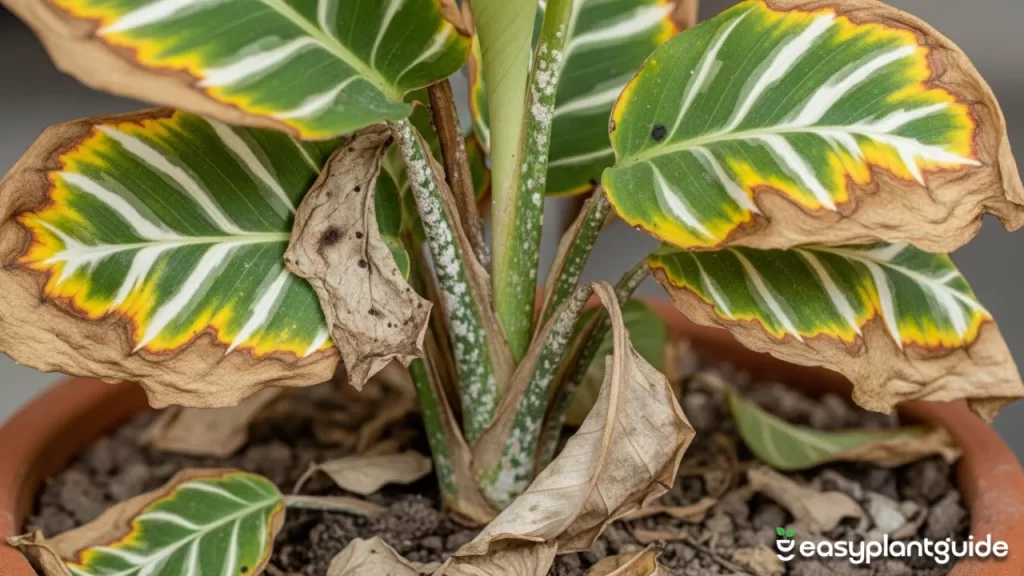
Yellowing leaves on Sanderiana Variegated plant are a common sign of overwatering or poorly draining soil. When roots sit in soggy conditions, they cannot absorb nutrients properly, causing the foliage to turn yellow. To correct this, reduce watering frequency and ensure the pot has proper drainage. Check the roots for signs of rot, trimming any affected sections. Adjusting care practices and maintaining slightly moist, well-aerated soil will help the plant recover, promoting healthy green leaves and steady growth over time.
2. Brown Leaf Tips
Brown tips on Sanderiana Variegated plant leaves often result from low indoor humidity or the use of tap water containing chlorine or fluoride. These conditions can dry out leaf edges, reducing the plant’s aesthetic appeal. To prevent this, increase humidity by misting the plant or using a humidifier. Always use filtered or distilled water for watering. Regular monitoring and minor adjustments in watering and humidity levels help maintain healthy, vibrant foliage and prevent further leaf tip browning.
3. Pest Issues
Sanderiana Variegated plant can occasionally attract pests such as spider mites or mealybugs, which feed on sap and weaken the plant. Infestations may cause yellowing leaves, webbing, or sticky residue. Early detection is crucial to prevent serious damage. Treat affected plants promptly using neem oil, insecticidal soap, or wiping leaves with a damp cloth. Regular inspection, proper air circulation, and avoiding overwatering help minimize pest problems, keeping Sanderiana Variegated healthy, vibrant, and free from infestations indoors.
Seasonal Care Tips
During spring and summer, Sanderiana Variegated enters its active growth phase, requiring slightly more attention to thrive. Increase watering moderately to keep the soil evenly moist, but avoid overwatering to prevent root rot. Apply a diluted, balanced liquid fertilizer every 4–6 weeks to support strong stems and vibrant variegated leaves.
Bright, indirect light during this period encourages healthy growth and helps maintain the plant’s decorative appearance. Occasional pruning of yellowing or damaged leaves also promotes new growth. Maintaining consistent warmth and adequate humidity during these warmer months ensures the plant develops robust roots, fuller foliage, and overall vitality, preparing it for a long, healthy life indoors.
Final Thoughts
Sanderiana Variegated plant is a highly versatile and elegant indoor plant that combines ornamental beauty, symbolic meaning, and low-maintenance care. Its upright, segmented stems and variegated leaves create a striking visual appeal, while its slow growth and adaptability make it suitable for both beginners and experienced plant enthusiasts.
With the right balance of bright, indirect light, careful watering, and occasional pruning, this plant thrives effortlessly indoors. Whether placed on a desk, shelf, or in a decorative container, Sanderiana Variegated enhances any space, bringing freshness, positive energy, and a touch of natural elegance that lasts for years, making it a timeless choice for indoor greenery.
Checkout for more plant blogs here.