

Do Bamboo Plants Need Soil? 7 Amazing Facts You’ll Love
If you’ve ever wondered, “Do bamboo plants need soil?” you’re definitely not alone. Bamboo is one of those mysterious plants—fast-growing, elegant, and surprisingly adaptable. Some bamboo varieties grow wild in forests, others live happily indoors, and lucky bamboo somehow survives in just water. So today, let’s break everything down in a fun, simple way. By the end, you’ll know exactly how bamboo grows, whether soil is essential, when water is enough, and how you can keep your bamboo thriving long-term.
Do Bamboo Plants Really Need Soil?
In most cases—yes. Real bamboo (botanical bamboo) grows best in nutrient-rich soil because it relies on minerals, microbes, and stable moisture levels to develop strong roots and tall shoots. Soil gives it the structure and nourishment it needs to thrive outdoors or in large containers.
However, lucky bamboo—the type most people keep on desks or shelves—can survive and grow in water only. It doesn’t require soil because its root system is adapted to low-nutrient environments, making it perfect for decorative indoor arrangements.
So why the difference?
Because real bamboo and lucky bamboo are not the same plant at all. They may look similar, but they belong to different plant families and have completely different growing needs. Let’s dive deeper to understand how each one thrives.
The Difference Between Real Bamboo and Lucky Bamboo
Many people confuse the two, but they grow very differently. When asking “do bamboo plants need soil?”, the answer depends on the type of bamboo you have.
Real Bamboo (True Bamboo)
- Belongs to the grass family (Poaceae)
- Grows tall and spreads quickly
- Needs soil with nutrients
- Commonly used in gardens and landscapes
Lucky Bamboo
- Not actually bamboo
- Is a type of Dracaena (Dracaena sanderiana)
- Often grown in water-filled vases
- Perfect for indoor decor
Can Real Bamboo Grow Without Soil?
Many people wonder, “Do bamboo plants need soil?” In short—not for long. Real bamboo cannot thrive without soil because it relies heavily on the nutrients and minerals found in the ground. Soil also gives the plant stability, supports beneficial microorganisms, maintains proper moisture levels, and allows air to reach the roots. Without these essential elements, real bamboo quickly becomes weak, its leaves start turning yellow, and its growth slows down until it eventually stops altogether. Soil is the foundation that keeps real bamboo healthy, strong, and thriving.
Can Lucky Bamboo Grow Without Soil?
Many people ask, “Do bamboo plants need soil?” The answer depends on the type of bamboo. Real bamboo absolutely needs soil to grow strong and healthy, as it relies on nutrients, stability, and proper moisture that soil provides. Lucky bamboo, on the other hand, can thrive in water alone, making it a popular choice for indoor decoration. Understanding which type of bamboo you have is key to deciding whether soil is necessary for its growth.
Best Growing Conditions for Lucky Bamboo in Water

What It Needs
Many people wonder, “do bamboo plants need soil?” Lucky bamboo is unique because it can thrive without soil, growing perfectly in water alone. To keep it healthy, use clean filtered water and maintain the water level about 1–2 inches above the roots. Avoid placing it in direct sunlight, change the water weekly, and provide occasional liquid fertilizer to support growth.
5 Signs Your Lucky Bamboo Is Happy
You’ll know your lucky bamboo is thriving in water when it shows strong green stalks and fresh new leaves. Many people ask, “do bamboo plants need soil?” and seeing these signs proves that lucky bamboo can grow happily without soil. Healthy bamboo also has no yellow tips, firm roots, and steady growth over time, showing it’s getting the care it needs.
Best Soil Types for Real Bamboo
If you’re planting bamboo outdoors or in pots, many people wonder, “do bamboo plants need soil?” The answer is yes—soil quality is crucial for healthy growth.
Ideal Soil Composition
Bamboo loves soil that is loamy, moist but well-draining, rich in organic matter, and slightly acidic with a pH of 5.5 – 6.5. Understanding do bamboo plants need soil and providing the right type ensures your bamboo thrives and grows strong.
5 Benefits of Using Good Soil
Using the right soil is essential if you’re asking, “do bamboo plants need soil?” Good soil promotes faster growth, helps develop stronger roots, and supports healthier shoots. It also improves the color of the leaves and provides higher resistance to pests, ensuring your bamboo stays vibrant and thriving.
Soil vs. Water: Which One Is Better for Your Bamboo?
| Growing Medium | Suitable For | Pros | Cons |
|---|---|---|---|
| Soil | Real bamboo & lucky bamboo | High nutrients, long-term growth | Needs maintenance |
| Water | Lucky bamboo only | Easy, clean, decorative | Low nutrients |
| Pebbles | Lucky bamboo | Stylish, stable | Still needs water |
| Hydrogel Beads | Lucky bamboo | Aesthetic | Must rehydrate beads |
5 Mistakes People Make When Growing Bamboo
Avoid these common errors to keep your bamboo healthy. Many beginners ask, “do bamboo plants need soil?” and often underestimate how crucial soil quality and drainage are for real bamboo. Using poor or compacted soil can stunt growth, weaken roots, and make the plant more vulnerable to diseases. Other frequent mistakes include using tap water with chlorine, which can damage delicate roots, and placing bamboo in direct sunlight, which may scorch the leaves.
Ignoring yellowing or wilting leaves and allowing the roots to dry out are also serious issues that can affect overall growth. By understanding these mistakes and providing proper care—right soil, clean water, indirect light, and consistent moisture—you ensure your bamboo thrives, grows strong, and stays vibrant for years to come.
Do Indoor Bamboo Plants Need Soil?
Not always. Many people ask, “do bamboo plants need soil?” and the answer depends on the type of bamboo. Indoor bamboo, usually lucky bamboo, can survive perfectly in water alone or with pebbles for support. While soil is optional, it can be used if you want faster growth or a more traditional planting method, but the plant will still thrive without it.
Do Outdoor Bamboo Plants Need Soil?
Absolutely. Outdoor bamboo grows tall and strong only when planted in nutrient-rich soil. Many people ask, “do bamboo plants need soil?” and the answer is a clear yes for outdoor varieties. To improve soil quality, you can add compost and mulch, enhance drainage, aerate the soil regularly, and incorporate organic fertilizer. These steps provide essential nutrients and support healthy root development, ensuring your bamboo thrives in any outdoor environment.
How Much Water Does Bamboo Need in Soil?
Whether indoor or outdoor, bamboo loves consistent moisture—but not soggy conditions. Many people ask, “do bamboo plants need soil?” and watering properly is just as important as soil choice. Keep the soil lightly moist at all times, water deeply about twice a week, increase watering during hot summer months, and reduce it in winter when growth slows. Maintaining this balance ensures your bamboo stays healthy, strong, and vibrant.
5 Signs Your Bamboo Needs Soil Instead of Water
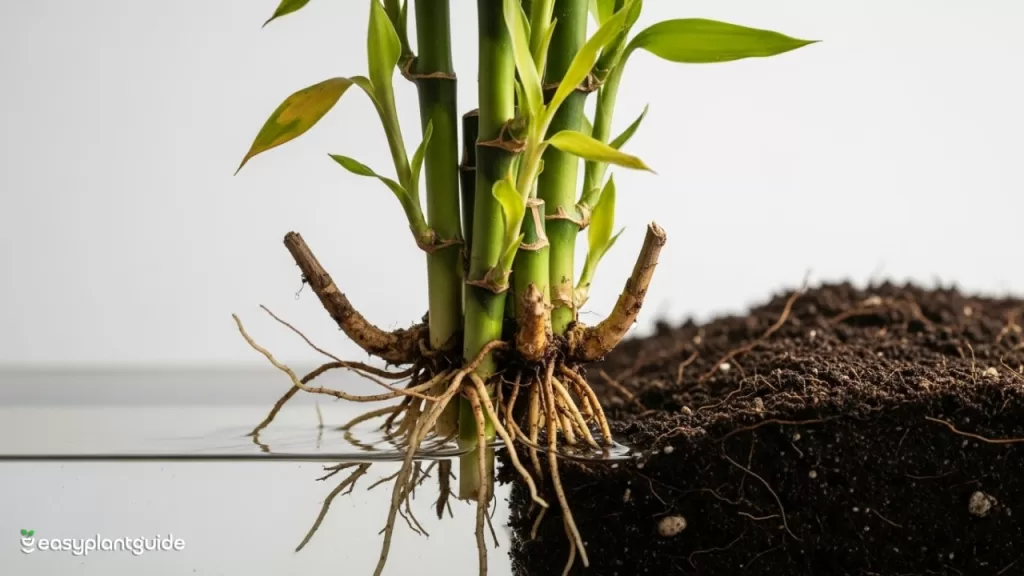
Sometimes bamboo that is growing in water may begin to struggle, leaving many plant owners wondering, “do bamboo plants need soil?” While lucky bamboo can survive in water, there are clear signs that it may need soil to continue thriving. Recognizing these signs early can help prevent stress and ensure your plant stays healthy.
1. Slow or No Growth
One of the first indicators that your bamboo may need soil is slow or no growth. If you notice that new shoots are stunted or the plant seems stagnant, it’s a sign that the bamboo isn’t getting enough nutrients from water alone. This is a common moment when owners start asking, “do bamboo plants need soil?”
2. Yellowing Leaves
Yellowing leaves are another sign that your bamboo lacks essential minerals. Even though water can sustain the plant temporarily, soil provides a richer source of nutrients that supports vibrant green leaves and overall plant health.
3. Thin or Weak Stalks
Thin or weak stalks suggest that the bamboo isn’t developing the structural strength it needs. Soil gives the roots stability and nutrients that help the stalks grow thicker and sturdier over time.
4. Brown or Rotting Roots
Brown or rotting roots indicate that the water environment is no longer suitable. Soil with proper drainage can help restore root health and prevent further damage.
5. Foul-Smelling Water
If the water starts to smell, it’s a clear signal that the bamboo’s environment is deteriorating. Transitioning your bamboo from water to soil can provide the nutrients, support, and stability it needs to grow strong, healthy, and vibrant. Understanding do bamboo plants need soil and acting on these signs ensures your plant thrives for years.
How to Transfer Lucky Bamboo From Water to Soil
Here’s a simple guide for transitioning your lucky bamboo, especially if you’re wondering “do bamboo plants need soil?”
Steps to Follow
First, gently clean the roots of your lucky bamboo. Prepare a pot with drainage holes and fill it with rich, moist potting mix. Plant the stalks upright, water lightly, and keep the pot in indirect light. This process helps the plant adjust from water to soil while minimizing stress.
5 Tips for Smooth Transition
When moving your lucky bamboo, remember that do bamboo plants need soil becomes important for long-term growth and stability. Don’t bury the entire stalk; keep the soil consistently moist, but avoid fertilizing for the first two weeks to let the plant acclimate. Always use filtered water and monitor the leaf color closely. Following these steps ensures a smooth transition and healthy bamboo growth in soil.
Nutrient Requirements for Bamboo Plants
Bamboo grows fast, so it needs proper nutrition to stay healthy. Many people ask, “do bamboo plants need soil?” and understanding nutrient requirements is key, whether your bamboo is in soil or water.
Best Fertilizers
Bamboo benefits from organic compost, liquid amboo fertilizer, balanced NPK (10-10-10), and slow-release pellets. Providing these nutrients ensures your bamboo gets the food it needs for vigorous growth and strong development.
5 Benefits of Fertilizing Correctly
Fertilizing correctly helps bamboo develop greener leaves, faster growth, stronger stems, healthier roots, and better resistance to stress. Ensuring proper nutrition, whether in soil or water, keeps your bamboo thriving and vibrant.
Conclusion
So, do bamboo plants need soil? The answer depends on the type of bamboo you have. Real bamboo absolutely needs soil to grow tall and strong. Lucky bamboo, on the other hand, can thrive beautifully in just water, making it perfect for indoor decor and low-maintenance plant lovers. Whether you choose soil or water, bamboo will reward you with fresh growth, greenery, and a peaceful vibe—just give it the right environment and a little consistent care.
Explore more plant blogs and grow your green journey with us.