
Mexican Bird of Paradise Plant Care: 7 Proven Easy Tips
The Mexican Bird of Paradise plant is admired for its bright yellow flowers, graceful fern-like foliage, and remarkable ability to thrive in harsh conditions. Native to Mexico, this evergreen shrub or small tree is a popular choice for warm climates, drought-prone areas, and low-maintenance landscapes. Gardeners love it because it combines beauty with resilience. With proper Mexican Bird of Paradise plant care, this plant can grow vigorously, bloom abundantly, and remain visually appealing throughout the year with minimal effort.
The Mexican Bird of Paradise plant is admired for its bright yellow flowers, graceful fern-like foliage, and remarkable ability to thrive in harsh conditions. Gardeners love it because it combines beauty with resilience. With proper Mexican Bird of Paradise plant care, this plant can grow vigorously, bloom abundantly, and remain visually appealing throughout the year with minimal effort, making it ideal for residential gardens, commercial landscapes, and sustainable outdoor designs in hot regions.
Understanding the Mexican Bird of Paradise Plant
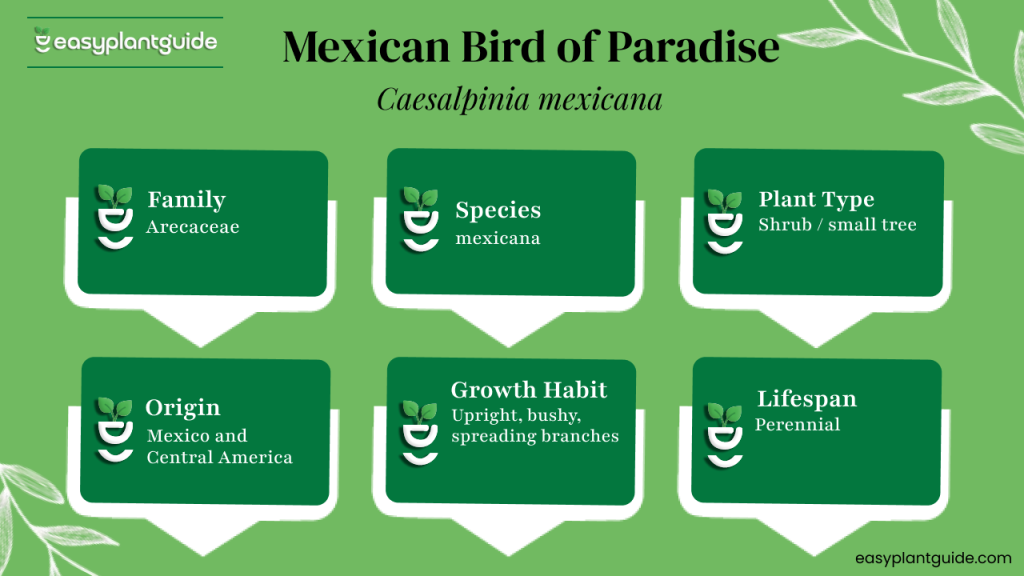
Mexican Bird of Paradise plant, botanically known as Caesalpinia mexicana, belongs to the legume family and is commonly grown as a shrub or small ornamental tree. It typically reaches a height of 10 to 20 feet and develops a spreading canopy of lush green leaves. Unlike tropical Bird of Paradise plants, this variety is more tolerant of heat and drought. Its long blooming season and ability to adapt to poor soils make it a reliable plant for gardeners seeking consistent performance without intensive care routines.
Best Climate Conditions for Healthy Growth
Mexican Bird of Paradise plant performs best in warm, sunny regions with low to moderate humidity. It thrives in USDA zones 9 to 11, where winters are mild and summers are long and hot. Although the plant can tolerate brief cold spells, extended freezing temperatures may damage young growth. In ideal climates, the plant remains evergreen and continues producing foliage year-round. Proper climate conditions play a crucial role in encouraging flowering and reducing stress-related issues such as leaf drop or poor bloom development.
Sunlight Requirements for Maximum Flowering
Adequate sunlight is essential for successful Mexican Bird of Paradise plant care. This plant requires full sun exposure to grow vigorously and produce its signature yellow flowers. When planted in shaded or partially shaded areas, the plant may survive but often produces fewer blooms and develops weaker growth. Direct sunlight for at least six to eight hours daily ensures strong stems, dense foliage, and consistent flowering. Choosing the right planting location significantly improves the overall health and visual impact of the plant.
Sunlight and Soil Requirements for Mexican Bird of Paradise Plant
The Mexican Bird of Paradise Plant thrives in full sunlight, requiring at least six hours of direct sun daily to produce vibrant yellow flowers. Well-draining soil is essential to prevent root rot, as this plant does not tolerate waterlogged conditions. Sandy or loamy soil enriched with organic matter works best, promoting healthy growth. Regular fertilization during the growing season enhances flowering and overall plant health. Proper sunlight and soil ensure your Mexican Bird of Paradise Plant flourishes beautifully in gardens or containers.
Soil Preferences and Drainage Needs
Mexican Bird of Paradise plant adapts well to a wide range of soil types, provided the soil drains efficiently. Sandy, loamy, or slightly rocky soils are ideal because they prevent water from accumulating around the roots. While the plant can tolerate nutrient-poor soils, excessively compacted or clay-heavy soil may lead to root rot and fungal diseases. Improving soil drainage before planting helps establish a strong root system and reduces long-term maintenance challenges, especially in areas with occasional heavy rainfall.
Planting Mexican Bird of Paradise Correctly
- Select a sunny, open location with good airflow
- Dig a hole twice as wide as the root ball
- Place the plant at ground level, not deeper
- Water thoroughly after planting
Correct planting technique ensures quick establishment and minimizes transplant shock. Spacing is also important, as overcrowding restricts airflow and increases disease risk. When planted correctly, Mexican Bird of Paradise plant adapts quickly and begins active growth within the first growing season.
Watering Schedule and Moisture Control
Watering plays a key role during the early growth stage of Mexican Bird of Paradise plant. Newly planted specimens require regular watering until their roots become established. Once mature, the plant becomes highly drought-tolerant and requires infrequent watering. Overwatering is a common issue and often leads to root-related diseases. Allowing the soil to dry out between watering sessions promotes deeper root growth and improves overall plant resilience. Adjust watering frequency during extreme heat while avoiding constant moisture around the roots.
Fertilization and Nutrient Support
Mexican Bird of Paradise does not require heavy fertilization, but light feeding can enhance flowering and foliage density. Applying a balanced fertilizer in early spring supports new growth and bud formation. Excess nitrogen should be avoided, as it encourages leafy growth at the expense of flowers. Organic compost is an excellent alternative, improving soil structure while slowly releasing nutrients. Minimal fertilization aligns well with the plant’s natural low-maintenance nature and prevents unnecessary stress or nutrient imbalance.
Pruning and Long-Term Maintenance
- Prune in late winter or early spring
- Remove dead, damaged, or crossing branches
- Shape lightly to maintain structure
Pruning encourages healthy branching and improves air circulation. Avoid aggressive pruning during active flowering periods, as it may reduce blooms. Consistent, light maintenance keeps the plant attractive and prevents excessive woody growth over time.
Flowering Behavior and Bloom Care
Mexican Bird of Paradise plant typically begins flowering in late spring and continues through summer. The bright yellow flowers grow in clusters and attract pollinators such as bees and butterflies. Flower production depends heavily on sunlight exposure and proper watering practices. Plants grown in full sun with minimal stress bloom more abundantly. Removing spent flowers is not required but may improve appearance. Healthy, mature plants often rebloom multiple times during the growing season under favorable conditions.
Common Pests and Disease Issues
- Aphids and spider mites during dry weather
- Root rot caused by overwatering
- Leaf spot in humid environments
Most pest and disease issues are preventable through proper watering and spacing. Neem oil or insecticidal soap can manage infestations without harming beneficial insects.

Growing Mexican Bird of Paradise in Containers
Mexican Bird of Paradise plant can be grown in large containers, especially in regions with colder winters. Container-grown plants require more frequent watering than those planted in the ground due to faster soil drying. Choosing a pot with drainage holes is essential to prevent waterlogging. While container plants may remain smaller, they still produce attractive foliage and flowers when provided adequate sunlight. Container growing also allows easy relocation during extreme weather conditions, making it a flexible option for many gardeners.
Winter Care and Cold Protection
In cooler climates, Mexican Bird of Paradise plantmay require minimal winter protection. Mulching around the base helps insulate roots and retain soil warmth. Watering should be reduced during winter dormancy to prevent root issues. Young plants are more sensitive to frost and may benefit from temporary covers during cold nights. Established plants generally recover well after mild frost damage, producing new growth when temperatures rise in spring.
Propagation Through Seeds
Propagation of Mexican Bird of Paradise plant is commonly done through seeds. Mature seed pods should be collected once dry and soaked before planting to improve germination rates. Seeds are planted in well-draining soil and kept lightly moist until sprouting occurs. Germination may take several weeks, requiring patience. While seed-grown plants take longer to flower, they develop strong root systems and adapt well to local conditions over time.
Landscaping and Design Uses
Mexican Bird of Paradise plant is widely used in landscaping due to its structured form and evergreen foliage. It works well as a privacy screen, accent plant, or focal point in desert-style gardens. Its tolerance to heat and drought makes it ideal for xeriscaping projects. The plant also complements modern and Mediterranean garden designs. When incorporated thoughtfully, it adds year-round greenery and seasonal color without overwhelming surrounding plants.
Final Thoughts
Mexican Bird of Paradise plant care is simple yet rewarding. With proper sunlight, well-draining soil, controlled watering, and light pruning, this plant thrives with minimal effort. Its ability to withstand heat, drought, and poor soil makes it a smart choice for sustainable landscaping. Whether planted in the ground or a container, Mexican Bird of Paradise plant offers long-lasting beauty and dependable performance, making it a valuable addition to any garden or outdoor space.
With proper sunlight, well-draining soil, controlled watering, and light pruning, this plant thrives with minimal effort. Its ability to withstand heat, drought, and poor soil makes it a smart choice for sustainable landscaping. Whether planted in the ground or a container, Mexican Bird of Paradise plant offers long-lasting beauty and dependable performance, making it a valuable addition to any garden or outdoor space for homeowners seeking low-maintenance, visually striking plants year-round.
Checjout for more blogs here.