
Mother in Law’s Tongue plant: Ultimate Impressive Guide 2025
The Mother in Law’s Tongue plant is the perfect choice if you want something that looks stylish, requires little effort, and keeps your air fresh. With its upright, sword-shaped leaves, it adds a bold touch of greenery to any corner of your home.
Also known as Snake Plant or Sansevieria trifasciata, the Mother in Law’s Tongue plant is tough, resilient, and admired worldwide. In this guide, we’ll explore its origin, varieties, care tips, health benefits, and even a few myths.
What is the Mother in Law’s Tongue Plant?
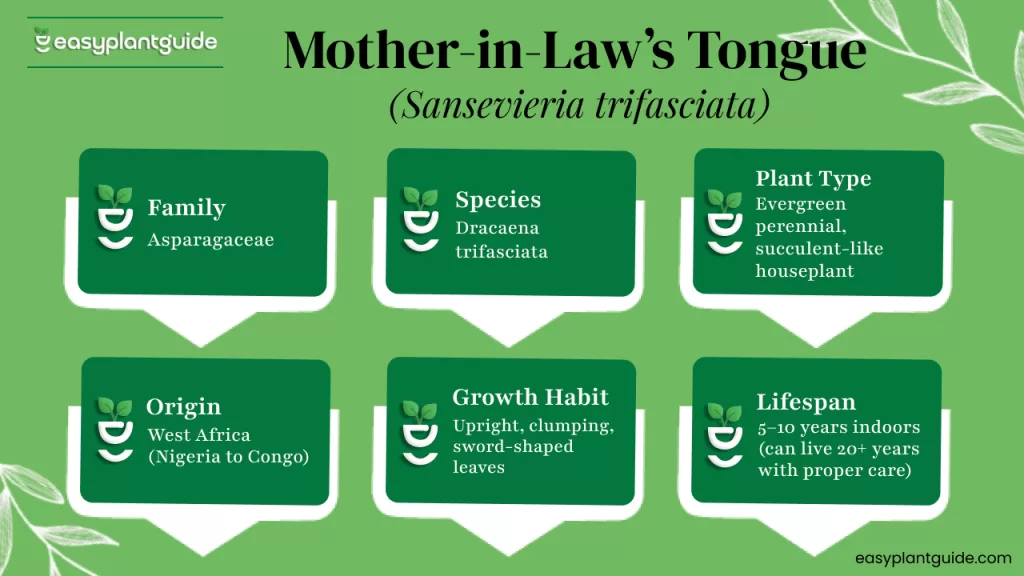
The Mother in Law’s Tongue plant is a hardy evergreen perennial admired for its tall, sword-like leaves with striking green and yellow patterns. Belonging to the Asparagaceae family, this plant originates from West Africa, where it thrives in tough, dry conditions. Its upright growth habit makes it a bold and stylish addition to any space.
What makes the Mother in Law’s Tongue plant so popular is its unique mix of beauty and resilience. It stays elegant with minimal care, tolerates neglect better than most houseplants, and adapts easily to different light conditions. On top of that, it’s recognized as one of the best air-purifying plants you can keep indoors.
Different Names You Should Know
This plant has many nicknames. A few popular ones include:
- Snake Plant
- Saint George’s Sword
- Viper’s Bowstring Hemp
- Sansevieria
- Mother-in-Law’s Tongue
Top Varieties of Mother in Law’s Tongue plant
The Mother in Law’s Tongue plant isn’t limited to just one look. In fact, there are over 70 varieties of this resilient houseplant, each with its own unique charm. Some grow tall with dramatic upright leaves, while others stay compact and nest-like, making them perfect for desks, shelves, or tabletops. This variety ensures there’s a type to suit every style and space.
Some of the most popular choices include Sansevieria trifasciata ‘Laurentii’, famous for its tall, yellow-edged leaves, and Sansevieria cylindrica, with its striking, round stick-like foliage. If you want something small, Sansevieria hahnii, also called the bird’s nest, is a perfect fit. For something bold, the whale fin (Sansevieria masoniana) and the silvery moonshine variety are show-stoppers in modern interiors.
Why is it Called Mother in Law’s Tongue?
The Mother in Law’s Tongue plant got its name from its long, sharp leaves. They’re humorously compared to the sharpness of a tongue, giving rise to the playful nickname.
It’s not intended as an insult but rather lighthearted fun. Many people simply call it the Snake Plant, a name that highlights its sleek and upright beauty.
Benefits of Having a Mother in Law’s Tongue at Home
The Mother in Law’s Tongue plant isn’t just a stylish indoor accessory—it’s a natural multitasker that makes your home healthier and more relaxing. Here are some of its most impressive benefits:
- Improves indoor air quality – This plant naturally filters out harmful particles, leaving your indoor environment fresher and cleaner. It’s especially useful in small apartments or closed spaces.
- Releases oxygen at night (rare among plants) – Unlike most plants, it gives off oxygen while you sleep. That makes it a perfect bedroom companion for boosting restful nights.
- Absorbs toxins like formaldehyde and benzene – Found in furniture, paints, and cleaning products, these toxins can be reduced with this plant. It acts like a silent air purifier working 24/7.
- Boosts humidity levels indoors – By slowly releasing moisture, it balances dry indoor air. This helps prevent issues like dry skin, sore throats, or irritated eyes during winter.
- Acts as a natural stress reliever – Greenery has a calming effect, and this plant’s toughness means no stress over constant care. It quietly uplifts your mood while brightening your space.
Care Guide: How to Keep It Happy
1. Watering Needs
The Mother in Law’s Tongue plant thrives when watered sparingly. It only needs a drink every two to three weeks, and it’s important to let the soil dry out completely in between. Overwatering is the most common mistake, so less is always better with this hardy plant.
2. Light Requirements
One of the reasons this plant is so popular is its adaptability to different lighting conditions. It can flourish in bright, indirect light but also survives in low-light corners of your home. This makes it a perfect fit for living rooms, bedrooms, or even office desks.
3. Temperature and Environment
You don’t need to make special adjustments to keep this plant happy indoors. It grows well in average household temperatures and doesn’t require extra humidity. However, keeping it away from cold drafts or frost will help maintain its vibrant leaves.
4. Soil and Fertilizer
The plant prefers well-draining soil, similar to what succulents need. A sandy or cactus-style potting mix works best to prevent water from pooling at the roots. During the growing season, fertilizing once a month is enough to give it the nutrients it needs without overwhelming it.
Do’s and Don’ts of Snake Plant Care
Here’s a simple breakdown to avoid common mistakes:
| Do’s | Don’ts |
|---|---|
| Use well-draining soil | Overwater (roots rot easily) |
| Place in indirect sunlight | Leave in standing water |
| Wipe leaves occasionally | Expose to frost |
| Repot every 2–3 years | Use heavy clay soil |
| Add fertilizer sparingly | Place in full sun all day |
Decorating Ideas with Mother in Law’s Tongue

Looking for a plant that doubles as décor? This one nails it!
- Place tall varieties in living room corners
- Use compact types on desks or shelves
- Line hallways with potted rows
- Mix with other succulents for contrast
- Add to bedroom for nighttime oxygen boost
How to Propagate Mother in Law’s Tongue plant
1. Leaf Cuttings in Soil
One of the most common ways to propagate the Mother in Law’s Tongue plant is by using leaf cuttings placed directly in soil. Simply cut a healthy leaf into sections, let them dry for a day or two, and then plant them upright in well-draining soil. With a little patience, new shoots will eventually emerge from the base.
2. Leaf Cuttings in Water
Another fun method is water propagation. Take a cutting from a strong leaf and place it in a jar of clean water with the cut end submerged. Over time, roots will begin to form, and once they are long enough, you can transfer the cutting to a pot. Many plant lovers enjoy this method because they can watch the rooting process.
3. Division of Rhizomes
The Mother in Law’s Tongue plant grows through underground rhizomes, which can be carefully divided when repotting. By cutting and separating these rhizomes, each section can be placed into its own container, allowing you to grow multiple plants from one. This method is quick and ensures strong, established growth.
4. Offshoot Separation
Sometimes the plant produces small baby shoots, often called pups, at the base. These offshoots can be gently removed and replanted in fresh soil. This is one of the easiest ways to propagate because the pups already have their own roots and adapt quickly to new pots.
5. Potting Baby Plants
If your Mother in Law’s Tongue plant has naturally developed young plants around its base, you can simply pot them separately. These baby plants tend to grow faster than leaf cuttings because they already have part of the parent plant’s energy stored within them. With proper care, they soon mature into tall, upright beauties.
Common Problems and Fixes
1. Yellowing Leaves
If the leaves of your Mother in Law’s Tongue plant start turning yellow, the most likely cause is overwatering. This plant prefers dry soil, so too much water can stress the roots and show up as discoloration. Allow the soil to dry completely before watering again.
2. Soft or Mushy Leaves
Soft, mushy, or collapsing leaves are often a sign of root rot. This happens when the plant sits in waterlogged soil for too long. To fix this, trim away the damaged leaves, repot the plant in fresh, well-draining soil, and adjust your watering routine.
3. Brown Tips
Brown, crispy leaf tips usually point to low humidity or excess fertilizer. While the Mother in Law’s Tongue plant can tolerate dry air, prolonged exposure may cause stress. Try misting occasionally, and be careful not to overfeed the plant with fertilizer.
4. Lack of Growth
If your plant isn’t growing, it might not be getting enough light. Although it tolerates low-light conditions, the Mother in Law’s Tongue plant thrives best in bright, indirect light. Moving it closer to a window often restores healthy growth.
5. Pests and Infestations
Mealybugs and spider mites sometimes target this plant, feeding on its sap and weakening the leaves. Wiping the foliage with neem oil or a gentle insecticidal solution is an effective way to get rid of pests. Keeping the leaves clean also helps prevent infestations.
Is Mother-in-Law’s Tongue Safe for Pets?
The Mother in Law’s Tongue plant is admired for its beauty and toughness, but pet owners should be cautious when bringing it into their homes. Despite its many benefits as an air-purifying indoor plant, it is unfortunately toxic to cats and dogs if chewed or swallowed. Because pets are naturally curious, especially with leafy houseplants, this can pose a hidden risk.
When ingested, the Mother in Law’s Tongue plant can trigger unpleasant reactions in pets such as nausea, vomiting, and excessive drooling. While it is rarely fatal, it can cause significant discomfort and may require veterinary care. The safest approach is to place the plant out of reach, use hanging planters, or opt for pet-friendly alternatives like the Areca Palm or Spider Plant. This way, you can enjoy the benefits of greenery without compromising your pet’s health.
Fun Facts You Didn’t Know
1. NASA’s Clean Air Study Connection
The Mother in Law’s Tongue plant gained global recognition after being included in NASA’s Clean Air Study. This research highlighted its ability to filter harmful indoor toxins and improve air quality, making it one of the best natural air-purifying plants you can keep at home.
2. Traditional Uses of Its Fibers
In the past, the strong fibers from the Mother in Law’s Tongue leaves were used to make ropes, mats, and even bowstrings. This practical use shows that the plant is not only decorative but has also served as a valuable resource for different cultures throughout history.
3. Ability to Survive with Little Water
One of the most impressive qualities of the Mother in Law’s Tongue plant is its drought tolerance. It can survive for weeks without water, which makes it a favorite among busy homeowners and beginners who want a low-maintenance indoor plant.
Conclusion
The Mother in Law’s Tongue plant is more than just a pretty face—it’s tough, low-maintenance, and full of benefits. From purifying the air to symbolizing resilience, it deserves a spot in every home. Bring one in, and let this timeless plant add beauty and positivity to your space.
Explore more plant blogs and grow your green journey with us.