
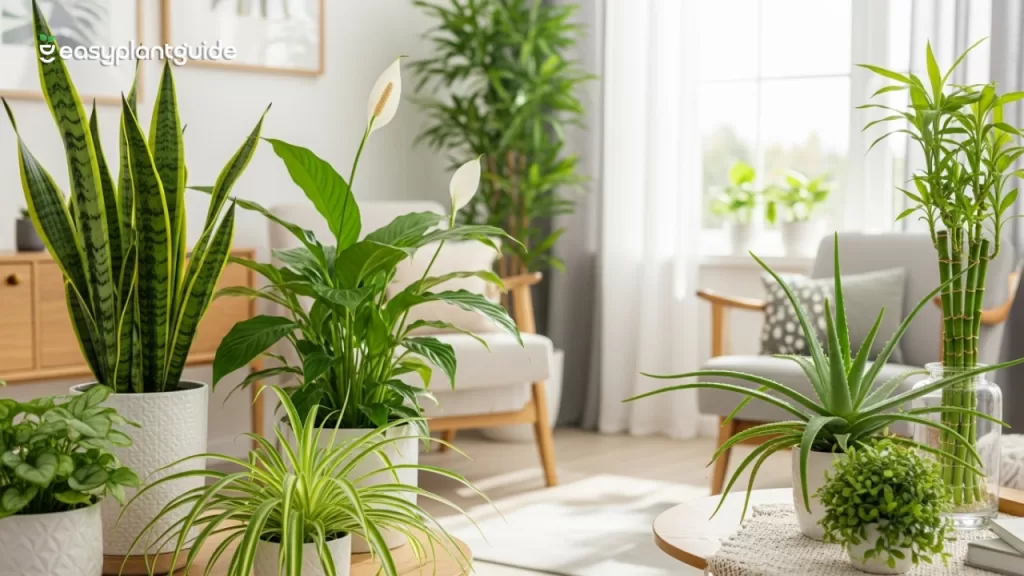
Are you spending hours indoors and feeling sluggish, tired, or just plain blah? Well, the air inside your home might be the culprit. Surprisingly, the air in our homes can be more polluted than outside! But here’s the good news: plants for indoor air purification can literally breathe new life into your living space. These green warriors not only look beautiful but also scrub harmful toxins from the air, making your home healthier. Let’s dive into the green magic that can change your indoor atmosphere.
Why Indoor Air Purification Matters
You might be asking yourself, “Do I really need plants for indoor air purification in my home?” The answer is a definite yes! Indoor air can often be more polluted than outdoor air, containing dust, allergens, volatile organic compounds (VOCs), and even mold spores. These invisible pollutants can lead to headaches, fatigue, allergies, respiratory problems, and in some cases, more serious long-term health issues.
By adding the right air-purifying plants, you can naturally remove these harmful toxins, boost oxygen levels, and create a fresher, cleaner, and more vibrant living environment. Beyond the physical benefits, these plants also add aesthetic charm and a sense of calm, turning your home into a healthier, happier space.
How Plants Purify Indoor Air
Plants for indoor air purification work like tiny natural air filters, cleaning your home while adding beauty and life. Here’s how they do it:
- Leaves absorb carbon dioxide and release oxygen: Most air-purifying plants take in carbon dioxide and release fresh oxygen, improving the overall air quality in your home.
- Roots and soil microbes break down harmful chemicals: The roots and beneficial microorganisms in the soil help neutralize toxic compounds, making indoor air healthier to breathe.
- Certain plants trap toxins like formaldehyde, benzene, and ammonia: Many houseplants naturally remove harmful volatile organic compounds (VOCs) that come from paints, furniture, and cleaning products.
- The plant’s transpiration process adds humidity, reducing dryness: As plants release water vapor, they naturally increase humidity, which can relieve dry skin, irritated throats, and respiratory discomfort.
- Greenery can boost mood and mental clarity while cleaning air: Beyond purifying the air, these plants create a calming atmosphere, reduce stress, and enhance focus, making them a perfect addition to your home or office.
Top 7 Indoor Air Purifying Plants
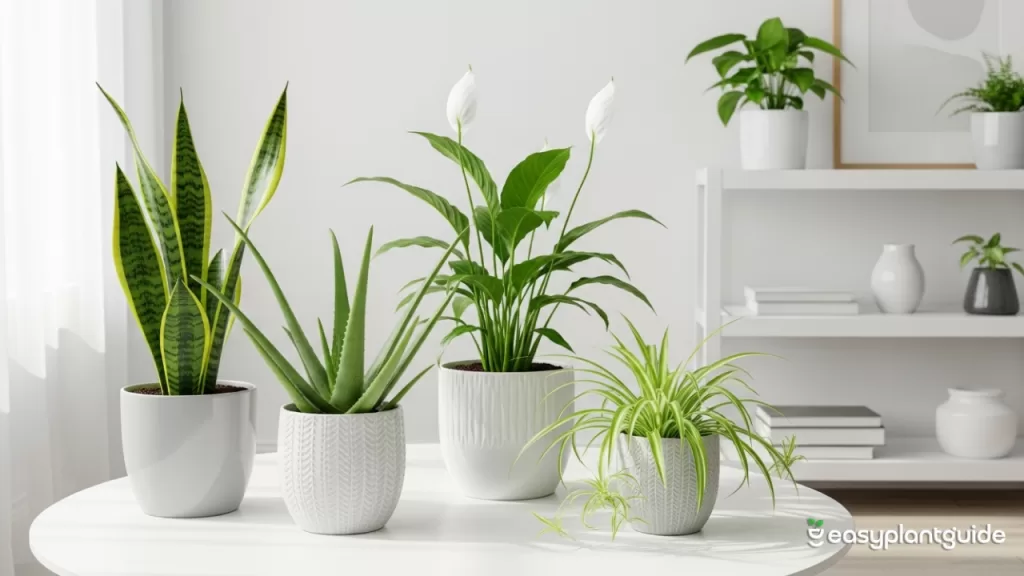
1. Spider Plant (Chlorophytum comosum)
Spider plants are among the easiest and most effective plants for indoor air purification, making them perfect for beginners or busy households. They remove carbon monoxide, formaldehyde, and xylene from indoor air, helping to create a healthier environment. Their long, arching green leaves with white stripes also add visual appeal. Place them in a bright, indirect light spot or hang them in decorative planters, and they will thrive while naturally improving air quality.
2. Peace Lily (Spathiphyllum)
Peace lilies are elegant and powerful plants for indoor air purification that filter toxins like ammonia, benzene, and formaldehyde while reducing mold spores. Their glossy green leaves and striking white blooms bring a sense of calm to any room. Peace lilies prefer moderate light and consistent moisture, making them both functional and decorative, all while enhancing the air you breathe indoors.
3. Snake Plant (Sansevieria trifasciata)
Snake plants are highly efficient plants for indoor air purification, converting CO2 into oxygen even at night. They tolerate low light and infrequent watering, making them perfect for low-maintenance air purification. Snake plants also help remove toxins like formaldehyde, xylene, and toluene, while their upright, sword-like leaves add a bold, modern touch to any room.
4. Aloe Vera
Aloe Vera is a versatile and practical addition to your home, one of the best plants for indoor air purification. It filters harmful chemicals like formaldehyde and benzene while also providing soothing gel for burns or skin issues. Aloe thrives in bright sunlight and well-drained soil, making it easy to care for while enhancing both air quality and indoor aesthetics.
5. Boston Fern (Nephrolepis exaltata)
Boston ferns are lush and moisture-loving plants for indoor air purification, effective at removing pollutants like xylene and formaldehyde. They naturally increase humidity while their delicate, feathery fronds create a refreshing, soft atmosphere. Regular misting, indirect sunlight, and consistent watering help Boston ferns flourish, turning them into a living air purifier that is both decorative and functional.
6. Rubber Plant (Ficus elastica)
Rubber plants are strong, evergreen plants for indoor air purification, ideal for filtering toxins like formaldehyde from your living space. Their large, glossy leaves add a luxurious touch while being relatively low allergenic, making them safe for homes with pets. They require moderate watering and occasional dusting, and can grow tall, creating a dramatic green accent while improving indoor air naturally.
7. Bamboo Palm (Chamaedorea seifrizii)
Bamboo palms are tropical plants for indoor air purification that remove benzene and formaldehyde while adding moisture to dry indoor air. Their feathery, arching fronds bring height and elegance, creating a vibrant indoor environment. Bamboo palms prefer bright, indirect light and regular watering, making them easy to maintain while enhancing both air quality and interior décor.
Benefits of Air Purifying Plants
Adding plants for indoor air purification to your home or workspace is about more than just decoration. These green wonders actively improve your living environment while boosting health, mood, and productivity. Let’s break down their key benefits.
1. Improve Overall Air Quality
One of the most important advantages of plants for indoor air purification is their ability to remove harmful toxins from the air. They filter volatile organic compounds (VOCs) like formaldehyde, benzene, and ammonia, which are commonly found in household products. By continuously cleaning the air, these plants create a fresher, healthier atmosphere that can reduce respiratory issues and make breathing easier indoors.
2. Reduce Stress and Boost Mood
Greenery has a remarkable effect on mental well-being, making plants for indoor air purification a natural stress-relief tool. Studies show that indoor plants can reduce anxiety, lower blood pressure, and improve overall mood. Simply seeing vibrant leaves or caring for plants can create a calming environment, enhancing happiness and mental clarity throughout your day.
3. Increase Humidity and Protect Skin
Many plants for indoor air purification release water vapor through a process called transpiration, which naturally increases indoor humidity. This added moisture helps prevent dry skin, chapped lips, and irritation in your respiratory system. In dry climates or heated indoor spaces, these plants act as natural humidifiers, making the air more comfortable to breathe and healthier for your skin.
4. Enhance Focus and Productivity
Having plants for indoor air purification in your home office or study can do wonders for concentration and efficiency. Cleaner air helps reduce fatigue, headaches, and mental fog, while the presence of greenery boosts attention span and creativity. The combination of fresher air and a visually soothing environment creates a natural productivity boost for work or study sessions.
5. Add a Natural, Calming Décor Element
Beyond health benefits, plants for indoor air purification bring beauty and tranquility to any space. Their lush green leaves and graceful forms enhance home décor, making rooms feel more inviting and alive. Whether placed on shelves, desks, or windowsills, these plants create a peaceful, nature-inspired ambiance while subtly improving the air you breathe.
Common Mistakes to Avoid
Even the most resilient plants for indoor air purification can struggle if not cared for properly. One of the biggest mistakes is overwatering, which can lead to root rot and weaken the plant’s ability to clean the air effectively. Another common issue is placing plants in total shade; while some tolerate low light, complete darkness can stunt growth and reduce their toxin-filtering abilities.
Overusing chemical fertilizers can harm both the plant and the beneficial soil microbes that help purify the air, so it’s best to stick to recommended doses or natural options. Ignoring pest infestations is also a risk, as insects like spider mites or aphids can damage leaves and lower the plant’s effectiveness. Finally, crowding plants without proper airflow can create humidity-related problems and reduce their overall air-purifying benefits, so it’s important to give each plant enough space to thrive.
Quick Care Checklist
Caring for plants for indoor air purification doesn’t have to be complicated, but a few simple routines can make a big difference in their health and effectiveness. Start by checking soil moisture weekly to ensure your plants are neither overwatered nor too dry, which helps maintain strong roots and optimal toxin-filtering ability. Rotate your plants regularly to provide even sunlight exposure, allowing all leaves to photosynthesize effectively and contribute to cleaner air.
Wiping leaves to remove dust is essential, as a clean leaf surface can better absorb pollutants and improve air purification. Fertilizing seasonally with appropriate nutrients supports healthy growth and keeps your plants thriving year-round. Lastly, monitor your plants for pests or signs of disease, addressing issues promptly to ensure they remain strong, vibrant, and fully capable of improving indoor air quality.
Best Low-Maintenance Air Purifying Plants
Not everyone has the time or memory to water plants regularly, but that doesn’t mean you can’t enjoy the benefits of plants for indoor air purification. Some houseplants are nearly indestructible and still work hard to clean the air. Here are the top low-maintenance options:
- Snake Plant: This hardy plant is one of the easiest plants for indoor air purification. It tolerates low light, requires minimal watering, and even converts CO2 into oxygen at night, making it perfect for bedrooms and low-light spaces.
- Spider Plant: Spider plants thrive with minimal care while effectively removing toxins like formaldehyde and xylene. They grow well in indirect light and can be hung in decorative planters for a stylish touch.
- ZZ Plant (Zamioculcas zamiifolia): ZZ plants are incredibly resilient, surviving long periods without water and thriving in low-light conditions. They are excellent plants for indoor air purification, removing common indoor pollutants effortlessly.
- Rubber Plant: Rubber plants are tough, evergreen air purifiers that remove formaldehyde and other toxins. They can grow tall indoors, tolerate moderate light, and need only occasional watering, making them a low-maintenance option.
- Dracaena: Dracaena plants are perfect for beginners, filtering chemicals like benzene, formaldehyde, and trichloroethylene. They grow well in indirect light and require minimal care while improving air quality indoors.
Placement Tips for Maximum Air Purification
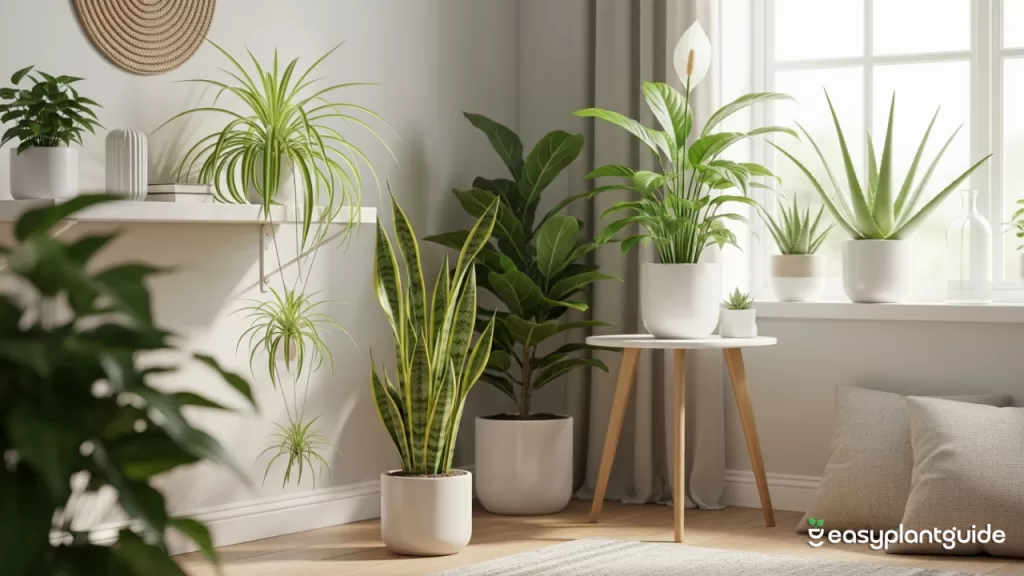
Where you place your plants matters for cleaning effectiveness:
- Near windows for sunlight exposure.
- In rooms you use most, like bedrooms and living rooms.
- Close to electronics to counteract pollutants.
- Bathrooms for moisture-loving plants like Boston Fern.
- Office desks to improve focus and reduce fatigue.
Plants That Remove Specific Toxins
| Toxin Type | Best Plant Options |
|---|---|
| Formaldehyde | Spider Plant, Aloe Vera, Bamboo Palm |
| Benzene | Peace Lily, Rubber Plant, Aloe Vera |
| Xylene | Spider Plant, Boston Fern |
| Ammonia | Peace Lily, Bamboo Palm |
| Trichloroethylene | Rubber Plant, Boston Fern |
Conclusion
Indoor plants are more than just décor—they’re natural, low-cost air purifiers that can enhance your health, mood, and living space. Whether you’re a beginner or a green-thumbed enthusiast, adding a few of these plants for indoor air purification can make a tangible difference in the air you breathe. So, why wait? Start your green journey today and let your home thrive with life, beauty, and cleaner air.
Explore more plant blogs and grow your green journey with us.