
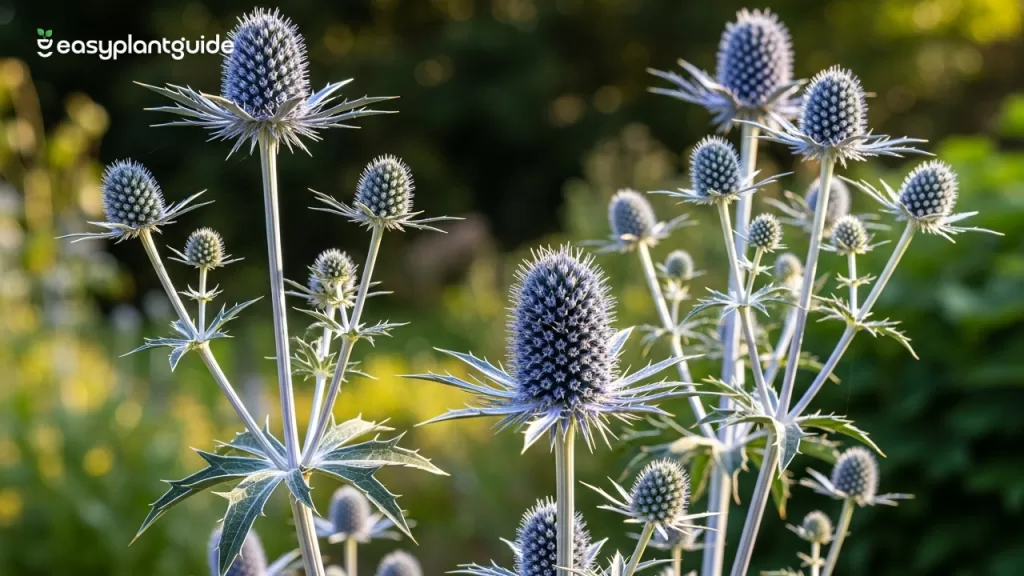
Have you ever seen a flower that looks like it’s been dipped in silver and kissed by the sea? That’s the magic of Eryngium giganteum plants, also known as Miss Willmott’s Ghost. These striking perennials aren’t just pretty faces—they’re hardy, easy to grow, and perfect for gardeners who love something a little wild yet elegant.
In this guide, we’ll dig deep into everything you need to know about growing, caring for, and loving Eryngium giganteum. Whether you’re a beginner or a seasoned gardener, this plant has something enchanting to offer.
What Is Eryngium Giganteum?
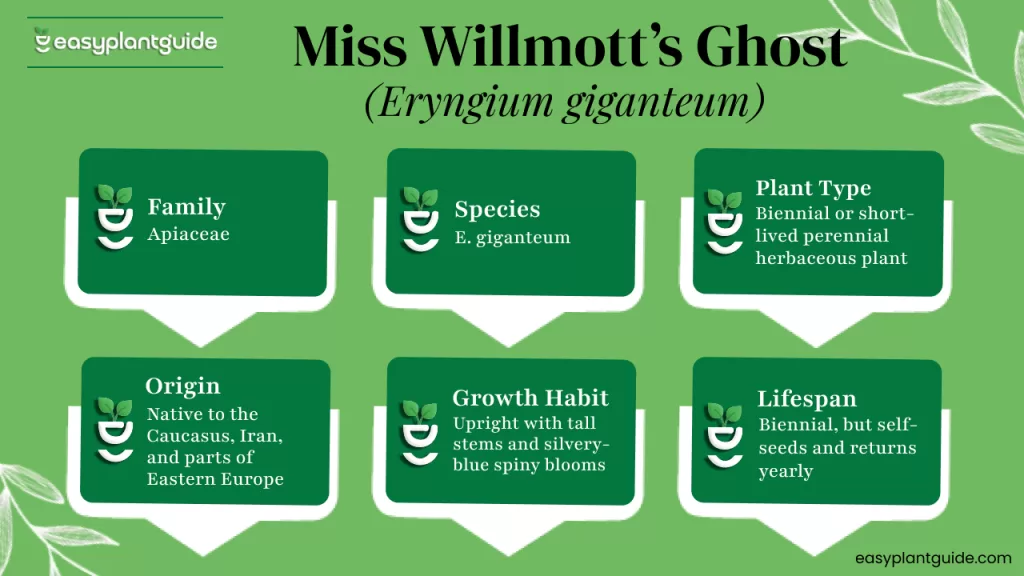
Eryngium giganteum is a striking perennial plant from the Apiaceae family, well-known for its silvery, metallic-blue flower heads that resemble thistles. Native to the Caucasus and Iran, this captivating species has been cherished in gardens for centuries for its unique architectural beauty and remarkable resilience. Its spiny, cone-like blooms surrounded by silvery bracts give Eryngium giganteum a dramatic and almost ghostly appearance, especially when the light catches its metallic sheen.
Often referred to by its charming common names—Miss Willmott’s Ghost, Sea Holly, or Giant Eryngium—this plant stands out as a bold focal point in garden beds and borders. Beyond its eye-catching look, Eryngium giganteum is prized for its toughness, drought tolerance, and ability to thrive in poor, well-drained soils. It’s also a magnet for pollinators like bees and butterflies, making it both a decorative and ecologically beneficial addition to any garden. Its long-lasting flowers are equally valued in both fresh bouquets and dried floral arrangements.
The Story Behind “Miss Willmott’s Ghost”
The name “Miss Willmott’s Ghost” comes with a charming piece of gardening folklore. It’s said that Ellen Willmott, a famous British horticulturist from the late 19th and early 20th centuries, adored Eryngium giganteum plants so much that she carried its seeds in her pockets and secretly scattered them in other people’s gardens. When the silvery, ghost-like blooms appeared months later, gardeners began calling the mysterious plant “Miss Willmott’s Ghost.”
The nickname beautifully captures both the ethereal beauty of Eryngium giganteum plants and the playful spirit of Ellen Willmott herself. The plant’s shimmering bracts glow in sunlight and take on an almost spectral quality under the moon, living up perfectly to its ghostly name. Whether or not the tale is true, it has become an enduring legend in horticulture—adding a touch of mystery and personality to the timeless charm of Eryngium giganteum plants.
Why You’ll Love Eryngium Giganteum Plants
These plants aren’t just about looks—they’re practical and beneficial too! Here’s why gardeners swear by them:
- Unique Beauty: Their silvery-blue glow stands out in any garden.
- Low Maintenance: Once established, they thrive with little attention.
- Drought-Tolerant: Perfect for sunny, dry spots.
- Pollinator Magnet: Bees and butterflies can’t resist them.
- Great for Bouquets: Their stiff stems make them excellent for dried arrangements.
Eryngium Giganteum Plants Appearance and Features
Eryngium giganteum has a truly architectural form. Each stem bears cone-shaped flower heads surrounded by spiky, silver bracts. The plant grows about 90–120 cm tall and adds dramatic texture to borders and rock gardens.
| Feature | Description |
|---|---|
| Height | 90–120 cm (3–4 ft) |
| Bloom Time | Summer (June–August) |
| Flower Color | Silver-blue |
| Foliage | Deep green, spiny edges |
| Soil Type | Well-drained, sandy |
| Light | Full sun |
Ideal Growing Conditions for Eryngium Giganteum
To help your Eryngium giganteum plants thrive, provide them with the right growing conditions. These plants are true sun lovers and need at least six to eight hours of direct sunlight each day. The more sunlight they receive, the brighter and more metallic their silvery-blue glow becomes.
When it comes to soil, Eryngium giganteum plants prefer sandy or gravelly soil that drains well. Avoid heavy clay or soggy soil, as poor drainage can easily lead to root rot. Good airflow and slightly dry conditions are key to keeping them healthy.
In terms of watering, moderation is essential. Eryngium giganteum plants dislike sitting in wet soil, so only water when the soil feels completely dry. Once established, they are drought-tolerant and require very little maintenance, making them perfect for low-water gardens.
How to Grow Eryngium Giganteum from Seeds
Growing Eryngium giganteum plants from seed is an easy and rewarding way to add these striking blooms to your garden. Start by sowing the seeds in autumn or early spring, using well-draining compost or sandy soil to mimic their natural environment. Cover the seeds lightly with a thin layer of soil—don’t bury them too deep, as they require some light to germinate properly. Keep the temperature cool and the soil just slightly moist, as germination can take several weeks. Once the seedlings are large and sturdy enough to handle, transplant them carefully into their final sunny location, allowing enough space for each plant to grow and develop its iconic silvery-blue flower heads.
Planting Eryngium Giganteum Outdoors
- Wait for frost to pass: Always plant Eryngium giganteum plants after the last frost to protect young seedlings from cold damage.
- Choose a sunny location: Pick a bright, open spot since these plants need full sunlight to grow strong and produce vibrant blooms.
- Provide proper spacing: Space each plant about 45–60 cm apart to give them enough room to develop their tall stems and spiky flower heads.
- Improve soil drainage: Mix in a layer of gravel or coarse sand to ensure the soil drains well, preventing root rot and excess moisture.
- Water carefully: Water thoroughly right after planting to help the roots settle, but avoid overwatering—Eryngium giganteum plants prefer slightly dry conditions once established.
Eryngium Giganteum Care Tips
- Watering Routine: Water Eryngium giganteum plants sparingly, as they prefer dry conditions. Let the soil dry out completely between waterings to prevent root rot.
- Fertilizing: Eryngium giganteum plants don’t need much feeding. A light layer of compost in spring is enough to support healthy growth and strong blooms.
- Pruning & Deadheading: Remove faded flowers to promote new blooms. In late autumn, cut Eryngium giganteum plants back to ground level to keep them neat and ready for the next season.
Benefits of Growing Eryngium Giganteum Plants
1. Drought-Resistant and Eco-Friendly
One of the greatest advantages of growing Eryngium giganteum plants is their exceptional drought tolerance. They thrive in dry, well-drained soil and require very little water once established. This makes them an eco-friendly choice for sustainable gardens that conserve water and support a low-maintenance landscape.
2. Perfect for Pollinator Gardens
Eryngium giganteum plants are a magnet for bees, butterflies, and other beneficial insects. Their nectar-rich flowers provide an excellent food source throughout the blooming season, making them a valuable addition to pollinator-friendly gardens that encourage biodiversity.
3. Low-Maintenance and Hardy
Another major benefit of Eryngium giganteum plants is their easy care. Once established, they require minimal attention, thrive in poor soil, and are rarely affected by pests or diseases. Their resilience makes them ideal for gardeners seeking beauty without constant upkeep.
Common Problems and How to Fix Them
1. Preventing Root Rot in Eryngium Giganteum Plants
Although Eryngium giganteum plants are hardy, they can suffer from root rot if grown in poorly drained soil. This issue is most common in areas that retain excess moisture. To prevent it, use well-draining, sandy soil and avoid overwatering. Ensuring proper drainage will keep the roots healthy and the plant thriving.
2. Fixing Flopping Stems in Eryngium Giganteum Plants
Flopping stems often occur when Eryngium giganteum plants are grown in shaded areas. These plants need full sun to develop strong, upright stems. Moving them to a brighter, sunnier location helps maintain their structure and prevents the stems from bending or collapsing under their own weight.
3. Protecting Eryngium Giganteum Plants from Slugs and Snails
While pests are rarely a problem, slugs and snails can occasionally target young Eryngium giganteum plants. Protect new seedlings by using organic barriers or natural repellents early in their growth. Once mature, the plant’s spiny texture generally deters pests from returning.
Eryngium Giganteum in Garden Design
If you want to add drama, texture, and structure to your garden, Eryngium giganteum plants are an excellent choice. They pair beautifully with ornamental grasses, lavender, and echinacea to create a wild, natural look that feels effortless yet elegant. In garden borders, they provide striking contrast against softer blooms, adding depth and visual interest to the landscape. These hardy plants also thrive in rock gardens, where their ability to handle poor, dry soil truly shines. Beyond their beauty, Eryngium giganteum plants attract bees and butterflies, making them perfect for wildlife-friendly gardens. Even after blooming, they retain their silvery color when dried, extending their appeal long after summer ends.
Companion Plants for Eryngium Giganteum
To enhance the impact of Eryngium giganteum plants in your garden, combine them with other complementary species. Lavender, Rudbeckia, Echinacea, Sedum, and Verbena bonariensis all pair wonderfully, bringing variety in color and texture while maintaining a cohesive, natural aesthetic. Together, these plants create a vibrant and pollinator-friendly garden that remains visually stunning throughout the growing season.
Using Eryngium in Floral Arrangements
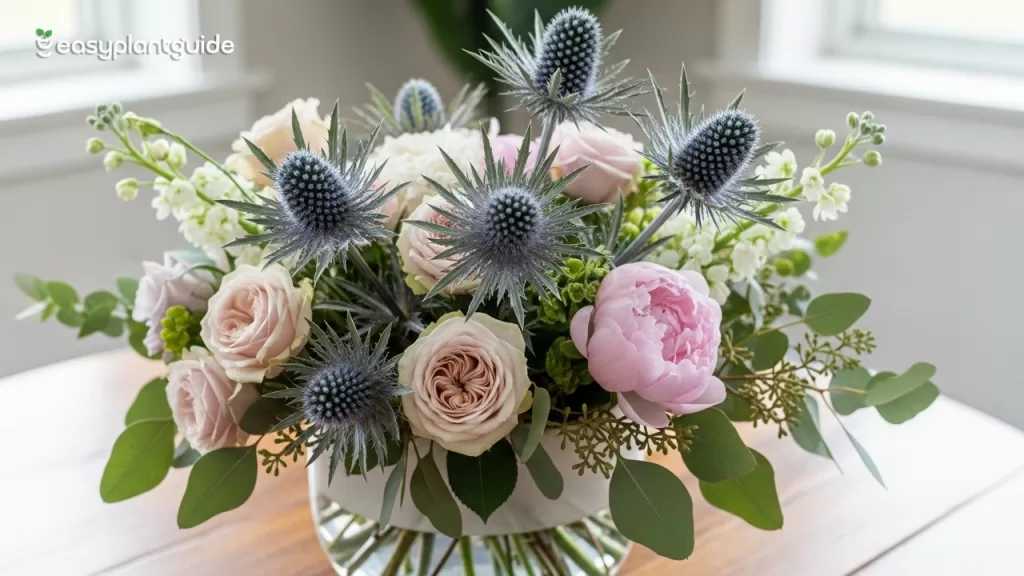
This plant is a florist’s favorite! The spiky, metallic texture adds contrast to soft flowers. Here’s why it’s perfect for arrangements:
- Dries beautifully without losing color
- Adds a unique texture and height
- Works well in rustic or boho bouquets
- Pairs with roses, hydrangeas, or dried grasses
- Long-lasting—up to months in dried form
Propagating Eryngium Giganteum
There are two main ways to propagate Eryngium giganteum plants, though one method is far more successful than the other. Growing Eryngium giganteum plants from seeds is the easiest and most reliable method. These plants naturally self-seed in the garden, often returning year after year without much effort. To collect seeds, allow the flower heads to dry naturally, then gather and store them for sowing in the next season.
Propagation by division is less common for Eryngium giganteum plants because they have deep taproots that don’t tolerate disturbance. Attempting to divide mature plants can damage the roots and stunt growth, so it’s generally best to grow new ones from seed instead.
Seasonal Care Guide
| Season | Care Tips |
|---|---|
| Spring | Sow seeds, add compost, remove old growth |
| Summer | Water sparingly, deadhead spent blooms |
| Autumn | Let seeds fall naturally or collect them |
| Winter | Cut back stems and mulch lightly |
Eryngium Giganteum for Dried Flower Art
If you enjoy crafts or floral design, Eryngium giganteum plants are a wonderful choice for creative dried flower projects. When dried, their silvery-blue flower heads develop a sculptural, metallic look that adds elegance and texture to any arrangement. The striking form of Eryngium giganteum plants makes them perfect for creating beautiful wreaths, wall hangings, table centerpieces, and DIY bouquets.
Their distinctive spiky blooms blend perfectly with rustic, modern, or minimalist home décor, bringing a natural artistic touch that lasts for a long time. Whether used on their own or combined with other dried flowers, Eryngium giganteum plants add timeless beauty and sophistication to any floral artwork.
Conclusion
The Eryngium giganteum plant is proof that nature doesn’t have to be complicated to be extraordinary. With its ghostly glow, drought tolerance, and year-round charm, it’s a must-have for any garden. Whether you want to attract pollinators, create dramatic floral displays, or just enjoy a low-maintenance showstopper, Miss Willmott’s Ghost won’t disappoint.
Explore more plant blogs and grow your green journey with us.