
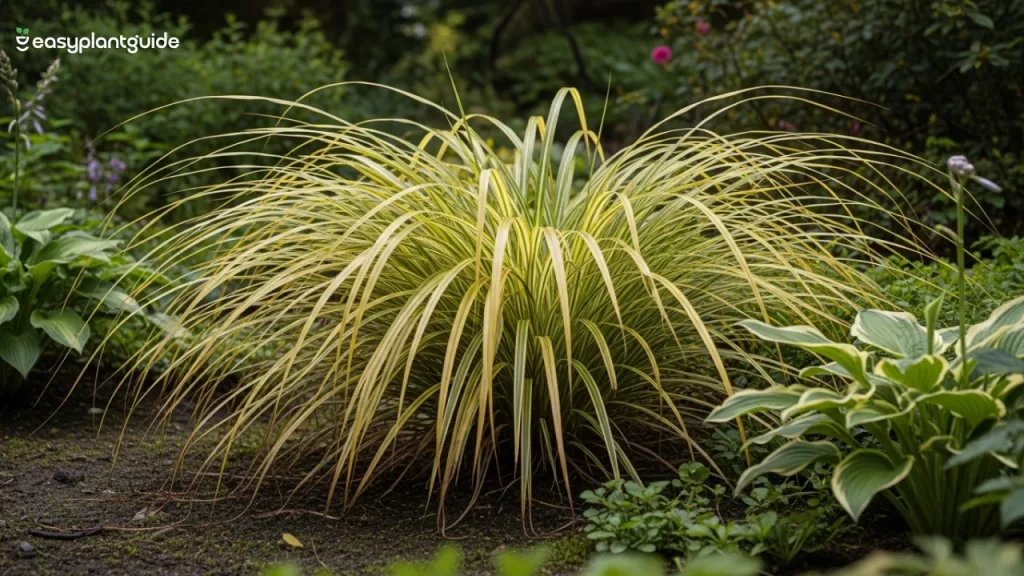
Hakonechloa macra ‘Aureola’, often known as the Japanese forest grass, is one of those plants that instantly transforms any garden space. With its arching golden-green blades and soft, flowing texture, it gives landscapes a calming, almost waterfall-like effect. If you’re looking for a plant that brings elegance without demanding constant attention, this beauty is the perfect pick. In this guide, we’ll explore everything you need to know—care tips, planting methods, design ideas, troubleshooting, and more. Let’s dive in!
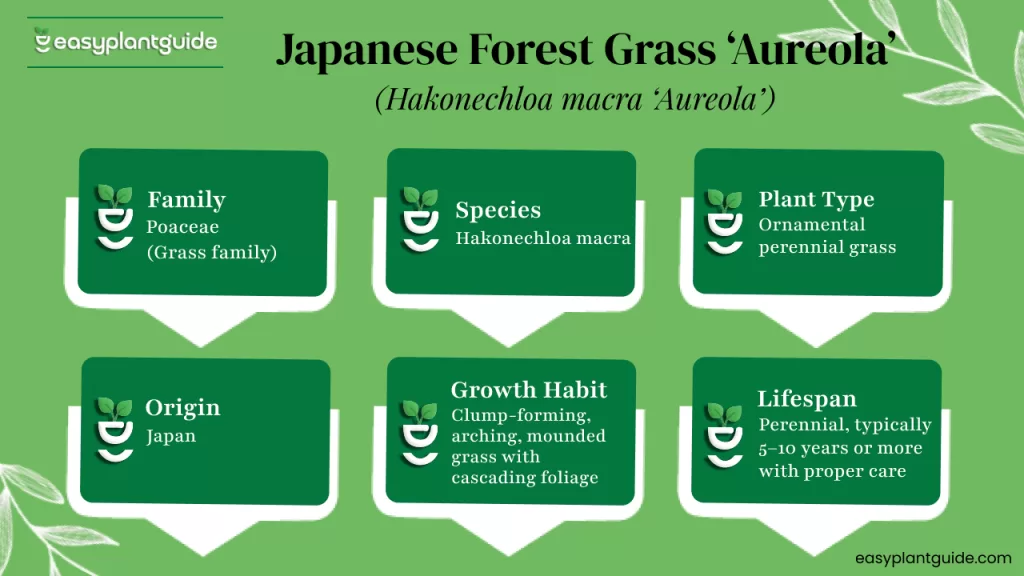
What Makes Hakonechloa Macra Aureola Special?
- Its arching, flowing blades create a sense of motion, like a golden waterfall gently swaying in the breeze.
- The variegated yellow and green leaves brighten shady corners where most plants struggle to make an impact.
- Soft cascading foliage contrasts beautifully with sturdier plants and hardscape elements, adding depth and interest.
- In summer, the foliage is golden-green; in autumn, it develops pinkish tones; and in winter, straw-like leaves maintain subtle elegance.
- Thrives in partial to full shade, tolerates a variety of well-drained, humus-rich soils, and requires minimal care.
- Combines beauty, color, texture, and ease of care, making it ideal for enhancing any garden or landscape design.
Key Features of Hakonechloa Macra Aureola
1. Appearance and Foliage
Hakonechloa Macra Aureola has soft, cascading blades that shift with the wind like silky ribbons. Its colors intensify depending on the season—golden in summer, tinged with pink in autumn, and straw-like in winter.
2. Growth Habit
It forms neat mounds that slowly spread, making it perfect for borders, pathways, woodland gardens, and container planting.
3. Shade-Loving Nature
Hakonechloa macra Aureola thrives in partial to full shade, making it an excellent choice for spots where many plants struggle. Its variegated foliage actually becomes more vibrant in shadier areas. This makes it perfect for brightening dim corners of the garden.
4. Low-Maintenance Growth
This grass requires minimal care once established, needing only consistent moisture and occasional trimming. It’s resistant to most pests and diseases, making it ideal for beginner gardeners. Its slow, controlled growth also reduces the need for frequent maintenance.
5. Year-Round Interest
Even when not in active growth, Hakonechloa Aureola adds texture and structure to the garden throughout the seasons. In autumn, its pinkish hues create a warm glow, and in winter, its straw-like foliage maintains visual interest. This makes it a standout plant in all four seasons.
Best Growing Conditions for Hakonechloa Macra Aureola
Light Requirements
Hakonechloa Macra Aureola performs best in partial to full shade, where its golden variegation becomes more vibrant and dramatic. While it can tolerate gentle morning sunlight, intense afternoon sun can scorch its delicate blades and cause them to fade. If you want the richest, most striking coloration, place it in a shaded or dappled-light spot that mimics its natural woodland habitat.
Soil Preferences
This plant thrives in moist, humus-rich, well-drained soil, much like the fertile forest floors of its native Japan. The soil should retain moisture without becoming soggy, as waterlogged conditions can lead to root rot. Mixing compost or organic matter into the soil enhances its structure, boosts nutrients, and helps maintain the consistent moisture Hakonechloa Aureola loves for healthy, lush growth.
How to Plant Hakonechloa Macra Aureola
1. Choose a Semi-Shaded Location
Pick a spot that receives partial to full shade, as Hakonechloa Macra Aureola thrives away from harsh sunlight. Shady areas help maintain its bright golden color and prevent leaf scorching. This makes it ideal for woodland gardens or spots under trees.
2. Loosen the Soil to Improve Drainage
Before planting, dig and loosen the soil to at least 6–8 inches deep. Breaking up compacted soil allows roots to spread easily and reduces the risk of waterlogging. Well-aerated soil is key to healthy growth.
3. Mix Compost or Organic Matter
Incorporate compost, leaf mold, or well-rotted manure into the soil. This boosts nutrients, improves moisture retention, and creates the rich, humus-filled environment Hakonechloa prefers. Healthy soil leads to fuller, brighter foliage.
4. Plant at the Same Soil Depth It Came In
Place the plant in the hole so that the crown sits at the same depth as it was in its pot. Planting too deep can suffocate the roots, while planting too shallow may dry them out. Gently firm the soil around the base.
5. Water Thoroughly After Planting
Give the plant a deep, soaking water to help settle the soil around the roots. Keep the soil consistently moist during the first few weeks as the plant establishes. Mulching around the base helps retain moisture and regulate temperature.
Hakonechloa Macra Aureola Watering and Moisture Needs
- Water regularly during the first growing season
- Avoid waterlogging the roots
- Keep soil consistently moist in summer
- Reduce watering in winter
- Mulch to retain moisture
Seasonal Care Guide
1. Spring Care
Spring is the perfect time to refresh your Hakonechloa Macra Aureola for the growing season. Trim back all the old, dried leaves from winter to make room for soft new shoots. A light layer of compost or organic mulch helps boost nutrients and encourages lush, vibrant growth as temperatures warm.
2. Summer Maintenance
During summer, this plant needs consistent moisture to stay healthy and bright. Keep the soil evenly moist—never dry or waterlogged—especially during hot spells. Watch for yellowing or crispy leaves, as these are signs of too much direct sun. Adding a bit of shade cloth or relocating potted plants can help prevent stress.
3. Fall Preparation
In fall, Hakonechloa Macra Aureola transforms beautifully, often developing pink or reddish tones that add warmth to the garden. This is a low-maintenance season where the plant naturally begins to slow down. Simply remove damaged leaves and ensure the soil remains slightly moist as it prepares for winter.
4. Winter Protection
While this grass is hardy, severe cold can still stress the roots. Apply a light layer of mulch around the base to protect it from freezing temperatures and frost heave. Avoid heavy cutting during winter—leave the straw-like foliage for added texture and insulation until early spring.
Growing Conditions Overview
| Growing Requirement | Ideal Conditions |
|---|---|
| Light | Partial–full shade |
| Soil | Moist, humus-rich, well-draining |
| Water | Consistent, not soggy |
| Hardiness | USDA zones 5–9 |
| Spread | Slow, clump-forming |
Landscape Uses for Hakonechloa Aureola
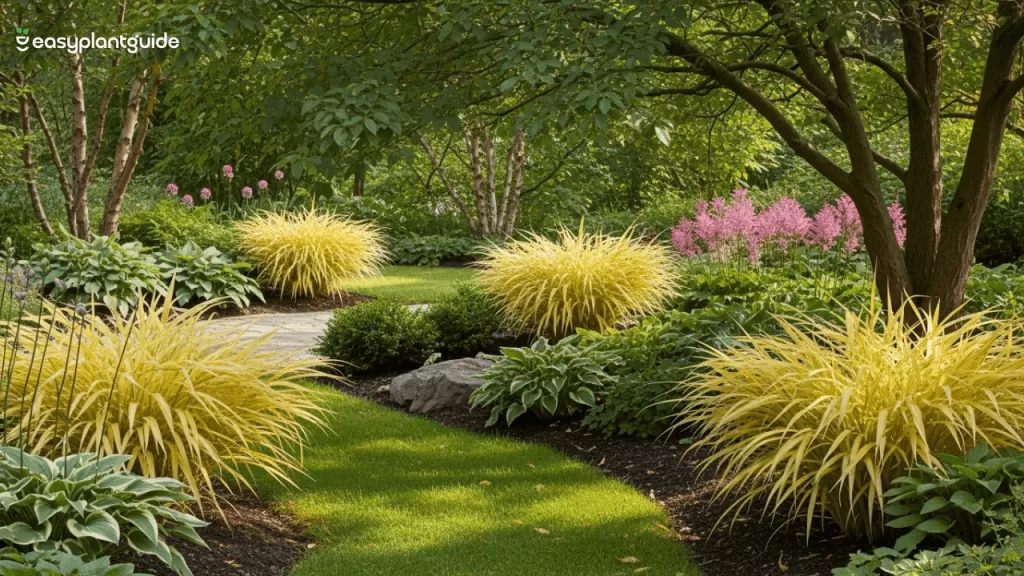
- Woodland gardens
- Shady borders
- Under trees
- Along walkways
- Japanese-style gardens
Hakonechloa Macra Aureola Design Benefits
1. Adds Graceful Movement to the Garden
Hakonechloa Macra Aureola brings life to still areas with its flowing, arching foliage that dances in the breeze. This gentle movement creates a dynamic, calming effect, making garden spaces feel more natural and serene. It’s perfect for adding visual interest to corners or spots that would otherwise appear static.
2. Provides Striking Golden Contrast
The elegant golden tones of Hakonechloa Macra Aureola stand out beautifully against darker green plants or shaded areas. This vibrant contrast draws the eye and highlights the grass as a focal point. It brightens up shady corners, giving even dim areas a warm, inviting glow.
3. Softens Hard Edges and Enhances Layers
The grass’s soft, cascading blades help soften the harsh lines of pathways, rocks, or garden beds, creating a seamless blend with natural elements. It works well alongside stones and textured garden features while enhancing the layered, multi-dimensional look of landscaped spaces.
Companion Plants That Pair Well
This ornamental grass pairs wonderfully with shade-loving plants such as hostas, ferns, heucheras, astilbes, and coral bells. These combinations create a visually rich and textural garden display that feels lush and serene. When grouped together, they highlight each other’s colors and textures, adding a sense of harmony and balance to woodland or layered garden designs.
How to Propagate Hakonechloa Macra Aureola
Propagation is easiest through division, ideally performed in early spring. Use a sharp spade to separate healthy clumps without damaging the roots. Replant the divided sections immediately into prepared soil, ensuring they are at the same depth as before. Water thoroughly after planting and keep the soil consistently moist until the new plants are well established and actively growing.
Common Problems and Solutions
1. Yellow Leaves?
Yellowing leaves are usually a sign of too much direct sun or insufficient water. Adjust the plant’s location to a shadier spot or increase watering frequency to restore its vibrant color. Maintaining consistent soil moisture helps prevent future yellowing.
2. Slow Growth?
Slow growth is often caused by poor soil quality or lack of nutrients. Adding compost or organic matter improves fertility and encourages healthy, vigorous foliage. Regular feeding during the growing season can also boost performance.
3. Root Rot?
Root rot occurs when the soil remains waterlogged or poorly drained. Ensure proper drainage by amending the soil with organic matter and avoid overwatering. Choosing a slightly elevated or sloped planting site can also help prevent excess moisture around the roots.
Tips for Growing a Lush, Vibrant Plant
1. Protect from Harsh Sunlight
Avoid exposing Hakonechloa Macra Aureola to intense afternoon sun, as it can scorch the delicate leaves and dull its vibrant colors. Placing it in partial to full shade ensures the foliage remains bright and healthy throughout the growing season.
2. Maintain Moisture and Nutrients
Keep the soil consistently moist, but avoid waterlogging, to support strong growth and lush foliage. Adding a layer of organic mulch annually helps retain moisture, improve soil fertility, and protect roots from temperature extremes.
3. Encourage Full, Healthy Growth
Grouping multiple clumps together creates a fuller, more dramatic visual effect in the garden. Trim dead or damaged foliage early in spring to encourage fresh, vibrant shoots, ensuring the plant maintains its elegant, flowing appearance year-round.
4. Regular Monitoring for Pests and Diseases
Although generally low-maintenance, keep an eye out for pests or fungal issues. Early detection and proper care, like improving airflow and avoiding overwatering, help maintain plant health and prevent potential damage.
5. Seasonal Adjustments
Adapt your care routine according to the seasons. Water more frequently in summer heat, protect roots with extra mulch in winter, and prune in spring to stimulate new growth, ensuring the grass looks vibrant all year long.
Final Thoughts on Hakonechloa Macra Aureola
Hakonechloa macra ‘Aureola’ is one of those plants that quietly elevates your entire garden. Its golden hues, gentle movement, and low-maintenance nature make it a top choice for anyone wanting beauty without the struggle. Whether you’re designing a tranquil shade garden or simply need a graceful groundcover, this ornamental grass is sure to add charm and sophistication.
If you provide it with the right balance of shade, moisture, and care, it will reward you with year-round elegance. Ready to add some cascading magic to your garden? Hakonechloa ‘Aureola’ might just be your new favorite plant.
Explore more plant blogs and grow your green journey with us.