
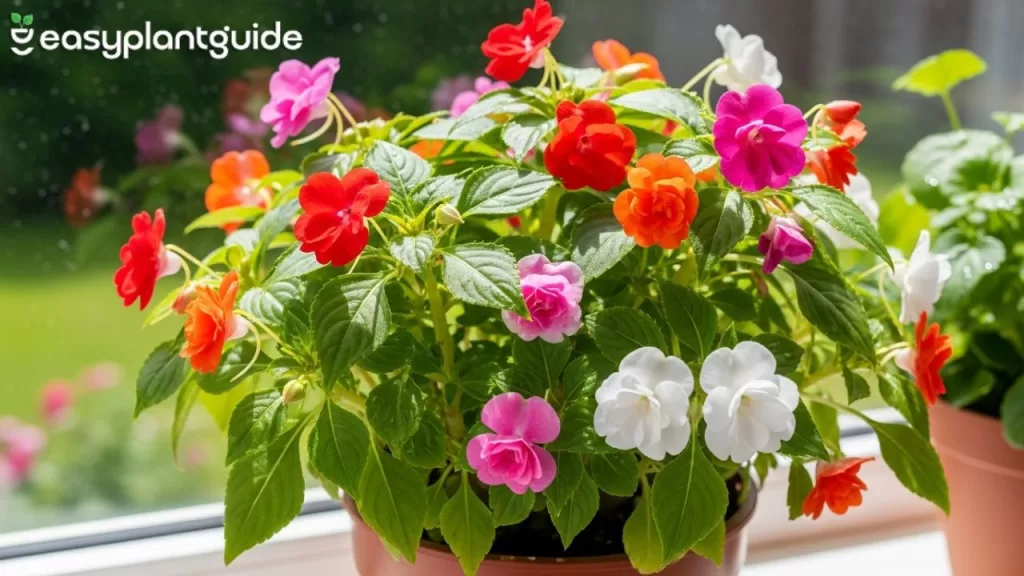
The Balsamina plant, also known as Impatiens balsamina or Garden Balsam, is a radiant gem in the gardening world. Native to tropical Asia, this vibrant flowering plant has long captured the hearts of gardeners for its lively charm and effortless growth. The moment you plant it, your garden seems to awaken—its bright blooms burst like splashes of paint against the green canvas of leaves, transforming even the dullest corners into cheerful, inviting spaces.
What makes the Balsamina plant truly special is how easily it thrives. It doesn’t demand much attention, yet it rewards you with a stunning display of colors throughout the summer months. Its delicate petals, which come in shades of pink, red, white, and purple, seem almost velvety, while the lush green foliage adds a perfect balance of freshness and softness. Whether it’s planted in garden beds, borders, or pots, Balsamina adapts beautifully to its surroundings, bringing life wherever it grows.
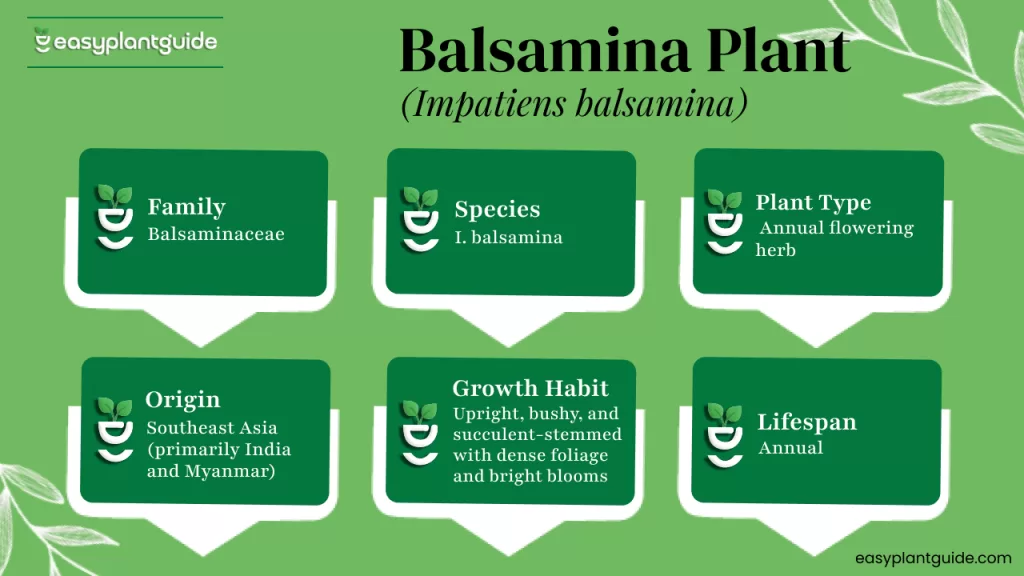
Quick Facts About the Balsamina Plant
Before we dive deep, here’s a quick glance at what makes this flower special.
| Feature | Description |
| Scientific Name | Impatiens balsamina |
| Common Names | Garden Balsam, Touch-Me-Not |
| Family | Balsaminaceae |
| Type | Annual Flowering Plant |
| Native To | Southeast Asia |
| Height | 12–30 inches |
| Blooming Season | Summer to Early Fall |
| Flower Colors | Pink, Red, White, Purple |
What Is the Balsamina Plant?
The Balsamina plant is a tropical annual flower admired for its eye-catching, cup-shaped blossoms that come in shades of pink, red, white, and purple. With its soft, succulent stems and fast-growing nature, it easily adapts to warm, humid environments. This low-maintenance beauty blooms abundantly with minimal effort, making it a favorite among both beginner gardeners and experienced plant enthusiasts. Whether planted in garden beds or pots, Balsamina adds a lively burst of color and charm to any outdoor space if you take good care of this plant.
Native Habitat and Origin
Originally native to India, Myanmar, and other parts of Southeast Asia, the Balsamina plant naturally thrives in warm, humid regions, especially in moist forests and along riverbanks. It loves filtered sunlight, rich soil, and consistent moisture—conditions that mirror its tropical origins. When cultivated in home gardens, replicating this environment by providing partial shade, regular watering, and well-draining soil helps the plant grow lush and vibrant, producing its signature colorful blooms throughout the warm months of the year.
Physical Features and Varieties
Each Balsamina variety has a unique personality. You’ll find it in shades of pink, red, purple, and white each bloom slightly different but equally captivating. Here are a few highlights of its features:
- Brightly colored blooms that resemble mini roses
- Soft, lance-shaped leaves with serrated edges
- Succulent green stems that hold water
- Compact growth suitable for pots and borders
- Seed pods that burst open when touched—hence the nickname “Touch-Me-Not”
How to Grow Balsamina from Seeds
Growing Balsamina from seeds is one of the easiest and most rewarding gardening experiences. Start by choosing rich, well-draining soil to give the seeds a healthy foundation. Sow them directly in the garden or pot after the last frost, keeping the soil consistently moist but not waterlogged. Place your container or bed in partial sunlight, where it can enjoy gentle warmth and light. Within 10 to 14 days, you’ll notice tiny seedlings emerging, and in just 8 to 10 weeks, vibrant blooms will appear—continuing to brighten your garden until fall. By following this instructions you will become in growing a healthy Balsamina Plant.
Ideal Growing Conditions for Balsamina
Light
- Prefers partial shade or filtered sunlight.
- Too much direct sunlight can cause leaf scorch.
- Morning sun and afternoon shade work best.
Temperature and Humidity
- Thrives in temperatures between 20°C to 30°C.
- Needs high humidity, similar to tropical climates.
- Avoid cold drafts and frost at all costs.
Soil and Nutrition
- Loamy, well-draining soil with organic compost works perfectly.
- Maintain a soil pH between 6.0 and 7.0.
Watering and Feeding Tips
The Balsamina plant loves consistency—neither drought nor overwatering. Here are 5 essential watering and feeding tips:
- Water when the top inch of soil feels dry.
- Avoid overhead watering to prevent fungal issues.
- Use organic compost every 3–4 weeks.
- Keep the soil slightly moist during the growing season.
- Mulch around the base to retain soil moisture.
Pruning and Maintenance
Regular maintenance is the secret to keeping your Balsamina plant bushy, healthy, and bursting with blooms all season long. To encourage fuller growth, pinch back long stems so the plant can branch out more effectively. Remove any yellow or damaged leaves to maintain a neat appearance and prevent disease. Make sure to deadhead spent flowers regularly—this simple step helps the plant focus its energy on producing new blooms. It’s also a good idea to check under the leaves for pests like aphids or mites and treat them early if found. Lastly, if you’re growing Balsamina in containers, refresh the soil once a year to provide fresh nutrients and ensure strong, continuous growth.
Common Problems and Their Fixes
Even though the Balsamina plant is low-maintenance, it can face a few issues if ignored. Here are the common ones and how to fix them:
| Problem | Cause | Solution |
| Yellow Leaves | Overwatering | Let the soil dry slightly before watering again |
| Powdery Mildew | High humidity with poor air flow | Improve ventilation, avoid wetting leaves |
| Aphids | Pests feeding on sap | Use neem oil or insecticidal soap |
| Root Rot | Poor drainage | Repot with fresh, well-draining soil |
| Weak Blooms | Lack of nutrients | Feed with a balanced fertilizer |
Propagation Techniques
You can propagate Balsamina through seeds or stem cuttings.
From Seeds
- Collect mature seed pods before they burst.
- Dry them and store in a cool place.
- Sow in spring for new growth.
From Cuttings
- Cut a 4-inch healthy stem below a leaf node.
- Remove lower leaves and dip the cut end in rooting hormone.
- Place in moist soil or water until roots appear.
Uses and Landscape Design
Balsamina plants bring life, color, and charm to any garden layout with their vibrant blooms and lush foliage. They make excellent border plants, adding a striking color contrast to garden edges. You can also combine them with ferns or begonias to create a rich, tropical look. For smaller spaces, Balsamina grows beautifully in pots, brightening up patios and balconies. They’re also ideal for butterfly and pollinator gardens, and their dense growth makes them perfect filler plants for flower beds.
Environmental and Health Benefits
This plant doesn’t just look pretty—it also contributes to your environment. Benefits include:
- Attracts bees and butterflies.
- Helps reduce soil erosion.
- Improves air quality around your garden.
- Creates a cooling effect in humid climates.
- Some traditional uses for skin irritation and inflammation.
Fun Facts About Balsamina
The Balsamina plant hides some truly fascinating secrets that make it even more captivating. Its seed pods have a unique “exploding” feature, bursting open at the slightest touch to scatter seeds far and wide. In many Asian cultures, the plant’s colorful petals are used as a natural dye for fingernails, while in the language of flowers, it symbolizes motherly love and kindness. During the Victorian era, gardeners admired it as a symbol of patience, and in some regions, its edible petals are even brewed into soothing herbal teas.
Quick Growing Conditions Table
| Condition | Ideal Range | Notes |
| Light | Partial shade | Avoid harsh midday sunlight |
| Temperature | 20°C–30°C | Sensitive to cold |
| Soil | Well-draining, rich in compost | Loamy mix is ideal |
| Watering | When top inch dries | Keep evenly moist |
| Fertilizer | Every 3–4 weeks | Use balanced organic feed |
Conclusion
The Balsamina plant is far more than just a splash of color in your garden—it’s a living expression of warmth, resilience, and natural simplicity. This plant doesn’t just grow; it thrives with grace, offering a steady reminder that beauty doesn’t always require constant effort. Even with minimal care, it rewards you generously with clusters of vibrant blooms that last for months, bringing life and charm to every corner they grace.
Each flower seems to tell a story of patience and quiet joy, opening day after day in radiant hues of pink, purple, red, and white. Its lush green foliage complements the blossoms perfectly, creating a lush tropical look that feels both fresh and soothing. Whether you tuck it into a backyard flower bed, line your garden borders with it, or place it in a sunny balcony pot, the Balsamina plant effortlessly transforms its surroundings into a miniature paradise of color and calm.
Explore more plant blogs and grow your green journey with us.