
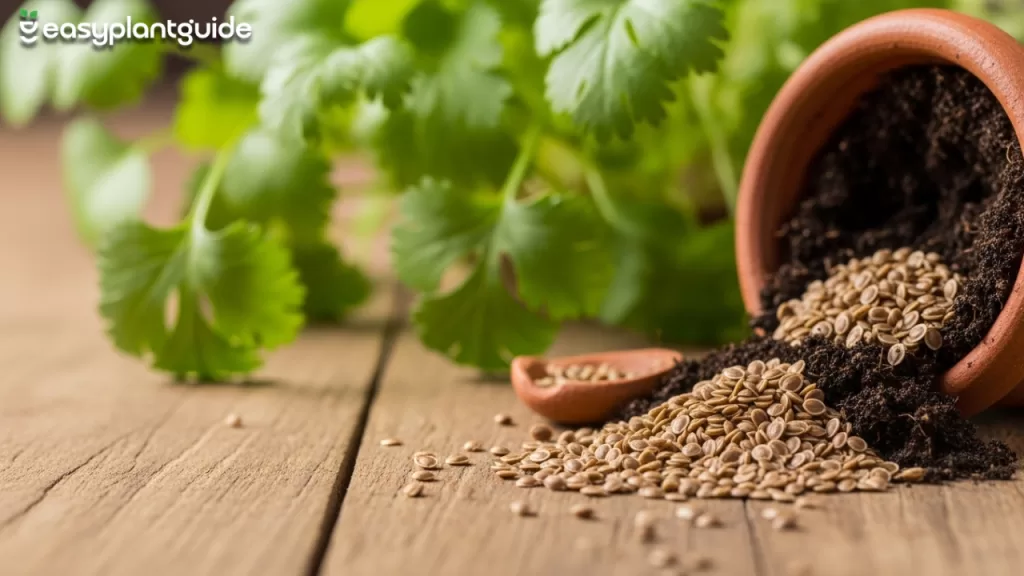
Fresh cilantro instantly elevates a dish — whether it’s sprinkled over tacos, curries, or salads. But what many people don’t realize is that this flavor-packed herb begins with tiny cilantro seeds, which hold the key to a thriving, aromatic garden. Growing cilantro from seed is simple once you understand its rhythm and needs. In this guide, we’ll explore everything about cilantro seeds — from planting and germination to harvesting and storing — so you can enjoy endless homegrown herbs bursting with freshness.
Freshly grown cilantro not only enhances your dishes but also fills your garden with a refreshing aroma that feels like nature’s own perfume. Watching those tiny cilantro seeds sprout into vibrant green leaves is deeply satisfying — a reminder of how small beginnings can yield big rewards. Whether you’re growing it on a sunny windowsill or in your backyard, cilantro adds beauty, flavor, and life to your space. Plus, there’s nothing quite like harvesting your own herbs right before cooking!
What Are Cilantro Seeds?
Cilantro seeds are the dried fruits of the Coriandrum sativum plant, a versatile herb that gives you both fresh leaves (cilantro) and flavorful seeds (coriander). Each round seed pod actually contains two tiny seeds inside, which explains why crushing them before planting improves germination. The seeds carry a citrusy, earthy aroma that enhances both your cooking and your garden. Whether you’re growing them for their lush leaves or their spice-rich seeds, cilantro offers a delightful dual-purpose crop.
Cilantro vs. Coriander: Are They the Same?
Here’s where many gardeners get confused. The plant Coriandrum sativum produces both cilantro (its fresh leaves) and coriander (its mature, dried seeds). In the U.S., “cilantro” refers to the leaves, while “coriander” means the seeds. However, in Europe and Asia, both are called “coriander.” Understanding this difference helps when buying seeds or reading recipes — because when you plant cilantro seeds, you’re actually sowing coriander!
| Term | Plant Part | Used As | Common Region |
| Cilantro | Leaves | Fresh Herb | North America |
| Coriander | Seeds | Spice | Global |
| Cilantro Seed | Seed Pod | For Planting | Gardening Context |
Why Grow Cilantro from Seed?
Starting cilantro from seed is one of the most rewarding gardening experiences. Seeds germinate easily in cool weather and develop strong roots, making them more adaptable than store-bought seedlings. You can also plant them repeatedly throughout the year for a continuous harvest. Plus, it’s more cost-effective and eco-friendly. With a single packet of cilantro seeds, you can produce fresh herbs all season long, customize your growing method, and enjoy knowing exactly what’s gone into your food.
Choosing the Right Cilantro Seeds
Not all cilantro seeds are created equal, so choosing the right variety makes a big difference. Look for organic, non-GMO, and slow-bolting varieties that resist premature flowering in hot weather. Slow-bolting types like Santo or Calypso are perfect for warmer climates. Freshness also matters — older seeds have lower germination rates. Always check the packaging date before buying, and store unused seeds properly to preserve their viability for next season’s planting.
How to Prepare Cilantro Seeds for Planting
Cilantro seeds have a tough outer shell, so prepping them helps them sprout faster. Start by gently crushing the seed pods between your fingers — each pod contains two viable seeds inside. Then, soak them in water overnight to soften the coat and encourage germination. After soaking, dry them briefly on a paper towel before planting. This little bit of pre-planting care can cut germination time nearly in half and increase your success rate dramatically.
Best Time to Plant Cilantro Seeds
Timing is everything with cilantro. Since it prefers cooler temperatures, early spring and fall are ideal planting seasons. In hot climates, cilantro tends to “bolt,” meaning it flowers early and stops producing leaves. Plant your cilantro seeds after the last frost in spring or when temperatures drop below 75°F (24°C) in autumn. For continuous harvest, sow new seeds every two weeks. This succession planting ensures a steady supply of fragrant, tender cilantro leaves all year.
Ideal Soil and Location
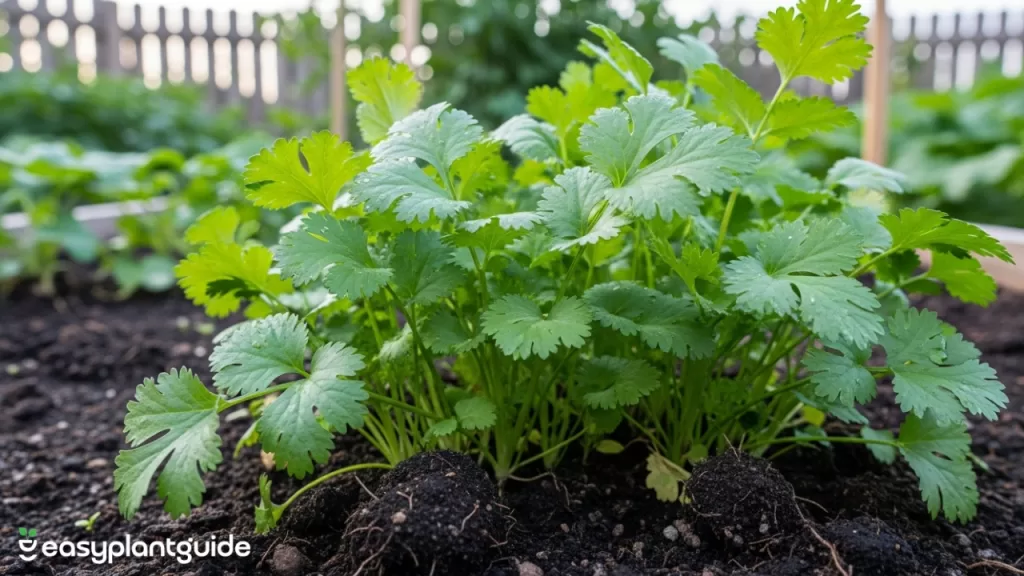
Cilantro thrives in well-drained, fertile soil that’s rich in organic matter. The pH should range between 6.2 and 6.8, which you can test using a simple soil kit. A sunny to partially shaded spot works best. If you live in a hot region, partial shade prevents heat stress and bolting. Mix compost into the soil before planting to enrich it naturally. Avoid heavy clay soil — cilantro roots prefer a loose, crumbly texture for easy growth and air circulation.
How to Plant Cilantro Seeds (Step-by-Step)
Planting cilantro is quick and rewarding. Start by loosening your soil about 6 inches deep to help root development. Sow seeds ¼ inch deep and 2 inches apart, then gently cover them with soil. Water immediately but lightly to settle the seeds. Cilantro usually germinates in 7–10 days under ideal conditions.
Planting Quick Tips:
- Always plant in cool weather.
- Space rows about 8 inches apart.
- Keep soil moist during germination.
- Thin seedlings to prevent crowding.
- Use mulch to conserve moisture.
Cilantro Seed Germination Tips
Germinating cilantro can sometimes test your patience. Maintain consistent moisture — not too dry, not waterlogged. The ideal germination temperature is 60–70°F (15–21°C). Avoid disturbing the soil once you’ve planted the seeds. If you’re growing indoors, place your pots near a sunny window or under grow lights. Be patient; cilantro seeds can take up to two weeks to sprout. Once they do, you’ll see delicate green shoots — a promising sign your herb garden is thriving.
Caring for Cilantro Plants
Once your cilantro plants are established, they require simple but consistent care. Water them two to three times a week, depending on your climate. Regular trimming encourages bushier growth and delays flowering. Fertilize with a mild organic liquid feed every three weeks. Watch for pests like aphids and whiteflies, which can damage tender leaves.
5 Quick Cilantro Care Tips:
- Keep soil evenly moist but never soggy.
- Harvest outer leaves regularly.
- Trim flowers to prevent bolting.
- Provide shade in hot weather.
- Rotate planting spots yearly for better soil health.
Common Problems with Cilantro Seeds
Cilantro is hardy, but like all plants, it faces challenges. Seeds may fail to germinate due to overly dry soil or planting too deep. Bolting happens when temperatures rise above 80°F. Yellow leaves often indicate poor drainage or overwatering. Fungal issues like powdery mildew can also occur in humid environments. Use neem oil or insecticidal soap if pests appear. With good soil management and proper watering, these common problems can easily be avoided.
Harvesting Cilantro
Cilantro is ready for harvest when it’s 4–6 inches tall. Cut outer leaves first, leaving inner shoots to keep growing. Regular harvesting keeps plants productive. If you want seeds, allow the plant to flower and form seed pods. Once pods turn brown and dry, clip them and let them air-dry indoors. Shake the dried pods to release the seeds, and you’ll have your very own coriander spice or seeds for the next planting season.
How to Store Cilantro Seeds
Proper storage ensures your cilantro seeds stay fresh for years. Once seeds are completely dry, store them in airtight glass jars or envelopes. Label each container with the variety and date. Keep them in a cool, dark place — ideally below 50°F (10°C). Avoid humidity, as moisture can lead to mold or spoilage.
5 Smart Storage Tips:
- Dry seeds thoroughly before storing.
- Use airtight jars or packets.
- Keep away from sunlight.
- Label containers clearly.
- Store in a cool, dry cupboard.
Cilantro Companion Plants
Cilantro is truly a garden multitasker — not only does it add flavor to your meals, but it also plays an important role in maintaining a healthy, balanced garden ecosystem. When planted alongside the right companions, cilantro helps repel pests, improve soil health, and enhance the growth of neighboring plants. For instance, tomatoes make excellent partners because cilantro’s strong scent naturally deters aphids and harmful insects that often attack tomato plants. Spinach grows well with cilantro since both enjoy similar soil and watering conditions, allowing them to thrive side by side without competing for nutrients.
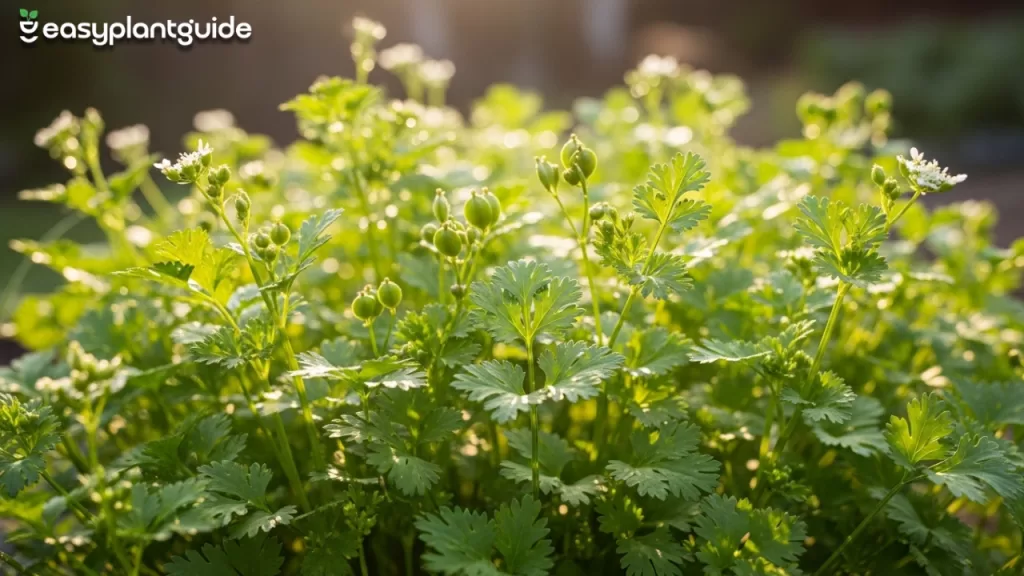
Pairing cilantro with basil enhances both flavor and aroma while keeping away pests like spider mites. Mint, with its strong fragrance, provides additional pest protection, creating a natural barrier against bugs. Meanwhile, carrots help by loosening the soil, ensuring cilantro roots can spread easily. These companion relationships not only promote better growth but also reduce the need for chemical pesticides. However, avoid planting cilantro near fennel or dill, as they release compounds that inhibit its growth and flavor. By choosing the right companions, your cilantro will flourish — producing lush leaves, fewer pests, and a more productive, harmonious garden overall.
Health Benefits of Cilantro Seeds
Cilantro seeds are more than just aromatic — they’re full of health-boosting properties. They aid digestion, help detoxify heavy metals, and regulate blood sugar. The seeds are rich in antioxidants that combat inflammation and support heart health. They’re also known to improve skin clarity and gut function. Adding crushed cilantro seeds to your diet can offer a subtle, nutty flavor while providing wellness benefits backed by centuries of traditional medicine.
Culinary Uses of Cilantro Seeds
Cilantro seeds are prized in cuisines worldwide. They’re often toasted or ground to bring out their warm, citrusy flavor. In Indian and Middle Eastern cooking, they form the backbone of spice blends like garam masala and curry powder. You can also add them to soups, marinades, pickles, or roasted vegetables for an earthy twist. Lightly crushing or dry-roasting the seeds before using enhances their aroma and flavor, giving your dishes an irresistible depth and warmth.
Cilantro Growing Calendar
Here’s a simple growing calendar to help plan your cilantro planting year-round.
| Season | Activity | Notes |
| Early Spring | Sow seeds outdoors | Ideal for cool weather germination |
| Late Spring | Thin seedlings | Maintain airflow between plants |
| Summer | Partial shade or container growing | Prevents bolting |
| Fall | Second planting | For extended harvest |
| Winter | Indoor growing | Use pots near windows or under lights |
Conclusion
From humble seeds to flavorful leaves and spices, cilantro seeds offer endless rewards for gardeners and cooks alike. They’re easy to plant, fast to grow, and rich in both culinary and health benefits. By choosing quality seeds, maintaining the right soil, and following simple care steps, you can enjoy fresh cilantro year-round. So grab a handful of seeds, prepare your soil, and let nature reward you with lush greenery and zesty aroma — straight from your own garden.
Checkout For More Blogs Here.