
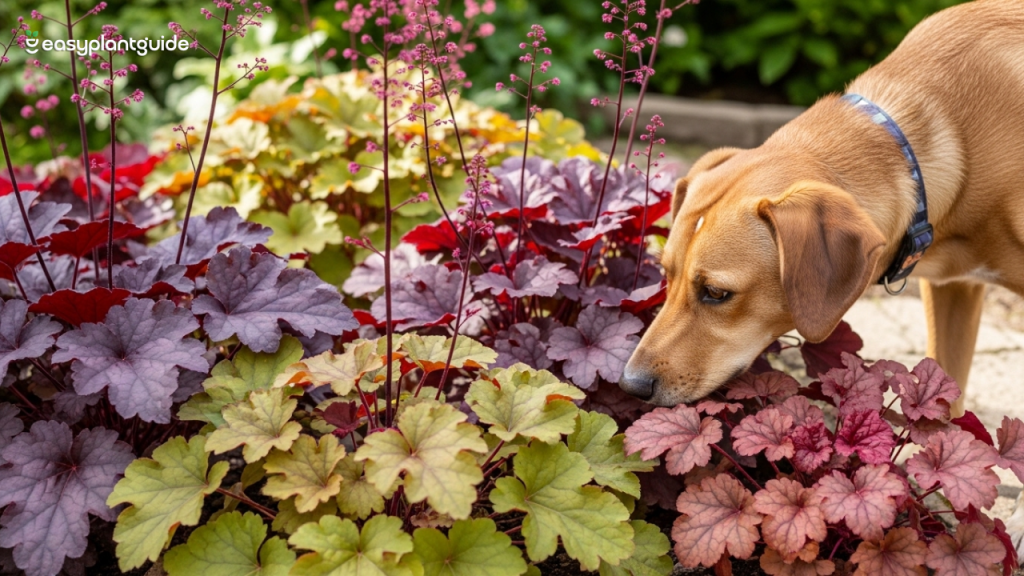
If you’re a plant lover and a dog parent, you’ve probably had this thought: “Wait… is my garden safe for my pup?” And if you’ve been searching for heuchera toxic to dogs, you’re in the right place. Heuchera, also called coral bells, is one of those gorgeous, colorful plants that makes any garden look like a Pinterest dream. But when dogs are involved, beauty always comes with one big question: Is it dangerous? Let’s dig into the truth, the risks, and what you should do if your dog decides to snack on your plants.
What Is Heuchera (Coral Bells)?
Heuchera is a popular perennial plant best known for its vibrant and colorful foliage. You’ll often find it growing in beautiful shades like deep purple, lime green, bronze, and red, making it a standout choice in shade gardens. Many gardeners love heuchera because it’s easy to grow, requires very little maintenance, and stays attractive throughout the year. It’s also perfect for planting in borders, pots, and decorative garden beds.
For pet owners, it’s natural to wonder about safety, which is why questions about heuchera toxic to dogs often come up. The good news is that heuchera is generally considered safe for dogs, though supervision is always recommended to prevent any mild digestive upset if your dog happens to nibble on the leaves.
Why Do Gardeners Love It So Much?
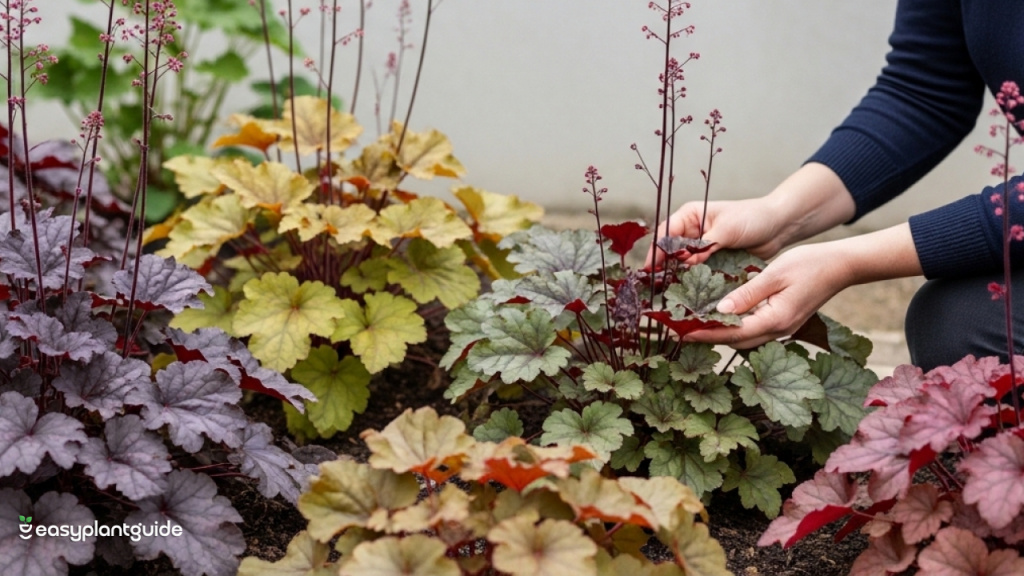
Gardeners love heuchera because it’s an easy plant to grow and doesn’t require much maintenance. It stays beautiful throughout the year with its colorful foliage and works perfectly in garden borders, pots, and shaded areas. However, for dog owners, it’s not just about how attractive the plant looks, but also whether it’s safe to have around curious pets.
Heuchera Toxic to Dogs
Here’s the good news: concerns about heuchera toxic to dogs are largely unfounded, as heuchera is generally considered non-toxic to dogs. Most major plant safety organizations list coral bells as safe for pets. However, it’s important to remember that non-toxic doesn’t always mean completely risk-free. Dogs have sensitive stomachs, and chewing on any plant, even a safe one, can sometimes lead to mild digestive upset.
Is Heuchera Poisonous to Dogs or Just Irritating?
When it comes to heuchera toxic to dogs, it’s important to know that this plant isn’t a “poison dart frog” that can cause severe harm if ingested. Think of it more like eating too much salad when your stomach isn’t used to it—surprising, maybe uncomfortable, but usually not dangerous. While heuchera is not classified as poisonous, dogs that chew on it may experience mild digestive reactions. These can include vomiting, drooling, mild diarrhea, or general stomach upset. The severity often depends on the size of your dog, how much they ate, and their individual digestive sensitivity.
Fortunately, most dogs recover on their own within a few hours, and the symptoms are typically short-lived. However, it’s still a good idea to monitor your pet after they’ve nibbled on any plant. If you notice persistent vomiting, repeated diarrhea, or signs of discomfort that last longer than a day, contacting your veterinarian is the safest option. Understanding these mild reactions regarding heuchera toxic to dogs helps pet owners enjoy their gardens while keeping their furry friends safe and healthy.
5 Reasons Heuchera Is a Great Pet-Friendly Plant
“Heuchera toxic to dogs” is a big misconception . It is a top choice for dog-friendly gardens because it combines beauty with safety. Here are five reasons why it’s ideal for pet owners:
- Non-toxic foliage – Coral bells are generally safe for dogs, making them a low-risk option for your garden.
- Hardy perennial – They can survive in various conditions and come back year after year with minimal care.
- Beautiful colors – From deep purples to bright greens, heuchera adds vibrant, eye-catching foliage to any space.
- Works in shade gardens – Perfect for spots where other plants might struggle, keeping your garden lush even in low-light areas.
- Low maintenance – Requires little effort, making it easy to care for while keeping your pets safe.
Why Dogs Chew on Plants in the First Place
Dogs aren’t trying to ruin your garden on purpose, even when they nibble on plants like heuchera. Many pet owners worry about heuchera toxic to dogs, but chewing is often just a natural behavior. Dogs chew for several reasons: they might be bored and need something to occupy their time, curious and exploring new textures with their mouths, or trying to relieve an upset stomach. Puppies, in particular, explore the world by chewing as part of their development. In many ways, plants act as nature’s chew toys, giving dogs something to interact with while satisfying their instincts. Understanding these behaviors can help you redirect their chewing safely while keeping both your garden and your pets protected.
Symptoms to Watch If Your Dog Eats Heuchera
If you suspect your dog has munched on coral bells, keep an eye out.
Common Mild Symptoms
- Nausea
- Soft stool
- Slight vomiting
- Decreased appetite
When Symptoms Become Serious
Call your vet if you notice:
- Repeated vomiting
- Lethargy
- Tremors
- Difficulty breathing
- Bloody diarrhea
Best Places to Plant Heuchera If You Have Dogs
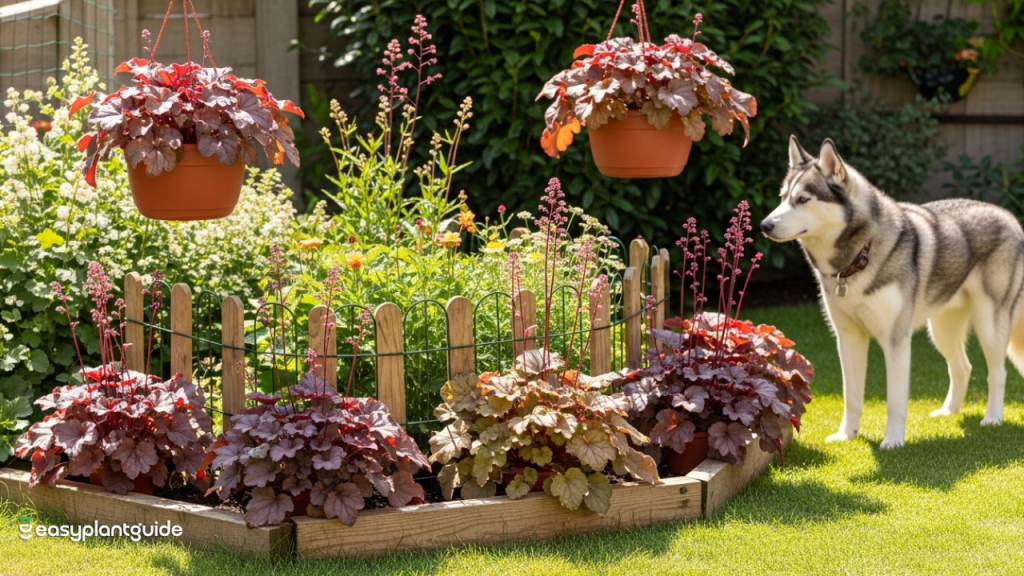
Placement matters.
- Raised planters
- Hanging pots
- Behind short fencing
- Decorative borders
- Areas your dog can’t easily reach
What To Do If Your Dog Eats Coral Bells
If your dog nibbles on coral bells, don’t panic. Most cases are minor, but it’s important to handle the situation carefully to keep your pet safe. Here’s a step-by-step guide to help you manage it effectively.
1. Remove Plant Pieces
Gently check your dog’s mouth and remove any remaining plant material to prevent further chewing or ingestion. This is the first and most important step.
2. Offer Fresh Water
Provide your dog with plenty of fresh water. This helps flush out their system and can reduce the chance of stomach irritation.
3. Monitor Your Dog
Keep a close eye on your dog for the next 24 hours. Watch for symptoms such as vomiting, diarrhea, drooling, or general discomfort. Most mild reactions resolve on their own.
4. Contact Your Veterinarian if Needed
If your dog shows persistent or severe symptoms, or seems unusually lethargic or unwell, contact your veterinarian immediately. Even though serious reactions are rare, professional advice ensures your dog stays safe.
Heuchera Toxic to Dogs vs Other Dangerous Garden Plants
Heuchera is one of the safer choices. But many common plants are truly toxic.
| Plant Name | Toxic to Dogs? | Common Symptoms |
|---|---|---|
| Heuchera (Coral Bells) | No | Mild stomach upset |
| Lilies | Yes | Kidney failure, vomiting |
| Azaleas | Yes | Weakness, drooling |
| Tulips | Yes | GI upset, heart issues |
| Spider Plant | No | Mild vomiting if overeaten |
Can Puppies Be More Sensitive to Heuchera?
Yes, puppies can be more sensitive to plants than adult dogs. Even though concerns about heuchera toxic to dogs are minimal, puppies are like tiny, curious explorers—like toddlers with fur. Safe plants can still cause mild irritation because puppies have:
- Smaller bodies – They are more affected by any substance they ingest.
- Developing digestive systems – Their stomachs are more sensitive to new foods and plants.
- More curiosity – Puppies explore their environment by chewing, so supervision is crucial.
How to Stop Dogs From Eating Garden Plants
Even plants that are considered safe, including heuchera, shouldn’t be chewed constantly. Here are some practical ways to protect both your garden and your pets:
- Use pet-safe deterrent sprays – These sprays discourage chewing without harming your dog.
- Provide chew toys outdoors – Redirect their attention to something safe and fun.
- Train the “leave it” command – Teaching basic commands helps control unwanted behavior.
- Block off garden beds – Fencing or barriers can keep curious pets out of certain areas.
- Keep your dog stimulated with walks – A tired dog is less likely to chew out of boredom.
By combining supervision with these strategies, you can reduce the risk of any issues related to heuchera toxic to dogs while keeping your pets happy and your garden intact.
5 Dog-Friendly Shade Plants Besides Heuchera
If you want more pet-safe options for shaded areas of your garden, consider these plants in addition to heuchera:
- Boston fern – Lush, green, and completely safe for pets.
- Spider plant – Hardy and non-toxic, adds a playful texture to your garden.
- African violet – Beautiful flowering plant safe for dogs.
- Bamboo palm – Great for indoors or shaded outdoor areas, pet-friendly.
- Calathea – Vibrant foliage that thrives in shade and is safe for pets.
These plants, along with heuchera, give you plenty of safe, low-risk options for creating a dog-friendly garden. Even though concerns about heuchera toxic to dogs are minimal, it’s still wise to supervise pets around plants to prevent excessive chewing.
Is Heuchera Toxic to Other Pets Like Cats?
Good question! While the focus is often on heuchera toxic to dogs, it’s worth noting that heuchera is also generally considered non-toxic to cats. Having coral bells in your home or garden is usually safe even if your feline friends like to explore your plants. However, just like dogs, cats may experience mild stomach upset if they nibble on too much of the plant. Symptoms can include minor vomiting, drooling, or a soft stomach, but these reactions are typically temporary and resolve on their own. Keeping an eye on curious pets and discouraging excessive chewing helps ensure a safe environment for all your furry companions.
5 Signs Your Dog Needs a Vet After Eating Plants
Even plants that are generally considered safe, including heuchera, can cause problems if eaten in large amounts. Pet owners often worry about heuchera toxic to dogs, but it’s important to know the signs that indicate professional help is needed. Here are five warning signals to watch for:
- Persistent vomiting – If your dog keeps vomiting over several hours, it could indicate a more serious reaction.
- Severe diarrhea – Continuous or bloody diarrhea is a warning sign that your dog may need medical attention.
- Extreme drooling – Excessive drooling can signal irritation or discomfort in the mouth or digestive system.
- Weakness or shaking – Lethargy, tremors, or unusual weakness could indicate your dog is not feeling well.
- Refusal to eat or drink – If your dog stops eating or drinking for an extended period, it’s a sign that something may be wrong.
Even though serious reactions from heuchera toxic to dogs are rare, knowing these signs helps you act quickly and keep your pet safe.
Final Thoughts on Heuchera Toxic to Dogs
So, is heuchera toxic to dogs? The answer is no—heuchera isn’t considered poisonous and is one of the safer ornamental plants for pet owners. That said, dogs are curious little explorers, and even non-toxic plants can cause mild stomach upset if eaten in large amounts. The best approach is to enjoy your colorful coral bells while keeping a watchful eye on your furry garden helper. By understanding heuchera toxic to dogs and taking simple precautions, you can create a safe, vibrant garden that your pets can enjoy alongside you. A happy, safe garden means a happy dog—and that makes everything better.
Explore more plant blogs and grow your green journey with us.