
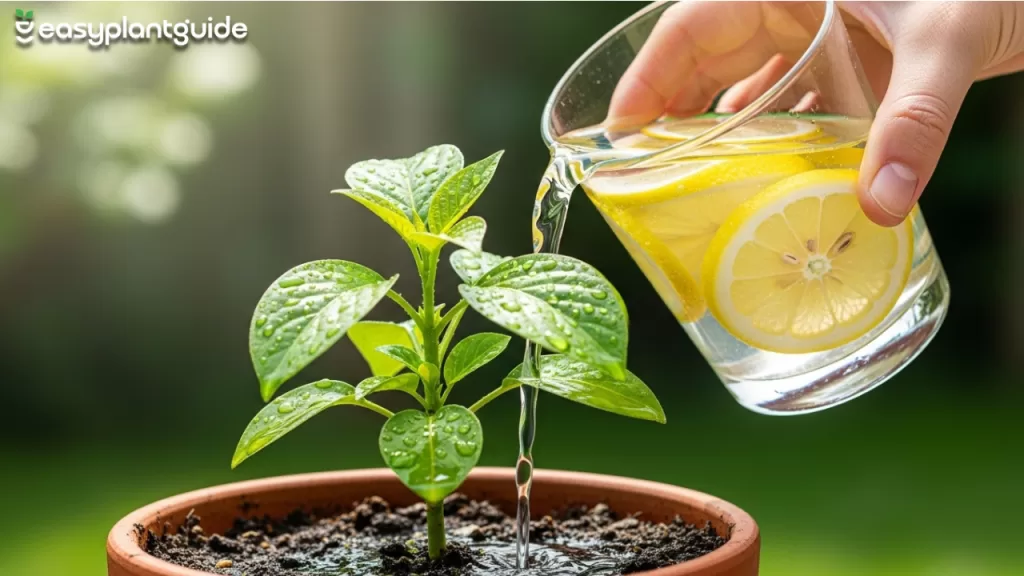
Lemon water for plants is a diluted mixture of lemon juice and water used by gardeners to naturally balance soil pH. The citrus acidity reduces alkalinity, improves nutrient availability, and helps plants absorb essential minerals more efficiently. When applied correctly, lemon water for plants strengthens root function, boosts microbe activity, and enhances overall plant vigor. It provides a safe, organic alternative to synthetic acidifiers, making it an excellent choice for gardeners looking for a natural soil-improvement method.
Lemon water for plants works as a gentle, natural booster that supports healthier soil structure and plant growth over time. Its mild acidity helps break down mineral deposits left by hard water, preventing nutrient lockout and promoting better nutrient flow to the roots. This simple mixture also enhances the effectiveness of fertilizers by creating an environment where essential elements become more accessible to plants. When used in proper dilution, lemon water for plants improves leaf color, encourages stronger root development, and helps acid-loving plants thrive without the need for harsh chemical treatments.
Soil pH Balance
Lemon water for plants helps naturally lower soil pH, making it especially valuable for gardens with alkaline soil. High pH restricts nutrient absorption, leading to yellow leaves and slow growth. Mildly acidic lemon water gently unlocks nutrients and improves root function. This adjustment also enhances soil biology, promoting healthier microbial life. When used occasionally and at the right dilution, lemon water effectively restores soil balance and supports long-term plant health without resorting to harsh chemical solutions.
Plants That Benefit vs. Don’t Benefit From Lemon water for plants
| Plant Type | Response to Lemon Water | Reason |
| Blueberries | Good | Thrive in acidic soil |
| Hydrangeas | Good | Improve color & nutrient uptake |
| Ferns | Good | Prefer mildly acidic soil |
| Citrus Trees | Good | Benefited by lower pH |
| Cacti | Bad | Prefer alkaline, dry soil |
| Succulents | Bad | Sensitive to acidity |
| Snake Plant | Bad | Prefers neutral soil |
Plants That Benefit
Lemon water works best for plants that naturally thrive in acidic soil. These include blueberries, azaleas, hydrangeas, gardenias, ferns, and many citrus plants. Such species often struggle in alkaline soil, and lemon water for plants helps correct nutrient absorption issues. Indoor plants such as spider plants and calatheas may also benefit when tap water causes mineral buildup. By supporting healthier pH levels, lemon water enhances foliage color, flowering performance, and root strength in acid-loving plants.
How to Dilute Lemon Water
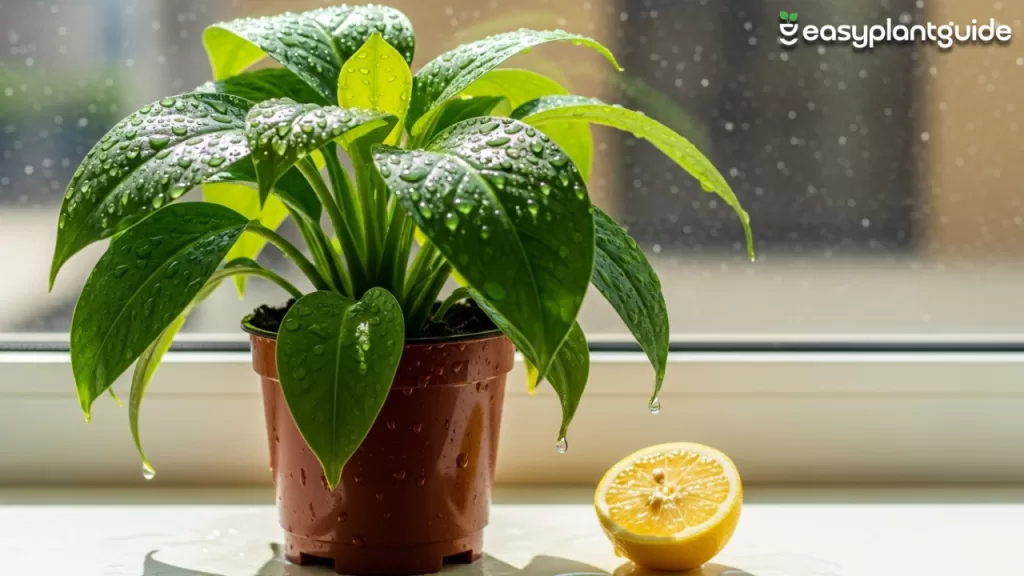
Safe dilution is essential for protecting your plants. Pure lemon juice is far too acidic and can burn delicate roots or harm soil microbes. The recommended ratio is 1 tablespoon of lemon juice per 1 liter of water, creating a mild solution similar to natural acidic rainfall. This dilution allows gradual soil improvement without overwhelming plant systems. Using freshly squeezed lemon water for plants is ideal to avoid additives found in bottled products, ensuring pure, effective results for your plants.
How Often to Use Lemon Water
Use lemon water carefully to prevent over-acidifying the soil. Follow these guidelines:
- Apply once every 4–6 weeks for outdoor plants.
- Indoor plants need it every 6–8 weeks due to slower drainage.
- Reduce frequency if plants show stress signs like droopy leaves.
- Avoid using lemon water during winter dormancy periods.
- Flush soil with plain water occasionally to prevent buildup.
Growth Benefits
Lemon water for plants enhances plant growth by improving nutrient release in alkaline soil. Its mild acidity breaks down mineral deposits, helping roots absorb iron, magnesium, and other essential nutrients more easily. The result is healthier foliage, reduced yellowing, and stronger root development. Lemon water also supports beneficial microbes, improving soil structure and nutrient cycling. When applied in moderation, it boosts plant energy, encourages vibrant greenery, and promotes consistent growth for species that thrive in slightly acidic environments.
Fixing Alkaline Soil
Alkaline soil can prevent plants from absorbing essential nutrients, causing slow growth and chlorosis. Lemon water offers a gentle and natural way to lower soil pH without using synthetic chemicals. Its acidity dissolves excess minerals that contribute to high alkalinity, allowing nutrients to flow more freely to plant roots. By applying diluted lemon water for plants periodically, gardeners can gradually restore soil balance, improve plant appearance, and support healthier long-term growth in affected areas.
Using on Indoor Plants
Indoor plants can benefit from lemon water, but only when used correctly. Tap water often leaves mineral residue in pots, slowly raising soil pH. Lemon water helps dissolve these deposits and restore balance, improving nutrient absorption. Ferns, calatheas, peace lilies, and certain palms respond particularly well. Since indoor soil retains acidity longer, lemon water should be applied sparingly to avoid over-acidifying the pot. A careful schedule ensures indoor plants stay healthy and vibrant without unnecessary stress.
Common Mistakes to Avoid
Avoid these mistakes to keep your plants safe when using lemon water:
- Using lemon water for plants too frequently, causing acidic stress.
- Pouring lemon juice directly without dilution.
- Applying lemon water for plants to alkaline- or neutral-preferring plants.
- Using bottled lemon drinks containing sugar and additives.
- Ignoring plant symptoms like yellowing or drooping after application.
Lemon Water vs. Lemon Juice
Lemon water for plants and pure lemon juice are often confused, but they function very differently in gardening. Lemon water is a diluted, plant-safe solution designed to gently lower soil pH, while pure lemon juice is highly acidic and damaging. Using undiluted juice can burn roots, kill beneficial microbes, and create soil imbalance. Lemon water provides controlled acidity, making it suitable for long-term soil management. Understanding this distinction ensures you treat your plants safely without causing unintended harm.
Soil Microbe Support
Healthy soil depends on microorganisms that help decompose organic matter and release nutrients for plant use. Lemon water for plants supports microbial activity when applied moderately, creating a slightly acidic environment many beneficial microbes prefer. This leads to improved nutrient cycling, better soil structure, and enhanced root health. However, excessive acidity can harm these organisms, so balance is essential. Properly diluted lemon water applied occasionally strengthens the soil ecosystem and contributes to long-lasting plant vitality.
Is It Safe for All Plants?
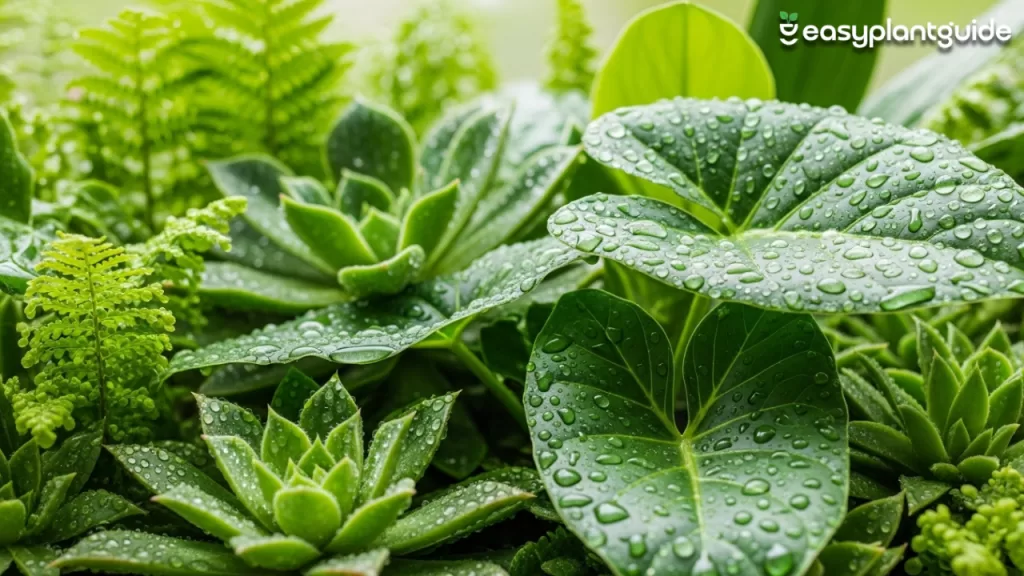
Lemon water for plants is not safe for every plant type. Species that prefer neutral or alkaline soil—such as succulents, cacti, snake plants, lavender, and rosemary—may experience root damage or nutrient imbalance if exposed to acidic treatments. Only acid-loving plants should be treated with lemon water. Always understand your plant’s soil preference before applying any pH-altering solution. By matching the treatment to plant needs, you ensure safe, effective, and healthy growth without risking harm.
Environmental Benefits of Using Lemon Water
Using lemon water for plants offers meaningful environmental advantages for gardeners seeking natural solutions. Because lemon water for plants reduces dependence on chemical acidifiers, it helps protect soil ecosystems and nearby water sources. Its organic acidity supports healthier microbial activity and improves long-term soil structure. By using lemon water for plants, gardeners can prevent mineral buildup caused by hard water and promote more sustainable gardening practices. This makes lemon water for plants an eco-friendly choice for maintaining vibrant, healthy growth.
How Lemon Water Supports Long-Term Soil Health
When used correctly, lemon water for plants contributes significantly to long-term soil health by maintaining ideal pH balance. Balanced soil allows roots to absorb nutrients more efficiently, preventing deficiencies that weaken growth. The acidity in lemon water for plants gently breaks down mineral deposits, improving soil aeration and moisture retention. Over time, lemon water for plants nurtures beneficial microbes that naturally enrich the soil. With moderate, consistent use, lemon water for plants builds stronger, more resilient growing conditions.
Conclusion
Lemon water can be a powerful yet gentle addition to your plant care routine when used correctly and in moderation. Its natural acidity helps lower high soil pH, allowing plants to absorb essential nutrients more efficiently, especially those that thrive in slightly acidic environments. By improving nutrient uptake, supporting beneficial soil microbes, and helping correct alkaline soil issues, lemon water provides a simple, organic method to boost plant vitality. However, not all plants tolerate acidic conditions, making it crucial to understand your plant’s specific soil preferences before applying lemon water.
Overuse or improper dilution may do more harm than good, emphasizing the importance of following the correct application guidelines. When prepared at the right strength and used sparingly, lemon water can enhance leaf color, strengthen roots, and improve overall plant performance. For gardeners seeking a natural and affordable way to support plant health, lemon water remains an effective tool—provided it is used with careful consideration and tailored to the needs of each plant species.
Checkout for more plant blogs here.