
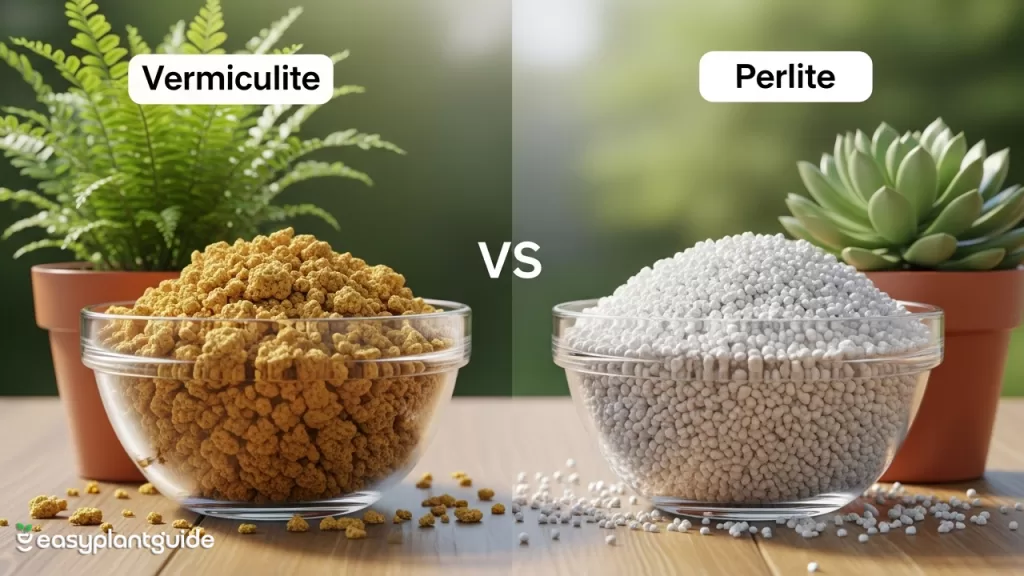
Gardening success often comes down to one essential factor—soil quality. Whether you’re a beginner gardener, a houseplant lover, or a professional horticulturist, you’ve probably come across vermiculite vs perlite, two popular soil amendments that claim to boost plant growth.
But which one should you actually use? Are they the same? And more importantly—which one helps your plants thrive?This detailed guide breaks down every difference in a simple and engaging way so you’ll never be confused again when choosing between vermiculite and perlite.
What Is Vermiculite?
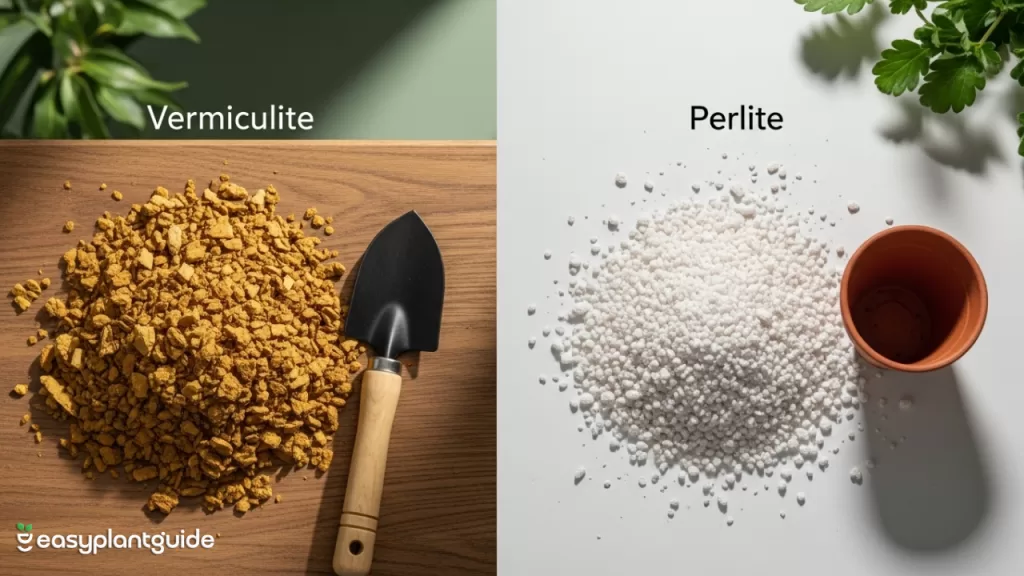
Vermiculite is a natural mineral used in gardening as a soil amendment to improve moisture retention and aeration. When heated to high temperatures, it expands like an accordion, forming lightweight, spongy flakes. In the debate of vermiculite vs perlite, vermiculite stands out for its ability to hold water and essential nutrients, making it ideal for seed starting mixes, rooting cuttings, and growing moisture-loving plants such as ferns and African violets. Its neutral pH and gentle texture also create a safe environment for young roots to develop.
What Is Perlite?
Perlite is a volcanic glass that expands when heated at high temperatures, creating lightweight, porous white granules. In the vermiculite vs perlite comparison, perlite is preferred for its excellent drainage and aeration properties, preventing soil compaction and root rot. It’s widely used in potting mixes for cactus, succulents, and indoor plants, as well as in hydroponic systems where oxygen flow to roots is essential for healthy growth.
Vermiculite vs Perlite: Quick Comparison Table
| Feature | Vermiculite | Perlite |
|---|---|---|
| Texture | Soft, spongy flakes | Lightweight, white pebbles |
| Moisture Retention | High | Low to moderate |
| Drainage | Moderate | Excellent |
| Best For | Seed germination, moisture lovers | Aeration, drainage, succulents |
| pH Level | Neutral to slightly alkaline | Neutral |
| Weight | Heavier | Very lightweight |
| Reusability | Moderate | High |
Why Compare Vermiculite vs Perlite?
Understanding the difference between vermiculite vs perlite is essential for anyone who wants healthy plants and successful gardening results. While both are popular soil amendments, they serve completely different purposes—vermiculite retains moisture, while perlite improves drainage and airflow. Choosing the wrong one can lead to overwatering, root rot, or dehydrated plants. By comparing vermiculite vs perlite, gardeners can make smarter decisions based on their plant’s needs and create the perfect growing environment.
1. Composition and Origin
Vermiculite comes from hydrated minerals like biotite and phlogopite. When heated, it expands into lightweight, accordion-like flakes that are excellent at retaining moisture, making it useful in gardening for seed starting and soil conditioning.
Perlite, on the other hand, is a silicon-rich volcanic glass that expands when heated, forming hard, porous granules that improve soil aeration and drainage. Although both materials are heat-processed, vermiculite provides moisture retention while perlite enhances airflow—highlighting their distinct roles in the vermiculite vs perlite comparison.
2. Water Retention Ability
Here’s where vermiculite vs perlite truly differ. Vermiculite absorbs water like a sponge and holds moisture for longer periods, making it ideal for seedlings, seed germination, and tropical plants that prefer consistently damp soil.
Perlite, on the other hand, does not retain much water. Instead, it allows excess water to drain quickly through the soil, preventing soggy roots. This makes perlite perfect for plants that hate wet conditions, such as succulents and cacti, where proper drainage is essential to prevent root rot.
3. Soil Aeration
Healthy roots need proper airflow just as much as they need water, and this is where perlite clearly outperforms in the vermiculite vs perlite comparison. Perlite helps create tiny air pockets within the soil, improving oxygen flow to plant roots and preventing soil from becoming dense or muddy.
Vermiculite, while useful for moisture retention, tends to compact over time, reducing airflow and making heavy soils even denser. If your soil feels heavy, sticky, or poorly drained, perlite is definitely your best friend for boosting aeration and promoting healthy root development.
4. pH Levels and Nutrient Support
When comparing vermiculite vs perlite, their effect on soil pH and nutrients is another key difference. Vermiculite has a neutral to slightly alkaline pH and can slightly raise the pH level of acidic soils. More importantly, it has excellent cation exchange capacity (CEC), meaning it can hold and store essential nutrients like potassium, magnesium, calcium, and ammonium for plant roots to absorb over time.
Perlite, on the other hand, is completely pH-neutral and chemically inert—it doesn’t react with fertilizers or store nutrients. While perlite improves soil structure, vermiculite is the better choice when your goal is long-term nutrient retention and healthier root nutrition.
5. Best Uses: Vermiculite vs Perlite
Vermiculite – When to Use It
Use vermiculite when you need moisture retention and gentle soil support. It is ideal for starting seeds from scratch because it keeps the growing medium consistently damp without becoming waterlogged. Vermiculite is also excellent for growing moisture-loving plants like African violets, improving sandy soils by helping them hold water, and supporting hydroponic rooting systems. When mixed into peat-based potting soils, it increases nutrient retention and creates a soft, balanced texture for healthy root growth.
Perlite – When to Use It
Perlite is the best choice when drainage and aeration are your main priority. It works perfectly in potting mixes for cacti and succulents, which need fast-draining soil to avoid root rot. Perlite is also ideal for orchid potting, cutting propagation, and raised garden beds because it keeps soil light, prevents compaction, and improves airflow to plant roots. It’s especially useful in heavy clay soils where drainage is a challenge.
6. Vermiculite or Perlite for Seed Starting?
| Category | Best Choice |
|---|---|
| High moisture seeds | Vermiculite |
| Fast root growth | Perlite |
| Indoor seed trays | Vermiculite |
| Outdoor seed trays | Perlite |
7. Vermiculite vs Perlite in Potting Mixes
Use vermiculite in potting mixes when plants dry out too quickly or when the soil feels overly gritty or loose and needs better moisture retention. It is especially helpful in low-humidity environments, for growing tropical plants, and for young seedlings that require consistent moisture to establish strong roots.
Use perlite when your potting mix feels too heavy or compacted and needs improved drainage. It is the best choice if plant roots are rotting due to excess water, or if you are growing succulents and cacti that prefer dry conditions. Perlite is also ideal when drainage is slow or when you need lightweight pots for hanging baskets or indoor plants.
Plants That Prefer Vermiculite vs Perlite
Vermiculite is ideal for plants that thrive in consistently moist soil. These include ferns, pothos, philodendrons, peace lilies, and young seedlings that need steady moisture for healthy root development. Vermiculite helps maintain humidity and prevents soil from drying out too quickly, making it perfect for tropical and moisture-loving plants.
Perlite, on the other hand, is preferred by plants that require fast drainage and airflow around their roots. These are typically drought-tolerant or desert plants such as aloe vera, snake plants, jade plants, string of pearls, and various cactus species. Perlite prevents waterlogging and root rot by improving aeration and keeping soil light and loose.
Pros and Cons of Vermiculite
When choosing between vermiculite vs perlite, it’s important to understand how each one behaves in soil. Both are popular soil amendments, but they serve different purposes depending on your plants’ needs.
Vermiculite – Pros and Cons
In the vermiculite vs perlite debate, vermiculite stands out for its superior moisture retention and nutrient-holding capacity. It is ideal for seed starting and young plants because it keeps the soil evenly moist and prevents seedlings from drying out. Vermiculite also holds essential minerals like calcium and magnesium and releases them slowly to plant roots. It prevents soil compaction, promoting healthy root development and long-term plant growth.
However, vermiculite has drawbacks. It can retain too much water, leading to soggy soil and a higher risk of root rot and fungal growth. It’s not suitable for drought-loving plants like succulents and cacti that require fast drainage. Vermiculite particles may break down over time, reducing their effectiveness. It is also more expensive than perlite and may not be as easily available in bulk, which can be a limitation for larger gardening projects.
Perlite – Pros and Cons
Perlite is the preferred choice in the vermiculite vs perlite comparison when drainage and aeration are the priority. Its porous, lightweight texture improves soil structure by creating air spaces that help roots breathe. Perlite drains excess water quickly, reducing the chance of waterlogged soil and root rot. It is long-lasting, doesn’t decompose, and is reusable—making it ideal for potting mixes, cuttings, and hydroponic gardening.
Still, perlite has limitations. It doesn’t retain moisture well, so soil with high perlite content dries out faster and may need frequent watering—especially in hot or dry climates. Perlite can be dusty during handling, so using a mask is recommended to avoid inhalation irritation. Since it doesn’t store nutrients, plants grown with perlite rely heavily on fertilizers. Outdoors, its lightweight nature means it can blow away easily unless mixed well into soil.
Combining Vermiculite and Perlite for Balanced Soil
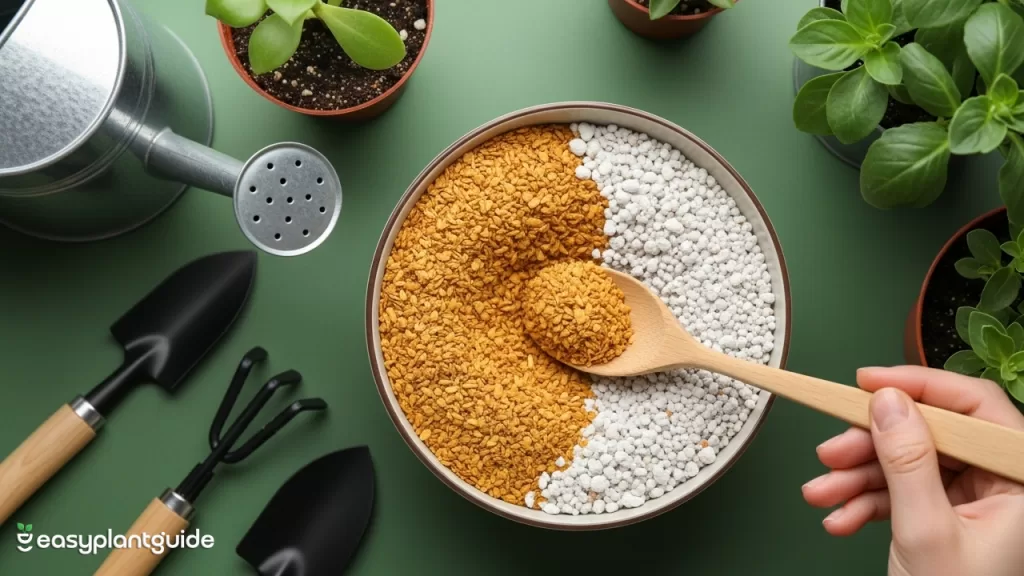
Mixing vermiculite and perlite creates a balanced soil mix with moisture control and proper aeration. Vermiculite retains water and nutrients, while perlite boosts drainage to prevent overwatering. A simple DIY mix includes:
- 1 part coconut coir (for moisture and root support)
- 1 part vermiculite (for nutrient and water retention)
- 1 part perlite (for drainage and airflow)
- 1 part compost (for natural nutrition)
Safety and Environmental Impact
In the vermiculite vs perlite comparison, both materials are natural, non-toxic, and safe for gardening and indoor plant use. Perlite can create fine dust when handled, which may irritate the lungs or throat, so wearing a mask is recommended during mixing. Vermiculite is generally safe, but it’s important to choose reputable, asbestos-free brands to ensure complete safety.
Environmentally, both vermiculite and perlite are considered eco-friendly alternatives to chemical soil additives. They are naturally occurring minerals that require minimal processing, making them sustainable choices for improving soil structure. Both materials are safe for plants, pets, and the environment, supporting healthy growth without harmful chemicals.
Vermiculite vs Perlite—Which One Wins?
| If You Want… | Choose |
|---|---|
| Moisture retention | Vermiculite |
| Soil aeration | Perlite |
| Faster seed germination | Vermiculite |
| Root rot prevention | Perlite |
| Balanced soil mix | Both |
Conclusion
Choosing between vermiculite vs perlite isn’t as hard as it seems. They may look similar, but each one plays a unique role in plant health. If your plant loves moisture—go with vermiculite. If it needs airflow and hates soggy roots—pick perlite. And if you’re unsure? Mix them together for the best of both worlds! Healthy soil means happy plants—and now you know exactly how to create the perfect growing environment. So go ahead, get your hands dirty and give your plants the soil they deserve.
Explore more plant blogs and grow your green journey with us.