
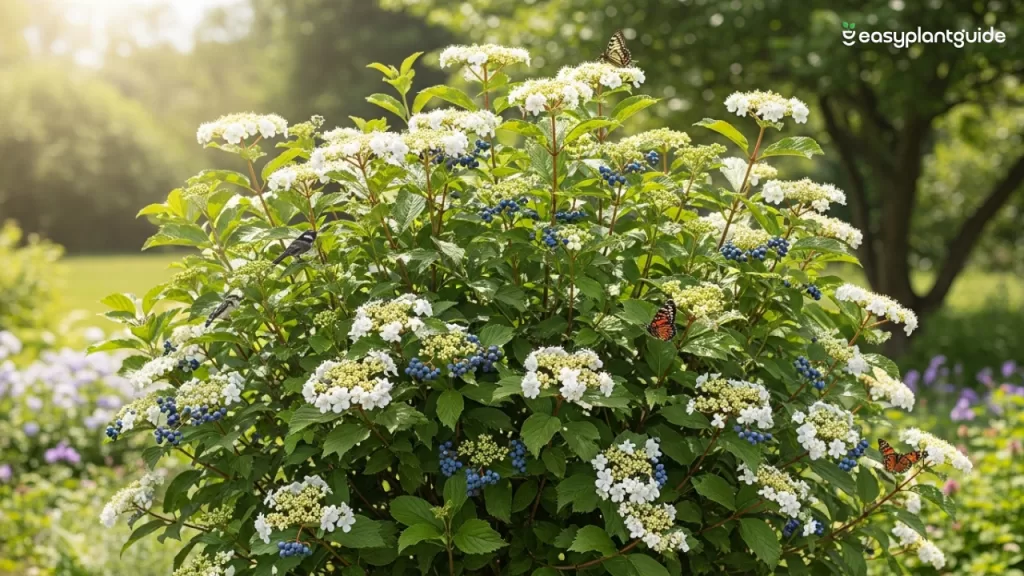
If you’re searching for a hardy, beautiful, and wildlife-friendly shrub, Viburnum dentatum arrowwood might just be your new garden favorite. This native shrub is tough, adaptable, and surprisingly gorgeous—perfect for homeowners, landscapers, and nature lovers. In this article, we’ll explore everything you need to know to grow, maintain, and enjoy this amazing plant.
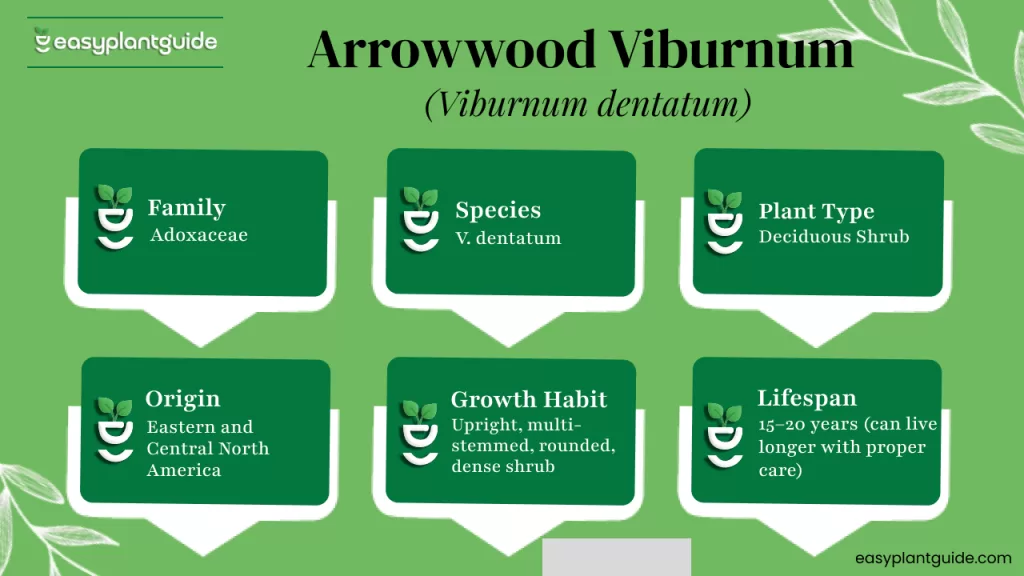
What Is Viburnum Dentatum Arrowwood?
Viburnum dentatum, commonly called arrowwood viburnum, is a versatile and hardy deciduous shrub native to North America, particularly found in the eastern and central regions. Its name “arrowwood” comes from the Native American tradition of using its strong, straight stems to craft arrow shafts, reflecting the plant’s historic and cultural significance. This shrub is highly valued in modern landscaping for its adaptability, dense growth habit, and multi-season interest.
It produces clusters of delicate white flowers in spring, followed by small blue-black berries in late summer and fall, which attract birds and other wildlife. Its vibrant green foliage turns a rich yellow or red in autumn, adding a splash of seasonal color. Whether used for hedging, wildlife gardens, or naturalized areas, Viburnum dentatum combines beauty, utility, and ecological value, making it a favorite among gardeners and landscapers alike.
Key Characteristics of Arrowwood Viburnum
1. Appearance and Structure
Viburnum dentatum is recognized for its upright, multi-stemmed growth habit. As the shrub matures, it develops a dense, rounded form that blends seamlessly into most garden landscapes. Its robust structure makes it an excellent choice for hedges, borders, or as a standalone specimen, providing both height and visual interest.
2. Notable Features
In spring, arrowwood viburnum produces clusters of small, creamy white flowers that create a soft, elegant display. These blooms are not only visually appealing but also attract pollinators like bees and butterflies, enhancing the ecological value of your garden.
3. Berry Production
By late summer and fall, the shrub bears small, blue-black berries that attract birds and other wildlife. These berries provide an important food source while adding seasonal interest and color to the landscape, making the shrub lively and engaging throughout the year.
4. Foliage and Fall Color
The leaves of Viburnum dentatum are deep green, serrated, and lush during the growing season. In autumn, the foliage transforms into striking shades of yellow, orange, or red, creating a vibrant and dynamic display that complements other seasonal garden elements.
5. Size and Growth
Arrowwood viburnum generally reaches a height of 6 to 10 feet, depending on the cultivar and growing conditions. Its moderate growth rate and manageable size make it suitable for both small and large gardens, offering flexibility in landscape design while maintaining a strong, attractive presence.
Why Choose viburnum dentatum arrowwood for Your Garden?
1. Versatile and Adaptable
There are countless shrubs available for landscaping, but few offer the combination of beauty, versatility, and resilience like viburnum dentatum arrowwood, commonly known as arrowwood viburnum. This shrub adapts well to a wide range of soil types, from sandy to clay, making it a reliable choice for almost any garden environment.
2. Low-Maintenance Growth
Once established, arrowwood viburnum is remarkably low-maintenance. It requires minimal pruning and can tolerate variations in sunlight and moisture, allowing gardeners to enjoy a thriving plant without constant attention.
3. Wildlife-Friendly Benefits
Beyond its ease of care, this shrub provides excellent support for wildlife. Its flowers attract pollinators such as bees and butterflies in the spring, while its berries in late summer and fall serve as a food source for birds, enriching your garden’s ecosystem.
4. Pest and Disease Resistance
Viburnum dentatum arrowwood is naturally resistant to many common pests and diseases, making it a durable option for gardeners seeking a long-lasting, healthy plant. Its robust nature ensures it maintains a lush and attractive appearance throughout the growing season.
5. Ideal for Landscaping and Privacy
Finally, its dense, upright growth habit makes it ideal for privacy screens, hedging, or defining garden spaces. Whether used as a standalone specimen or in a row for coverage, Viburnum dentatum adds both functional and aesthetic value to any landscape.
Best Growing Conditions for viburnum dentatum arrowwood
If you want lush greenery and an abundance of berries, providing Viburnum dentatum arrowwood with the right growing environment is essential. This shrub thrives in locations that receive full sun to partial shade, allowing it to develop strong growth while producing vibrant flowers and berries.
The soil should be moist but well-drained to prevent root rot and support healthy root development. While viburnum dentatum arrowwood is adaptable to many soil types, it performs best in soils with a neutral to slightly acidic pH, which encourages optimal nutrient uptake.
It’s also important to provide enough space for the shrub to reach its mature size without overcrowding. This ensures proper air circulation, reduces disease risk, and allows the plant’s natural rounded shape to develop fully. Additionally, protecting it from strong winter winds helps prevent branch damage and leaf loss, keeping the shrub healthy throughout the seasons.
Planting viburnum dentatum arrowwood
Planting arrowwood is easy—even for beginners.
Quick Planting Checklist
- Dig a hole twice the width of the root ball
- Make sure the crown stays level with the soil
- Backfill gently and water thoroughly
- Mulch to retain moisture
- Water consistently during the first growing season
Watering and Feeding Requirements
Proper care is essential for Viburnum dentatum arrowwood to ensure healthy growth and abundant berry production. During the first year after planting, it’s important to keep the soil evenly moist to help the roots establish. Once established, the shrub becomes more drought-tolerant, so you can reduce watering, except during periods of extreme heat when supplemental watering may be necessary to prevent stress.
Feeding your viburnum dentatum arrowwood also plays a crucial role in its health and vigor. Applying a slow-release fertilizer in early spring provides essential nutrients for growth and flowering. Avoid high-nitrogen formulas, as they can encourage excessive leaf growth at the expense of flowers and berries. Incorporating organic compost into the soil further enriches it, improving texture and moisture retention while supporting beneficial microbial activity.
Pruning Arrowwood Viburnum the Right Way
Pruning viburnum dentatum arrowwood is important to maintain its shape, encourage new growth, and improve air circulation throughout the shrub. The best time to prune is immediately after flowering, which allows the plant to develop blooms for the following season.
It’s important to remove old, damaged, or weak branches to promote healthier growth and prevent overcrowding within the shrub. Heavy pruning should be avoided in the fall, as this can reduce the plant’s hardiness and expose it to winter damage. Instead, shape the shrub lightly for a natural look that highlights its upright, rounded growth habit while maintaining its overall health and appearance.
Common Pests and Problems
Although hardy and low-maintenance, Viburnum dentatum arrowwood can face a few issues that gardeners should watch for. Powdery mildew may appear as a white coating on leaves, especially in humid, poorly ventilated areas, while leaf spot can cause brown or black spots and early leaf drop. Aphids can distort new growth, but they are usually controllable with insecticidal soap or natural predators like ladybugs.
Some cultivars may be affected by the viburnum leaf beetle, which can skeletonize leaves if not addressed early. Overwatering is another concern, as waterlogged soil can lead to root rot and other soil-borne diseases. Ensuring proper drainage, maintaining clean foliage, and monitoring for pests helps keep the shrub healthy and thriving.
Cultivars Worth Considering
| Cultivar Name | Height | Special Features |
|---|---|---|
| Blue Muffin | 5–7 ft | Heavy berry production |
| Chicago Lustre | 8–10 ft | Glossy dark foliage |
| Autumn Jazz | 6–8 ft | Vibrant fall color |
| Little Joe | 3–4 ft | Compact size |
| Arrowwood | 6–10 ft | Classic native form |
Landscaping Uses for Viburnum Dentatum
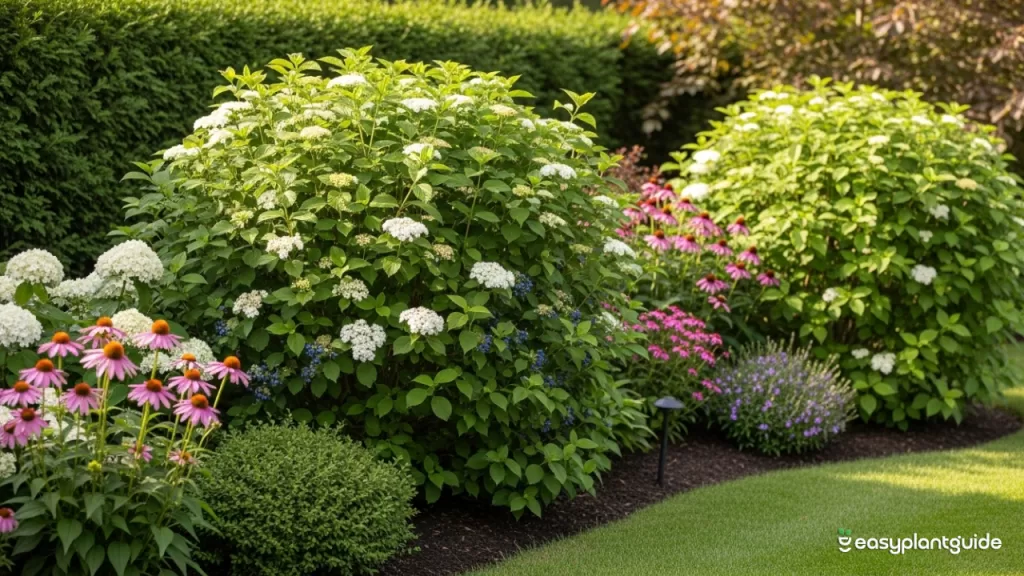
This shrub fits well in different landscape designs.
Best Uses
- Privacy screens
- Foundation plantings
- Wildlife gardens
- Naturalized areas
- Mixed shrub borders
Companion Plants That Thrive With Arrowwood
Choosing the right companion plants can enhance both the beauty and health of your garden when planting Viburnum dentatum arrowwood. Pairing it with complementary plants adds color, texture, and seasonal interest while supporting a balanced ecosystem.
- Black-eyed Susan: These bright, cheerful flowers provide a striking contrast to the shrub’s green foliage and bloom throughout summer, attracting pollinators.
- Winterberry holly: With its vibrant red berries in winter, this plant pairs well with arrowwood to extend seasonal interest and support wildlife.
- Purple coneflower: The tall, colorful blooms of coneflowers complement the shrub’s structure while attracting bees and butterflies.
- Red twig dogwood: Its striking red stems offer winter color and visual contrast, creating a dynamic look alongside arrowwood viburnum.
- Hydrangeas: These flowering shrubs blend beautifully with arrowwood, offering lush blooms in summer and fall, enhancing the layered texture of the garden.
Seasonal Changes and What to Expect
One of the most appealing qualities of Viburnum dentatum arrowwood is the year-round interest it brings to a garden. This shrub provides beauty and activity in every season, making it a standout choice for any landscape.
Spring: Creamy Flower Clusters
In spring, arrowwood viburnum bursts into life with clusters of creamy white flowers. These delicate blooms not only create a soft, inviting display but also attract pollinators such as bees and butterflies, supporting a healthy garden ecosystem.
Summer: Lush Green Foliage
During summer, the shrub maintains its dense, deep green foliage, forming a rounded shape that adds structure and privacy to the garden. Its vibrant leaves provide a rich backdrop for surrounding plants and serve as a habitat for birds and beneficial insects.
Fall: Colorful Foliage and Berries
In fall, arrowwood viburnum becomes truly captivating. The leaves transform into vivid shades of yellow, orange, and red, while clusters of blue-black berries appear. These berries attract birds and add seasonal texture, making the shrub a focal point in autumn landscapes.
Winter: Structure and Wildlife Activity
Even in winter, the shrub retains its charm with upright, well-defined branches that provide architectural interest. Birds often perch on the branches, and lingering berries from late fall continue to feed wildlife, keeping your garden lively even in colder months.
Final Tips for Success
To help your Viburnum dentatum arrowwood thrive, there are a few key practices to keep in mind. Start by choosing a sunny or partially shaded spot in your garden, as proper light ensures strong growth and vibrant flowering. Planting in well-drained soil is essential to prevent root rot and provide the shrub with a healthy foundation.
During the first year, consistent watering is crucial to help the roots establish and support new growth. For optimal berry production, consider planting another compatible cultivar nearby to encourage cross-pollination. Finally, prune the shrub immediately after it finishes blooming to maintain its shape, promote healthy new growth, and ensure it remains attractive throughout the seasons.
Conclusion
Viburnum dentatum arrowwood is one of the most dependable and visually appealing shrubs you can add to your landscape. With its fragrant blooms, wildlife-friendly berries, and year-round charm, it’s a true garden workhorse. Whether you’re building a hedge, attracting birds, or simply looking for a low-maintenance plant, arrowwood viburnum delivers. Give it the right care, and you’ll enjoy a thriving, beautiful shrub for many years to come.
Explore more plant blogs and grow your green journey with us.