
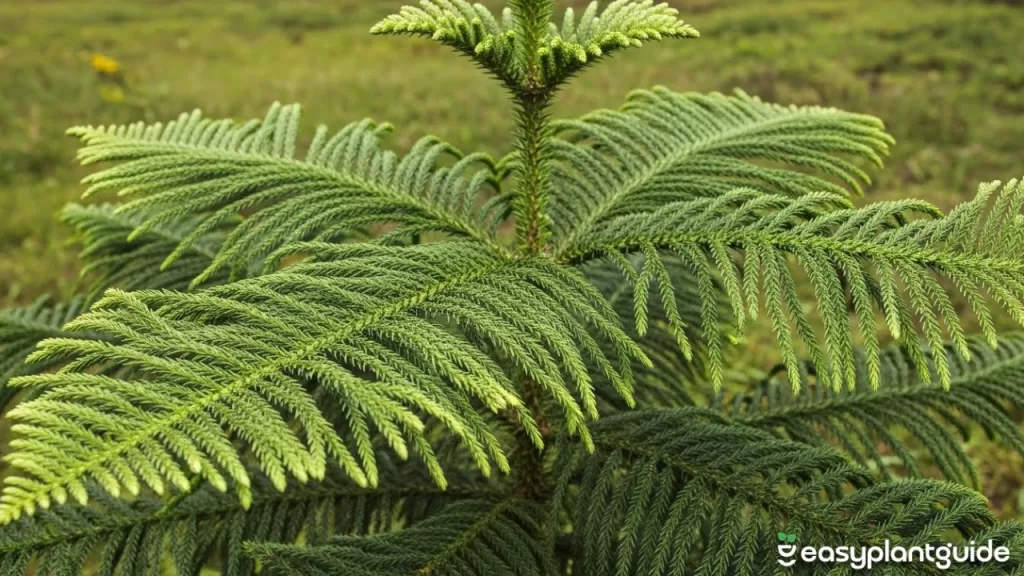
Watering Norfolk Island pine correctly is one of the most important factors in keeping this elegant indoor tree healthy and vibrant. While it looks like a traditional pine, it behaves very differently from outdoor evergreens. This plant prefers consistency, balance, and a gentle approach to watering. Too much water can damage its roots, while too little quickly leads to dry, falling needles. Understanding how, when, and how much to water creates a strong foundation for long-term growth. Once you learn its rhythm, caring for this plant becomes surprisingly easy and rewarding.
Understanding the Natural Habitat of Norfolk Island Pine
To master watering Norfolk Island pine, it helps to picture where it grows naturally. Native to Norfolk Island in the South Pacific, this plant thrives in warm coastal climates with high humidity and frequent but light rainfall. The soil there drains quickly, preventing water from sitting around the roots. Indoors, your goal is to mimic those conditions as closely as possible. This means moist but airy soil, steady watering, and good drainage. When you understand its tropical origins, many watering problems suddenly make sense.
Why Proper Watering Norfolk Island Pine Matters
Watering Norfolk Island pine isn’t just about keeping it alive—it directly affects its appearance, growth rate, and resilience. Proper watering supports strong root development, which allows the plant to absorb nutrients efficiently. When watered correctly, the needles stay soft, green, and full instead of brittle or yellow. Inconsistent watering stresses the plant, making it more vulnerable to pests and disease. Think of water as the plant’s communication system; when delivered properly, everything functions smoothly from roots to tips.
How Often Should You Be Watering Norfolk Island Pine?
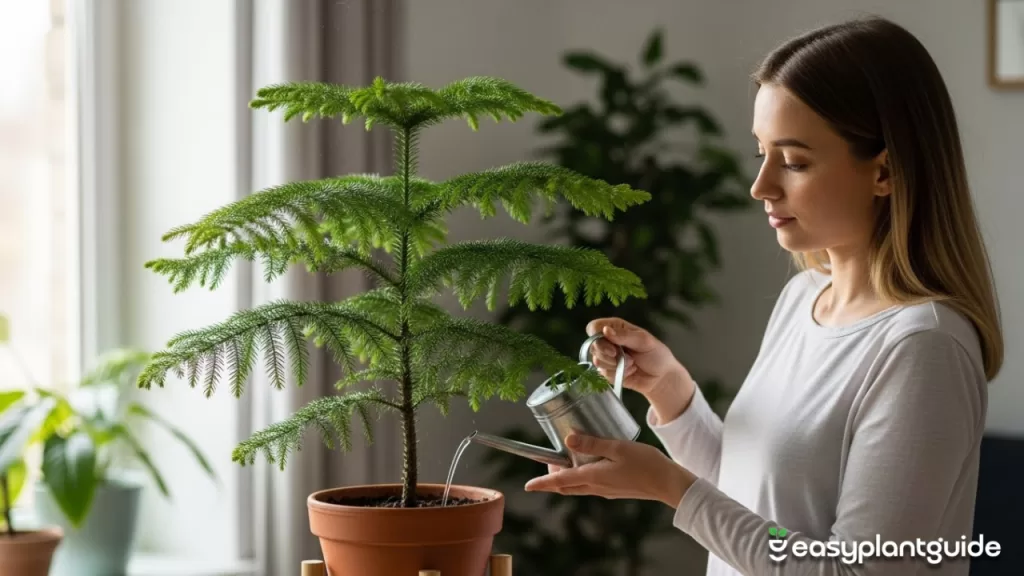
There’s no fixed schedule for watering Norfolk Island pine, and that’s actually a good thing. Instead of watching the calendar, watch the soil. Water when the top one to two inches feel dry to the touch. During spring and summer, this usually means watering every week or so, while cooler months require less frequent watering. Indoor temperature, pot size, and light levels all influence timing. This flexible approach prevents both overwatering and underwatering, keeping the plant comfortable year-round.
How Much Water Does a Norfolk Island Pine Need?
When it’s time to water, do it thoroughly. Watering Norfolk Island pine properly means soaking the soil until excess water drains from the bottom of the pot. This ensures moisture reaches the entire root system, not just the surface. Shallow watering encourages weak roots and uneven growth. However, never allow the plant to sit in standing water, as this can quickly lead to root rot. A deep drink followed by proper drainage is always better than frequent light watering.
Best Soil for Proper Watering Norfolk Island Pine
Soil quality plays a huge role in how successful your watering routine will be. Norfolk Island pine prefers loose, well-draining soil that holds some moisture without becoming compacted. A peat-based indoor plant mix combined with perlite or coarse sand works very well. Heavy soils trap water and suffocate roots, even if you’re careful with watering. Think of soil as the plant’s foundation—if it drains well and stays breathable, watering becomes far less risky and much more effective.
Seasonal Watering Guide for Norfolk Island Pine
Watering Norfolk Island pine changes with the seasons because the plant’s growth slows and speeds up throughout the year. In spring and summer, it actively grows and needs more frequent watering. Fall is a transition period where watering should gradually decrease. Winter requires the most restraint, as growth slows significantly and excess moisture can harm roots. Paying attention to seasonal shifts helps prevent common mistakes and keeps the plant healthy regardless of the time of year.
| Season | Watering Frequency | Key Focus |
| Spring | Every 7–10 days | Support new growth |
| Summer | Every 5–7 days | Monitor faster drying |
| Fall | Every 10–14 days | Reduce gradually |
| Winter | Every 14–21 days | Prevent cold, wet soil |
Signs You’re Overwatering Norfolk Island Pine
Overwatering is the most common issue people face when watering Norfolk Island pine. Excess moisture limits oxygen in the soil, causing roots to weaken or rot. Early signs often appear in the needles, which may yellow, soften, or fall off suddenly. The soil may smell musty, and the base of the trunk can feel soft. These symptoms are signals to stop watering and improve drainage immediately. Acting quickly can often save the plant before permanent damage occurs.
Common Overwatering Symptoms
- Yellowing or pale needles
- Soft or mushy trunk base
- Persistent wet soil
- Musty or sour smell
- Sudden needle drop
Signs You’re Underwatering Norfolk Island Pine
Underwatering Norfolk Island pine creates a different but equally stressful set of problems. When moisture is lacking, the needles dry out, turn brown at the tips, and become brittle. Growth slows, and the soil may pull away from the edges of the pot. This plant prefers evenly moist soil, so long dry periods can cause lasting damage. If caught early, a deep, thorough watering usually helps the plant recover and regain its lush appearance.
Underwatering Warning Signals
- Dry, crispy needles
- Browning needle tips
- Extremely dry soil
- Slow growth
- Increased needle shedding
Smart Watering Habits to Follow
- Check soil moisture regularly
- Use pots with drainage holes
- Water thoroughly, not lightly
- Avoid waterlogged saucers
- Maintain consistent routines
Water Quality and Its Impact on Norfolk Island Pine
The quality of water you use matters more than many people realize. Norfolk Island pine can be sensitive to salts and chemicals commonly found in tap water. Over time, these can build up in the soil and damage roots. Using filtered or distilled water is ideal. If tap water is your only option, letting it sit overnight helps reduce chlorine. Cleaner water supports healthier roots, better nutrient absorption, and overall stronger growth.
The Role of Humidity in Watering Norfolk Island Pine
Watering Norfolk Island pine works best when paired with proper humidity. This plant naturally thrives in moist air, and dry indoor conditions can cause symptoms similar to underwatering. Even if the soil is adequately moist, low humidity may lead to browning needles. Aim for moderate humidity using a humidifier, pebble tray, or grouping plants together. When humidity and watering work together, the plant stays lush, flexible, and visually appealing.
Common Watering Mistakes to Avoid
- Watering on a strict schedule
- Using compacted soil
- Ignoring seasonal needs
- Letting water sit in saucers
- Skipping soil checks
Best Practices for Watering Norfolk Island Pine Indoors
Indoor environments can be tricky, but a few good habits make watering Norfolk Island pine much easier. Always check the soil before watering and use room-temperature water to avoid shocking the roots. Morning watering is ideal because it allows excess moisture to evaporate throughout the day. Empty saucers after watering to prevent standing water. With consistent attention and small adjustments, indoor care becomes predictable and stress-free.
Watering Norfolk Island Pine After Repotting
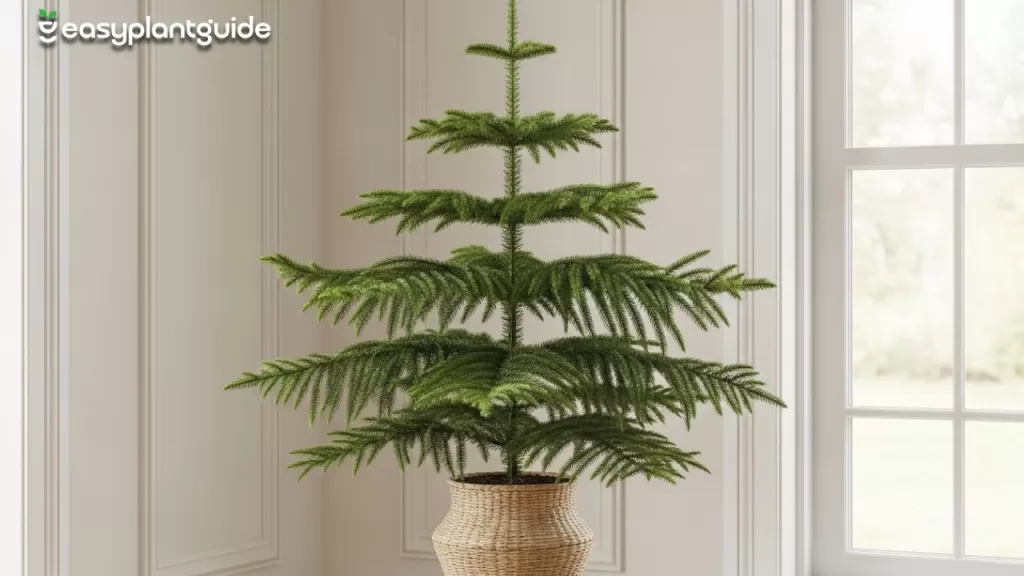
After repotting, Norfolk Island pine needs time to adjust. The roots are slightly stressed, and excess water can slow recovery. Water lightly right after repotting to settle the soil, then wait until the top layer dries before watering again. This careful approach encourages roots to grow into the new soil without risk of rot. Proper post-repotting watering sets the stage for healthy long-term growth.
Self-watering pots may seem convenient, but they aren’t always ideal for watering Norfolk Island pine. These containers often keep soil consistently wet, which increases the risk of root problems. This plant prefers controlled watering with periods of slight drying. If you choose a self-watering system, monitor moisture closely and adjust as needed. Manual watering usually offers better control and healthier results for this sensitive plant.
How Light Affects Watering Norfolk Island Pine
Light and water work hand in hand. Norfolk Island pine placed in bright, indirect light will dry out faster and need more frequent watering. In lower light conditions, soil stays moist longer, increasing the risk of overwatering. Always consider light exposure when deciding when to water. Adjusting watering habits based on light keeps the plant balanced and prevents unnecessary stress.
Long-Term Watering Tips for a Thriving Norfolk Island Pine
Over time, watering Norfolk Island pine becomes intuitive. Watch how quickly the soil dries, how the needles respond, and how seasonal changes affect growth. Small adjustments make a big difference. Consistency, observation, and patience are your best tools. When watering becomes a responsive habit rather than a chore, your plant will reward you with steady growth and lasting beauty.
Conclusion
Watering Norfolk Island pine doesn’t have to be confusing or overwhelming. By understanding its tropical nature, respecting its need for well-drained soil, and adjusting watering based on season, light, and humidity, you create the perfect environment for success. Pay attention to the signs your plant gives you and respond thoughtfully. With the right approach, your Norfolk Island pine will remain healthy, green, and graceful for many years to come.
Check out our blogs if you’re interested in more green goodies and easy plant care tips to keep your indoor jungle thriving.