
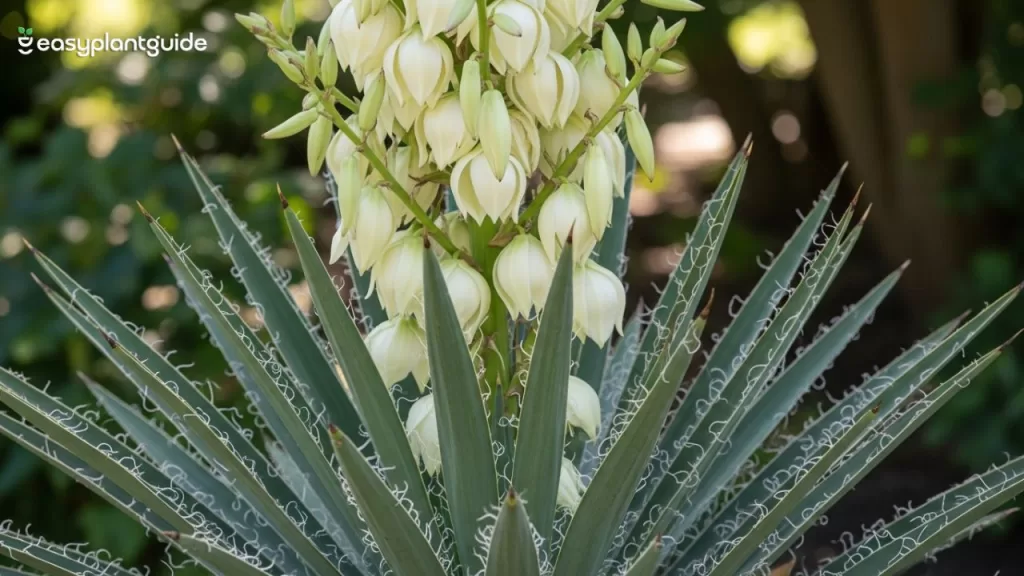
The Yucca filamentosa plant, often called Adam’s Needle, is one of those garden gems that beautifully blends toughness with visual appeal. This hardy, evergreen perennial adds a bold architectural flair to any garden while requiring almost no maintenance. With its striking sword-like leaves and elegant white blooms, it stands as a true statement piece. Perfect for busy gardeners, the Yucca filamentosa thrives in heat, drought, and neglect, making it an ideal choice for modern low-care landscapes.
What Is Yucca Filamentosa Plant?
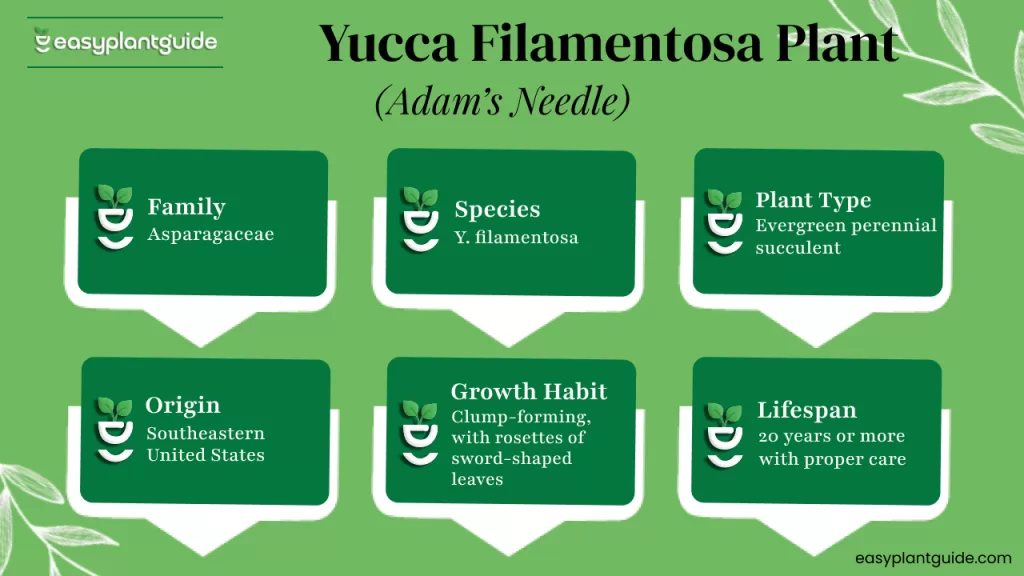
Yucca filamentosa Plant is a resilient, drought-tolerant perennial native to the southeastern United States. It’s known for its stiff, sword-shaped green leaves fringed with delicate curly filaments. This ornamental plant not only adds dramatic texture to gardens but also tolerates poor, sandy, or rocky soils where most plants struggle. Perfect for xeriscaping and coastal areas, Yucca filamentosa Plant is loved for its evergreen foliage, stunning flower spikes, and ability to thrive effortlessly in full sun and dry conditions.
Key Characteristics of Yucca Filamentosa Plant
| Feature | Description |
| Botanical Name | Yucca filamentosa |
| Common Name | Adam’s Needle |
| Type | Evergreen perennial |
| Height | 2 to 3 feet (flower spikes up to 8 feet) |
| Bloom Time | Late spring to summer |
| Flower Color | Creamy white |
| Hardiness Zones | 4–10 |
| Sun Exposure | Full sun |
| Soil | Well-drained, sandy, or rocky soil |
Why Gardeners Adore Yucca Filamentosa Plant
Let’s face it—this plant is a true survivor, and that’s why gardeners can’t get enough of it. The Yucca filamentosa Plant grows easily in poor, dry soils and needs very little water once it settles in. It naturally resists most pests and diseases, saving you time and effort in maintenance. Adding year-round texture and structure to your garden, this plant also delights with its tall, elegant flower spikes that bring a bold and eye-catching touch to any landscape.
Champion of Low Maintenance
If you’re tired of plants that constantly need care, the Yucca filamentosa Plant will be your new favorite. This tough perennial thrives on neglect and still manages to look stunning all year round. Simply plant it in a sunny location with well-drained soil, and it will reward you with beautiful, structured foliage for years. With minimal watering and no constant pruning required, this plant proves that sometimes, less really is more when it comes to garden maintenance.
Drought-Resistant Superstar
When it comes to surviving dry conditions, the Yucca filamentosa Plant truly shines. Its thick, waxy leaves act like natural water reservoirs, allowing it to withstand scorching sun and long dry spells with ease. This makes it ideal for xeriscaping and eco-friendly gardens. It requires minimal watering, flourishes in sandy coastal areas, and maintains its bold form year-round. For gardeners in hot, dry climates, it’s the perfect combination of beauty, strength, and reliability.
Striking Architectural Appeal
The bold rosettes of Yucca filamentosa Plant add structure and drama to any garden design. Its sword-like leaves and towering flower spikes create a strong focal point that’s hard to ignore. Design tips:
- Plant in groups of three for visual impact
- Mix with ornamental grasses for texture contrast
- Use as a border or centerpiece
- Perfect for desert or rock gardens
- Combines beautifully with succulents
Gorgeous Summer Blooms
When summer arrives, Yucca filamentosa Plant becomes the true star of the garden. Tall flower stalks rise above its bold foliage, bursting with clusters of creamy-white, bell-shaped blooms. These elegant flowers not only create a striking display but also attract beneficial pollinators like bees and moths. The blooms sway gracefully in the breeze, adding movement and charm to your landscape, making summer evenings feel alive and vibrant with nature’s gentle beauty and fragrance.
Year-Round Evergreen Beauty
Unlike many perennials that fade with the seasons, Yucca filamentosa Plant stays vibrant and green throughout the year. Its spiky, sword-like leaves remain bold even in winter, giving the garden structure when other plants go dormant. This evergreen resilience ensures visual interest across all seasons, providing texture, height, and contrast in both sunny and frosty landscapes. It’s a plant that truly earns its place, offering lasting beauty and strength in every corner of your outdoor space.
Easy to Propagate
Propagation is simple and rewarding. You can grow new plants through offsets (pups) or seeds, though offsets are faster and more reliable. Propagation steps:
- Carefully remove pups from the base
- Let them dry for a day or two
- Plant in sandy, well-draining soil
- Water lightly until roots form
- Enjoy new plants within weeks
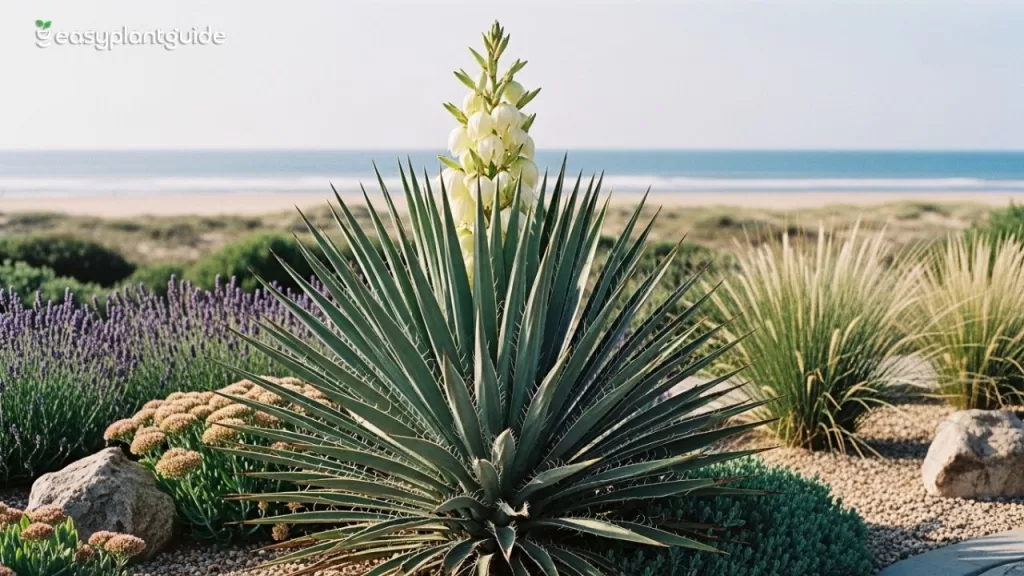
Ideal for Coastal Gardens
Because Yucca filamentosa Plant tolerates both salt and sandy soil, it’s an ideal choice for seaside and coastal landscapes. This hardy plant stands strong against salty breezes, constant wind, and dry, nutrient-poor soils where most plants struggle to survive. Its deep roots and tough leaves make it remarkably resilient, while its elegant, spiky form adds structure and beauty to the shoreline. For coastal gardeners seeking a low-maintenance, long-lasting plant, Yucca filamentosa Plant is simply a perfect match
Common Yucca Filamentosa Plant Varieties
There are a few popular cultivars worth exploring:
| Variety | Description |
|---|---|
| ‘Color Guard’ | Yellow-striped leaves with green edges |
| ‘Bright Edge’ | Green leaves with creamy-yellow margins |
| ‘Golden Sword’ | Variegated foliage with gold centers |
| ‘Hairy’ | Extra filaments along the leaf edges |
How to Plant Yucca Filamentosa Plant
- Choose a sunny, well-drained site.
- Dig a hole twice the width of the root ball.
- Mix in coarse sand or gravel if the soil retains water.
- Place the plant so the crown is level with the soil surface.
- Water lightly and let the soil dry between watering.
Soil and Water Requirements
Yucca filamentosa Plant loves poor, dry, and sandy soils basically the conditions most plants hate. Overwatering is the biggest mistake you can make. Quick tips:
- Never let it sit in soggy soil
- Water sparingly after establishment
- Avoid heavy clay unless amended with sand
Light and Temperature Needs
The Yucca filamentosa Plant is a true sun lover that thrives best under full sunlight. Ample sunlight ensures healthy growth, vibrant foliage, and abundant flowering. While it loves warmth, this tough perennial also handles extreme temperature changes like a pro—enduring freezing winters and scorching summer heat without complaint. Whether planted in tropical, coastal, or temperate regions, Yucca filamentosa Plant stays strong and beautiful year-round, proving its remarkable adaptability to almost any outdoor environment.
Pests and Problems
One of the biggest advantages of growing Yucca filamentosa Plant is its natural resistance to most pests and diseases. However, it can occasionally face minor issues like yucca weevils that damage the base, scale insects that appear on leaves, or root rot caused by overwatering. These problems are easily managed by using insecticidal soap, pruning damaged leaves, and ensuring the soil drains well. With these simple care steps, your yucca will stay healthy and pest-free.
Companion Plants for Yucca Filamentosa Plant
The Yucca filamentosa Plant pairs beautifully with plants that thrive in similar dry, sunny conditions. Excellent companions include lavender, agave, sedum, Russian sage, and echinacea. Together, they create a harmonious and visually striking garden with contrasting textures and colors. These drought-tolerant plants also attract pollinators like bees and butterflies, making your outdoor space both vibrant and eco-friendly. When grouped, they form a dynamic landscape that feels natural yet effortlessly elegant throughout every season.
Uses of Yucca Filamentosa Plant
Beyond its ornamental charm, the Yucca filamentosa Plant offers fascinating practical uses. Historically, Native Americans used its strong fibers to make ropes, baskets, and sandals. The plant’s roots contain natural saponins, once used for making soap and cleaning agents. Additionally, its deep root system helps control soil erosion, making it valuable for stabilizing sandy or sloped areas. This combination of beauty, utility, and resilience makes Yucca filamentosa Plant not only decorative but also a highly functional landscape plant.
Tips for Pruning and Maintenance
While Yucca filamentosa Plant is low-maintenance, a few simple care habits can enhance its appearance and longevity. After blooming, remove the spent flower stalks to tidy up the plant. Trim away dead or damaged leaves in early spring, but avoid cutting healthy green ones since they store vital energy. Every few years, divide large clumps to encourage new growth. Adding gravel mulch around the base helps retain moisture, suppress weeds, and keeps your garden neat and attractive.
Overwintering Yucca Filamentosa Plant
Even though Yucca filamentosa Plant is known for its cold hardiness, giving it a bit of protection during harsh winters helps ensure its best health. In regions with freezing temperatures, cover the plant’s crown with a layer of dry mulch, straw, or leaves to prevent frost damage. This insulation keeps the roots warm and safe from ice buildup. Once spring returns, remove the mulch to let it breathe again. With minimal care, your yucca will thrive year after year.
Conclusion
The Yucca filamentosa plant isn’t just another ornamental—it’s a resilient, sculptural masterpiece that thrives where others fail. Whether you’re aiming for a modern desert vibe or a coastal escape, this plant brings strength, style, and sustainability to your outdoor space. If you want a garden that’s effortlessly stunning and easy to care for, it’s time to let Adam’s Needle take center stage.
Don’t Forget to Check other Plants.