
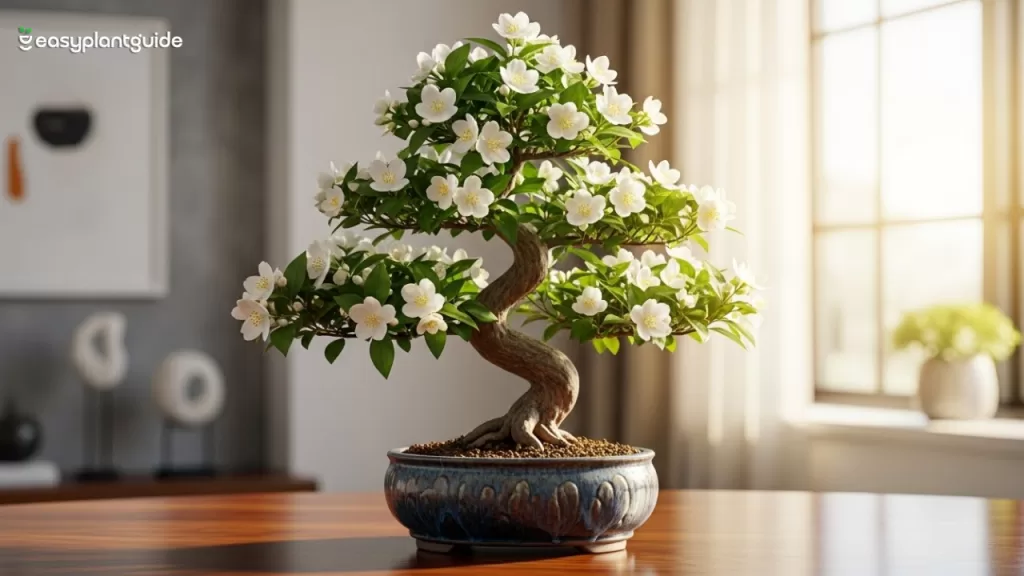
Jasmine bonsai is more than a plant. It is a living sculpture that fills your home with fragrance, charm, and a sense of calm. If you’ve ever dreamed of having a miniature flowering tree that looks elegant but doesn’t demand complicated care routines, jasmine bonsai is the perfect choice. In this guide, we’ll explore everything you need to help your jasmine bonsai grow beautifully, bloom consistently, and stay healthy year-round. By the end, you’ll feel confident about caring for this lovely little tree.
What Is a Jasmine Bonsai?
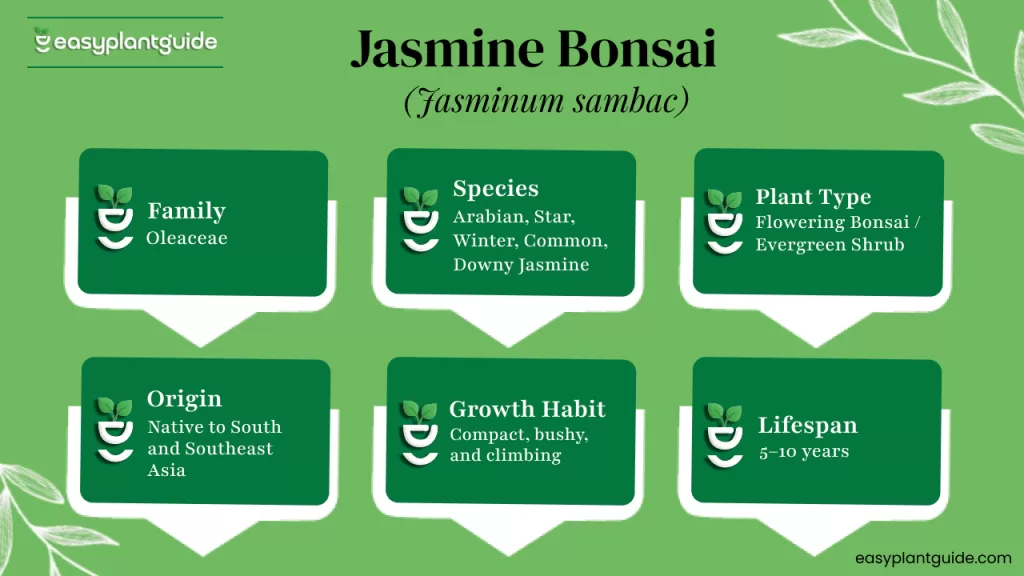
A jasmine bonsai is a miniature version of well-loved jasmine species that are carefully shaped and trained to grow in a bonsai form. It still carries the plant’s famous sweet fragrance and delicate white blossoms but maintains a compact, artistic structure perfect for small spaces.
Popular Jasmine Species Used for Bonsai
Some of the most commonly used jasmine types for bonsai include Arabian Jasmine (Jasminum sambac), Star Jasmine (Trachelospermum jasminoides), Winter Jasmine (Jasminum nudiflorum), Common Jasmine (Jasminum officinale), and Jasmine multiflorum, also known as Downy Jasmine. These species adapt well to pruning and training, making them ideal for bonsai shaping.
Benefits of Growing Jasmine Bonsai
If you’re wondering whether bringing a jasmine bonsai into your home is worth it, the answer is a definite yes. This tiny tree packs beauty, fragrance, and personality into a compact form. Whether you’re a beginner or already love growing plants, jasmine bonsai offers a mix of charm and practicality that makes it stand out among other miniature trees.
Long-Lasting, Sweet-Scented Flowers
One of the biggest reasons people adore jasmine bonsai is its irresistible fragrance. The blooms aren’t just beautiful; they fill the room with a gentle, calming scent that instantly freshens up your space. With the right care, jasmine bonsai produces flowers regularly, giving you a year-round dose of aroma therapy.
Perfect for Small Spaces
Even if your home is tiny, a jasmine bonsai fits right in. Its compact size allows you to place it on a desk, shelf, kitchen counter, or side table without feeling cluttered. It adds greenery and liveliness to any corner, making small spaces feel more vibrant and inviting.
Beginner-Friendly Plant
Many bonsai species require a lot of skill, but jasmine bonsai is surprisingly easy to manage. It forgives minor mistakes and bounces back quickly, which makes it ideal for first-time bonsai owners. As long as you provide light, proper watering, and occasional pruning, it stays healthy and happy.
Fast Growth Compared to Other Bonsai
Unlike slow-growing traditional bonsai trees, jasmine grows at a quicker pace. This means you see results faster, whether you’re shaping it, waiting for blooms, or simply enjoying its fresh foliage. Its faster growth also makes training and styling more rewarding.
Thrives Indoors and Outdoors
Jasmine bonsai is versatile and adapts well to both environments. Indoors, it brightens up your living area with greenery and fragrance. Outdoors, it enjoys natural light, fresh air, and open space. You can easily shift it depending on weather or your home setup without disturbing its growth.
Ideal Growing Conditions for Bonsai
To grow a healthy jasmine bonsai, you need to recreate the warm, bright environment this plant naturally thrives in. Jasmine loves spaces where the light is strong enough to energize growth but gentle enough to protect the leaves from damage. Bright, indirect sunlight for about 4 to 6 hours a day is ideal. It also enjoys mild morning sun, which helps stimulate flowering, but direct afternoon sunlight can be too intense and may scorch the foliage. Placing your bonsai near a window with filtered light or using a sheer curtain offers the perfect balance. Keeping the temperature stable and avoiding cold drafts also helps your jasmine bonsai stay lush and vibrant.
Best Soil Mix for Bonsai Jasmine
A well-draining soil mix is crucial for jasmine bonsai because the plant dislikes sitting in water. Poor drainage can lead to root rot and weak growth. The ideal soil should retain some moisture while allowing excess water to escape quickly. A recommended blend includes 40 percent bonsai soil, 30 percent coconut coir or peat, 20 percent perlite, and 10 percent organic compost. This combination provides good aeration, moisture retention, and nutrients to support healthy growth.
How to Water Jasmine Bonsai the Right Way
Watering seems simple, but many bonsai owners struggle with it. Jasmine bonsai thrives on consistent moisture, but overwatering can damage the roots. To keep it healthy, check the soil regularly with your finger, and water thoroughly until water drains from the bottom. Avoid letting the pot sit in standing water. Using room-temperature water is best, and during hot summer months, you may need to water more often to prevent the soil from drying out.
How to Fertilize Jasmine Bonsai for Maximum Growth
Fertilizing provides essential nutrients for lush leaves and abundant blooms. A balanced liquid fertilizer works well for regular feeding. During the growing season, feed your bonsai every two weeks, and reduce feeding during winter when growth slows. Once a month, use a bloom-boosting fertilizer to encourage flowers. Be careful not to over-fertilize, as this can burn the roots and harm the plant.
Pruning and Shaping Jasmine Bonsai
Pruning is what turns a regular jasmine plant into a striking bonsai tree. After flowering, trim branches to maintain shape and remove leggy or weak growth. Pinch new shoots to control height and encourage fuller foliage. Cut branches that grow inward, and use bonsai wire carefully to guide branches into your desired form. Regular pruning keeps the plant healthy and enhances its aesthetic appeal.
Repotting Jasmine Bonsai
Repotting is essential to keep the roots healthy and encourage new growth. Jasmine bonsai generally needs repotting every 2 to 3 years. The best time is early spring, just before new growth begins. Repot when roots start circling the pot or when the soil no longer drains well. If the plant shows slow growth, it may also be a sign that it needs fresh soil and more space for the roots to expand.
Common Problems and Solutions
| Problem | Cause | Quick Solution |
| Yellow leaves | Overwatering | Reduce watering and improve drainage |
| Brown tips | Low humidity | Mist regularly or use a humidifier |
| No flowers | Low light or lack of nutrients | Move to brighter area, fertilize |
| Droopy leaves | Underwatering | Water thoroughly |
| Sticky leaves | Pests | Use neem oil spray |
Pests That Affect Jasmine Bonsai
Jasmine bonsai is generally hardy, but pests can become a problem, especially if the plant is stressed or humidity is too low. Common pests that affect jasmine bonsai include aphids, spider mites, whiteflies, mealybugs, and scale insects. These tiny invaders can damage leaves, stunt growth, and reduce flowering if not managed promptly. To keep your bonsai healthy, you can treat infestations with neem oil, insecticidal soap, or a gentle application of rubbing alcohol. Regular inspection and maintaining proper humidity can also prevent most pest problems before they start.
Uses and Aesthetic Appeal
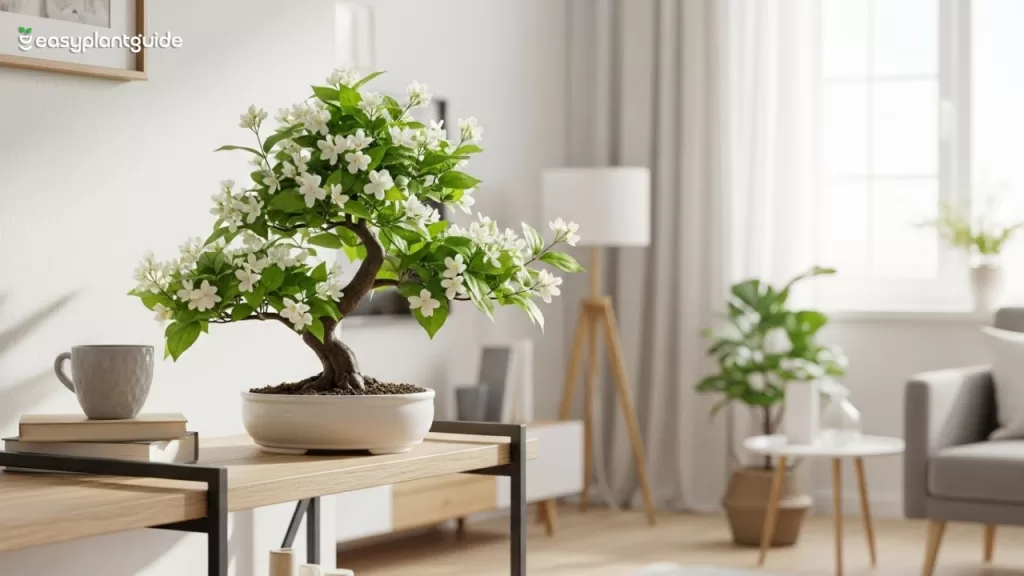
Uses of Bonsai Jasmine
- Enhances indoor air quality
- Provides a calming and relaxing environment
- Acts as a natural room freshener with fragrant blooms
- Suitable for living rooms, bedrooms, and office spaces
- Makes a thoughtful and unique gift
Aesthetic Benefits of Jasmine Bonsai
- Adds elegance and charm to any space
- Looks beautiful on shelves, tables, and countertops
- Complements minimalist and modern interior designs
- Enhances the overall decor of living areas
- Creates a visually appealing focal point in any room
Indoor vs. Outdoor Jasmine Bonsai
Indoor Placement
- Near large windows with bright, indirect sunlight
- Away from heaters and cold drafts
- In bright, airy rooms
- On balconies with partial shade
- Under grow lights if natural light is low
Outdoor Placement
- In a spot with morning sun and afternoon shade
- Protected from harsh direct sunlight
- Areas with good airflow to prevent pests
- On patios, balconies, or gardens with filtered light
- Safe from strong winds and sudden temperature changes
Winter Care for Jasmine Bonsai
Jasmine bonsai is sensitive to cold, so it requires extra care during the winter months. Before temperatures drop, it’s best to bring the plant indoors to protect it from frost and chilly winds. During this time, reduce watering, as the plant’s growth slows and it needs less moisture. Avoid fertilizing in winter, since the bonsai is not actively growing and excess nutrients can stress it. Place the bonsai near a bright window to ensure it still receives enough light, and keep it away from cold drafts or vents. With these simple precautions, your jasmine bonsai can remain healthy and ready to thrive once spring arrives.
How to Make Jasmine Bonsai Bloom More Often
Bonsai Jasmine produces fragrant flowers regularly if it receives the right care. To encourage more blooms, ensure the plant gets plenty of bright, indirect light throughout the day. Fertilizing once a month with a bloom-boosting fertilizer can stimulate flower production. Avoid heavy pruning just before flowering, as this can remove buds. Maintaining a consistent temperature between 18 to 26°C and providing good airflow around the plant also helps the flowers develop fully. By following these steps, your jasmine bonsai can stay vibrant and fragrant for longer periods.
Conclusion
Jasmine bonsai is truly a remarkable plant for anyone seeking fragrance, beauty, and a touch of nature in a compact, manageable form. Its delicate white flowers and sweet aroma can instantly brighten up any space, creating a calming and inviting atmosphere in your home or office. With the right care routine—including proper lighting, watering, fertilizing, pruning, and occasional repotting—this tiny tree rewards you with glossy, vibrant leaves and heavenly blooms throughout the year.
Even beginners can enjoy the satisfaction of nurturing a jasmine bonsai, as it is forgiving and relatively easy to maintain compared to other bonsai species. For more experienced plant lovers, it offers endless opportunities to practice styling, shaping, and enhancing its artistic form. Beyond its aesthetic and aromatic appeal, jasmine bonsai can also be a thoughtful gift, a natural air freshener, and a focal point in your decor that draws attention and admiration.
Explore more plant blogs and grow your green journey with us.