
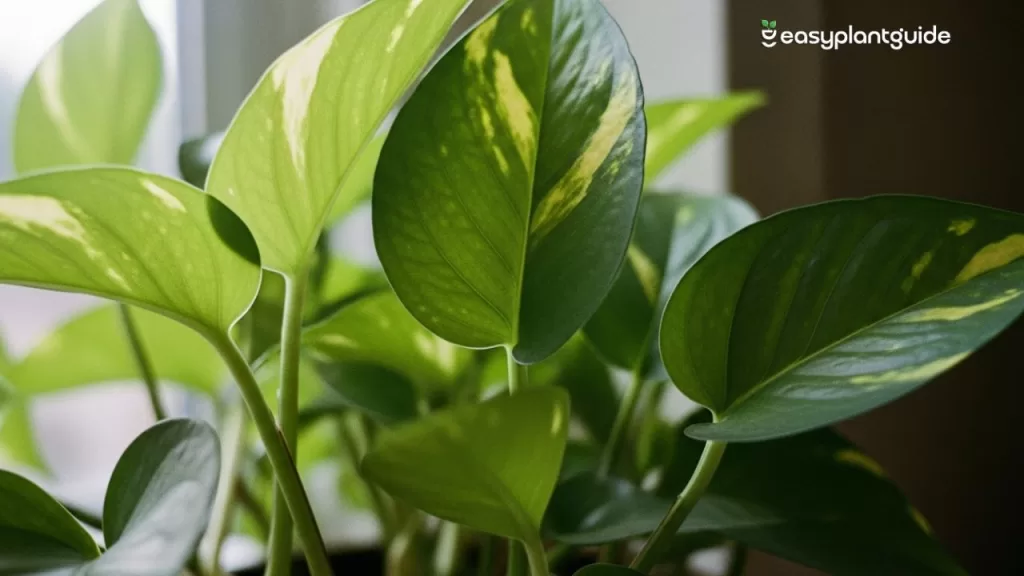
Scindapsus aureus, more commonly known as Golden Pothos or Devil’s Ivy, is one of those rare houseplants that people instantly fall in love with, and once you understand its charm, it’s easy to see why. This plant has an exceptional ability to blend seamlessly into any space, whether it’s a modern apartment, a cozy bedroom, or even a busy office. Its lush trailing vines, unique golden variegation, and unbelievable tolerance for neglect make it incredibly beginner-friendly.
As you read through this detailed guide, you’ll discover how this plant not only beautifies your space but also purifies the air, boosts your mood, and grows effortlessly with just a little care. By the end, you’ll find yourself wanting one—or maybe even three—of these gorgeous plants.
Scindapsus Aureus and Its Irresistible Appeal
There’s something uniquely captivating about Scindapsus aureus that makes it stand out in the world of indoor plants. Maybe it’s the rich, glossy leaves splashed with golden-yellow streaks, or perhaps it’s the feeling of tranquility it brings to any room. This plant has a visual softness that instantly makes a space feel warmer without overwhelming the décor. What truly seals the deal is how incredibly easy it is to care for, even if you’ve never kept a plant alive before. It asks for very little yet gives back so much, which is why it remains a top choice for plant lovers and beginners alike.
What Makes Scindapsus Aureus So Popular?
Scindapsus aureus has gained massive popularity due to its forgiving nature and incredible adaptability to different indoor conditions. Many houseplants come with long lists of do’s and don’ts, but this one keeps things refreshingly simple. You can grow it in hanging baskets, let it climb a moss pole, root it in water, or just let it trail freely along a shelf—the plant won’t complain. Its ability to survive in lower light environments also makes it perfect for homes where sunlight may not be abundant. Its vibrant leaves brighten dark corners, making it a natural interior decor solution.
Botanical Background and Origins
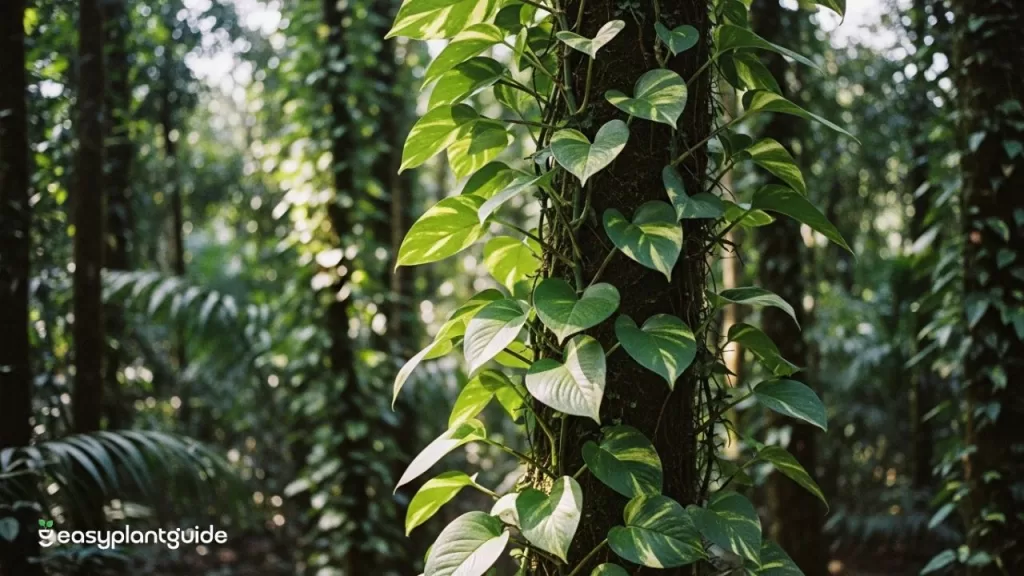
Scindapsus aureus originates from the lush tropical rainforests of Southeast Asia, where it naturally climbs tall trees while soaking up the humidity of its surroundings. Growing in such environments has made it an incredibly adaptable and resilient species. In its native habitat, the plant can grow to impressive lengths, clinging to surfaces using aerial roots and thriving in the dappled sunlight of the forest canopy. This background explains why the plant is so tolerant of indoor conditions, even when humidity fluctuates or lighting isn’t ideal. Its natural history plays a major role in its low-maintenance charm.
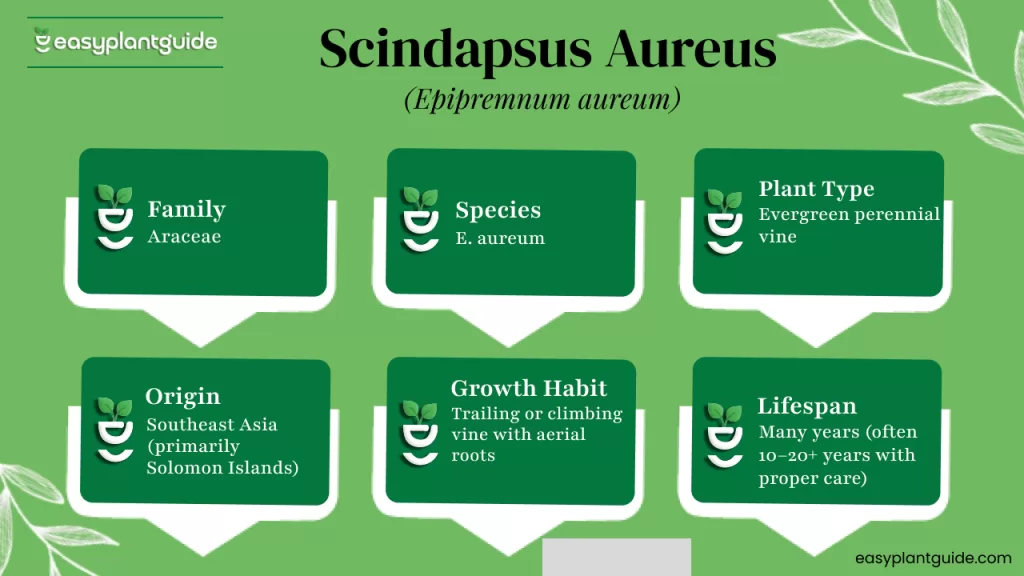
Botanical Table Overview
| Feature | Details |
| Botanical Name | Scindapsus aureus / Epipremnum aureum |
| Common Names | Golden Pothos, Devil’s Ivy |
| Family | Araceae |
| Type | Evergreen Vine |
| Origin | Southeast Asia |
| Lifespan | Many Years with Care |
This quick summary helps plant lovers understand the essential background of the species.
Key Features of Scindapsus Aureus
Scindapsus aureus stands out thanks to its striking golden variegation, fast growth rate, and ability to thrive in various indoor conditions. Unlike many delicate tropical plants, this one doesn’t demand constant attention to stay vibrant and healthy. Its leaves are heart-shaped and glossy, giving it a refreshed, lively appearance throughout the year. The plant remains visually appealing whether you grow it as a trailing vine or a climbing plant. Its versatility makes it suitable for homes, offices, balconies, and small corners needing a touch of greenery.
What Makes It Stand Out?
Here are some standout features:
- Golden-yellow variegated leaves that brighten any room
- Fast-growing vine that adapts to almost any environment
- Ability to flourish even in low-light areas
- Natural air-purifying qualities that improve indoor air
- Very easy propagation method that lets you grow unlimited new plants
Each of these points contributes to why Scindapsus aureus is often recommended to beginners and seasoned plant parents alike.
Light Requirements for Healthy Growth
Light plays a significant role in determining how vibrant and richly variegated your Scindapsus aureus becomes. While this plant is known for its exceptional tolerance of low-light conditions, placing it in bright, indirect light will bring out the stunning golden splashes on its leaves. Too little light may cause the variegation to fade, leaving the plant a duller green. Alternately, harsh sunlight can burn the foliage, leading to brown patches. This balance is key, and once you find the perfect spot, your plant will continue to grow beautifully.Best Lighting Conditions
- Avoid harsh direct sunlight as it can scorch the leaves
- Low light is tolerable but reduces golden variegation
- East-facing windows are ideal for gentle morning light
- Rotate your plant weekly to maintain even growth
- Use sheer curtains in bright rooms to soften the light
Watering Needs of Scindapsus Aureus
Watering is often where plant owners struggle, but Scindapsus aureus makes this easier than most. The plant prefers its soil to dry slightly between waterings, mimicking the natural environment where rain comes in intervals. Overwatering can lead to root rot, one of the few serious issues affecting the plant. Underwatering occasionally won’t harm it much, but prolonged dryness will cause drooping and leaf curling. Learning when to water becomes intuitive with time as you observe changes in soil texture and leaf firmness, making care simple and enjoyable.Simple Watering Rules
- Water only when the top inch of soil feels dry
- Reduce watering frequency during winter
- Always ensure your pot includes drainage holes
- Use room-temperature water to avoid shock
- Avoid letting water sit at the bottom of the pot
Soil Recommendations for Strong Growth
The soil mix you choose plays a major role in keeping your Scindapsus aureus healthy and thriving. The plant prefers a loose, well-draining mix that allows roots to breathe while holding just enough moisture. A compact, heavy soil can lead to water retention, which increases the risk of root rot. By adding ingredients like perlite or coco peat, you create an ideal growing medium that supports vigorous growth. Whether you plant it in a pot or allow it to climb up a support, a good soil mix ensures robust roots and lush foliage.Here’s a great soil combination:
- Coco peat for moisture retention
- Perlite to improve drainage
- Pine bark for root aeration
- Compost to enhance nutrition
- Orchid mix for loose structure
Temperature and Humidity Needs
As a tropical plant, Scindapsus aureus naturally thrives in warm temperatures and humid environments. Fortunately, it adapts easily to typical indoor conditions, even when humidity levels dip slightly. However, giving the plant a bit of extra humidity—especially in dry months—can encourage more vigorous growth and prevent leaf browning. Temperature fluctuations, especially sudden drops, can stress the plant and slow down its growth. Keeping it in a stable environment ensures healthier, stronger vines and vibrant foliage all year long.Ideal Climate Conditions
- Maintain temperatures between 18°C and 30°C
- Keep the plant away from cold drafts or AC vents
- Aim for humidity levels above 50%
- Mist occasionally during dry seasons
- Use a pebble tray to naturally raise humidity
How to Propagate Scindapsus Aureus Easily
Propagation is one of the most exciting aspects of owning Scindapsus aureus because it’s almost guaranteed to succeed. Whether you propagate in water or soil, the plant responds quickly and begins developing roots within a couple of weeks. This is perfect for expanding your collection or sharing with friends. Watching the roots emerge can be a truly rewarding experience, especially when you’re new to plant care. With just a few materials and steps, you can create endless new plants that are just as beautiful as the original. Step-by-Step Propagation Guide
- Choose a healthy vine with multiple nodes
- Make a clean cut below a node using sharp scissors
- Remove any leaves close to the bottom
- Place the cutting in water or moist soil
- Keep in bright, indirect light until roots form
Common Problems and Troubleshooting Tips
Even though Scindapsus aureus is incredibly hardy, it may still face occasional issues depending on environmental factors. The key is observing your plant regularly to catch symptoms early. Yellowing leaves often indicate overwatering, while crispy brown tips may suggest low humidity or underwatering. Legs vines usually mean insufficient light. Pests like spider mites and mealybugs can appear, especially in dry indoor areas, but they’re easy to remove with regular cleaning. Understanding these signs helps maintain long-term plant health.
Amazing Benefits of Scindapsus Aureus
One of the biggest reasons people love Scindapsus aureus is its wide array of benefits beyond aesthetics. This plant naturally purifies indoor air by removing toxins such as benzene and formaldehyde, making your home a fresher place to breathe. Its presence can also reduce stress and create a more peaceful environment. The best part? You don’t need to be an experienced gardener to enjoy these perks. As long as you provide basic care, the plant rewards you with beauty and fresh energy every day.Why You Should Own One
- Helps purify indoor air naturally
- Boosts mood and creates a calming atmosphere
- Enhances décor with lush foliage
- Perfect for beginners and busy individuals
- Affordable and easy to propagate
Decorating Ideas with Scindapsus Aureus
Scindapsus aureus is an excellent decorative plant because its trailing vines add movement and life to any area. Whether you want a minimalist look or a lush jungle vibe, this plant fits effortlessly. You can hang it in macramé holders, place it on shelves, or let it climb up a moss pole. The plant adapts to whatever style you choose, making it a versatile choice for interior decoration. It even thrives in bathrooms, where humidity levels tend to be higher.Creative Display Tips
- Let vines cascade from high shelves
- Use decorative macramé hangers for added elegance
- Train the plant on a moss pole for vertical growth
- Grow in clear jars for a modern water-propagation look
- Place in corners to create a lush, cozy feel
Toxicity and Safety Precautions
While Scindapsus aureus is safe to keep indoors, it contains calcium oxalate crystals, making it mildly toxic if ingested. This means pets and small children should not chew or bite the leaves. Skin contact is generally safe, but some individuals may experience irritation during pruning or repotting. Basic precautions help ensure a safe environment without compromising the beauty of your plant. Awareness of toxicity allows you to enjoy the plant responsibly and confidently.
Best Fertilizer for Scindapsus Aureus
Fertilizing Scindapsus aureus helps maintain strong, vibrant growth, especially during active growing months. A balanced fertilizer provides essential nutrients such as nitrogen, phosphorus, and potassium. Applying fertilizer too frequently or using strong formulas can damage the roots. This plant doesn’t require heavy feeding, which makes the care routine easier. Simple monthly feeding is enough to keep your plant thriving and enhancing its golden variegation. A light feeding plan ensures the plant grows consistently without complications.
Repotting Scindapsus Aureus
Repotting allows the plant to refresh its soil, expand its root system, and grow more vigorously. Typically, Scindapsus aureus needs repotting every year or two, depending on growth rate. When roots begin poking out of drainage holes or circling the pot, it’s time to give it a new home. A slightly larger pot encourages healthier growth without overwhelming the plant. After repotting, the plant may take a short time to adjust but will quickly resume normal growth once settled.
Conclusion
Scindapsus aureus is truly one of the most rewarding houseplants you can bring into your home. Its eye-catching appearance, minimal care requirements, and impressive benefits make it ideal for plant lovers at all experience levels. Whether you’re decorating a small apartment or creating a green sanctuary in your living room, this plant delivers beauty, simplicity, and natural charm. With proper care, your Scindapsus aureus will thrive for years, offering lush greenery, cleaner air, and a delightful presence you’ll appreciate every day.
Check out more Plant Blogs.